It’s a Tuesday in October. You are standing under the great glass clock on the Right Bank of the Seine, the one that used to tell trains when to leave. Behind you is the Tuileries. Across the river, the Louvre. Above your head, the gilded letters that still spell out GARE D’ORLEANS, because this place was a railway station before it was a museum. You have a ticket in your hand. Your friend told you two hours would be enough. Your friend is wrong, and the question of how long to spend at Musee d’Orsay is the wrong question anyway. The right question is: in what order.
Three hours is the floor. Four is comfortable. Five is a slow lunch and the Manet rooms twice. Less than three and you will leave with a headache and a phone full of paintings you can no longer remember which floor you were on for. Is 2 hours enough for Orsay? Only if you accept that you will see one quarter of the museum and miss two of its three knockout works. People who insist on the Orsay museum 2 hours plan are usually trying to do the Louvre the same morning, and the Louvre will eat their afternoon either way.
Here is the part nobody tells you. The Orsay’s three biggest gut-punch paintings are not in the same room. They are not on the same floor. They are not even in the same wing. Edouard Manet’s Olympia is on the ground floor near the entrance. Vincent van Gogh’s Starry Night Over the Rhone is up on the fifth floor, in the famous gallery behind the clockface. Gustave Courbet’s Origin of the World is on the ground floor again, but tucked into a side room most people walk past. Doing them in the wrong order means doubling back across a building the size of a city block, three times. That is the whole reason your friend ran out of time.
The building that wanted to be a station
The Gare d’Orsay opened in July 1900, three weeks before the Universal Exposition. It was the first electrified train terminal in the world, designed by Victor Laloux to look like a Belle Epoque hotel rather than a piece of industrial infrastructure. The trains stopped running into it in 1939. By 1970 the French government wanted to demolish it for a new hotel. Then the Pompidou Center happened, and Paris remembered that throwing out nineteenth-century buildings tended to be a mistake. Valery Giscard d’Estaing made the call in 1977. The station became a museum dedicated to the years between 1848 and 1914, the exact gap the Louvre stops at and the Pompidou begins from.
The conversion took nine years. It opened in December 1986. The result is the only major museum in the world where the architecture is louder than half the art. The vaulted glass roof, the thirty-two foot clocks, the long central nave that used to be a train platform. You will walk in and want to take photos of the building before you have looked at a single painting. Don’t fight it. The building is part of the visit. Just budget for it.
What three hours at the Orsay museum actually buys
Three hours sounds like a lot. It is not. The Orsay holds more than four thousand objects on permanent display. Eighty Renoirs. Sixty Manets. Twenty-four Van Goghs. Eighteen Monets including five from the Rouen Cathedral series, which you should look at side by side because the whole point is that he painted the same building in different light and the differences only land in person. Then there’s the Cezanne room. Then there’s the Degas room. Then there’s a sculpture garden in the central nave that includes Carpeaux’s The Dance and Pompon’s polar bear and a model of the Paris Opera house cut in half so you can see the underground river the Phantom is supposed to live in.
That is what the Orsay museum visit time question is really about. Not how many minutes a Renoir takes. Three hours is the floor because under three hours you cannot do the three floors without skipping one of them. And the Orsay rewards floor changes. The genius of the building is that the chronology runs vertically, not horizontally. Ground floor: the painting world Manet shattered in the 1860s. Middle level: the polished, official Salon work and the early sculpture. Top floor: the Impressionists and what came after. You can watch French art break and reassemble itself by riding two escalators.
Start with Olympia, not Starry Night
Most people get off the escalator at the top floor, walk straight to Van Gogh, and spend forty minutes there before they have looked at anything else. Don’t. Olympia is on the ground floor and Olympia is the spine of the whole museum. Manet finished her in 1863, showed her at the Salon of 1865, and the public reaction was the closest thing the nineteenth century had to a riot in a gallery. Guards had to stand in front of the painting because visitors were trying to attack it with umbrellas. The scandal was not nudity. The Louvre across the river was full of nudes. The scandal was that Olympia stared back. She is a working woman in Paris, she has a black ribbon at her throat, she is wearing a single slipper, and a maid is bringing her a bouquet from a client she is about to send away. Manet painted her flat on the canvas, no soft shadowing, no marble idealization. He painted a body the way a camera would see it. Everyone knew exactly what they were looking at and nobody could agree whether it was a masterpiece or an obscenity.
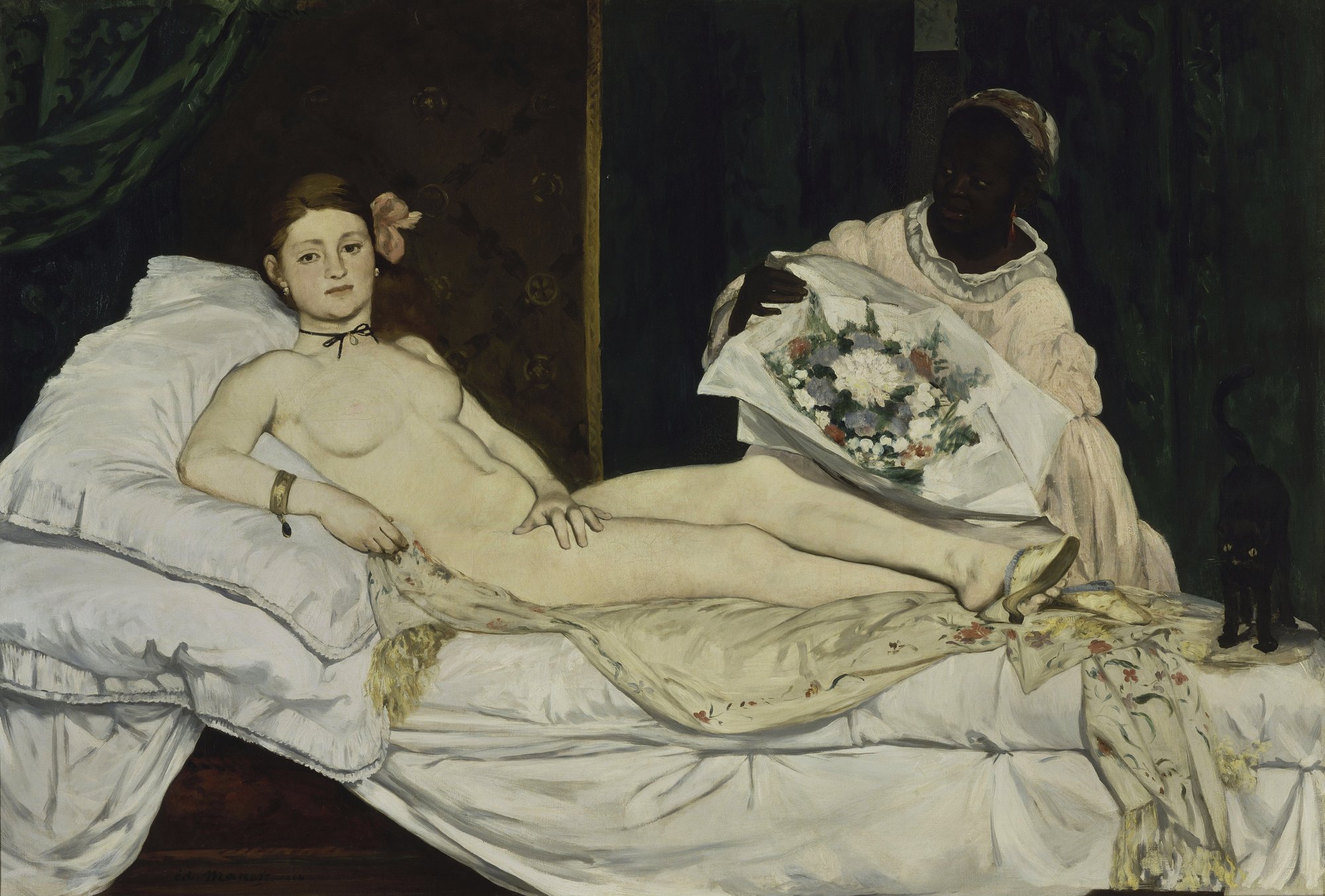
Stand in front of her for ten minutes. Then walk twenty steps to the right and look at Manet’s Luncheon on the Grass, which is in the same room and was painted two years earlier. You are looking at the moment European painting stops being about gods and aristocrats and starts being about people who could plausibly be sitting next to you on the metro. From there you have done the hardest cognitive work of the visit. Everything else is easier.
The Courbet detour most visitors miss
Before you leave the ground floor, go find Origin of the World. It is in Room 7, smaller than you expect, hung in a quieter corner that the museum installed deliberately to give it some breathing room. Courbet painted it in 1866 on commission from a Turkish-Egyptian diplomat named Khalil Bey, who kept it behind a green velvet curtain in his Paris apartment for private viewing. It then disappeared into private collections for over a hundred years. Jacques Lacan owned it in the 1950s and had Andre Masson paint a wooden cover for it that depicted the same landscape abstractly so guests would not see what was underneath without warning. The Orsay finally acquired it in 1995.
It is a forty by fifty-five centimeter painting of a woman’s pelvis and lower torso, cropped at the breasts and the thighs, with no face. It is also one of the most technically virtuosic paintings in the building. Get close. Look at how the flesh is rendered. Courbet was making a point about realism that he had been making for twenty years and that the Salon had been refusing to hear. You can take it or leave it as content. You cannot dismiss it as paint. Five minutes here, then go up.
The middle level that everybody skips
The middle level, technically the second floor or “niveau 2,” is where most three-hour visits collapse. People come up the escalator, see the gilded Salon paintings and the bronzes, and assume it’s the second-tier collection. It is not. This is where Rodin lives. Two versions of The Gates of Hell maquette, the small Thinker, the larger Balzac. There is also a long room of furniture and decorative arts from the Art Nouveau period that includes Hector Guimard’s metro entrance models, the same wrought-iron typeface you see at the Abbesses station today.
Give the middle level twenty-five minutes. Walk through the painting galleries quickly. Spend most of the time on the Rodin sculptures. Look at the small Camille Claudel pieces, especially The Mature Age, which is one of the most psychologically loaded sculptures in Paris and is hidden in a side gallery half the visitors never enter. Then go up.
The fifth floor and the famous clock
The Impressionist gallery is on the fifth floor, behind the great clock. This is the room from every photo. The light comes through the clockface from the west. There are two giant Monet water lily studies, the Renoirs including The Ball at the Moulin de la Galette, the Pissarros, the Sisleys, and a wall of Cezanne apples. Spend forty minutes here. Maybe more. The Cezanne portraits are easy to walk past and very, very hard to forget once you have actually looked at one.
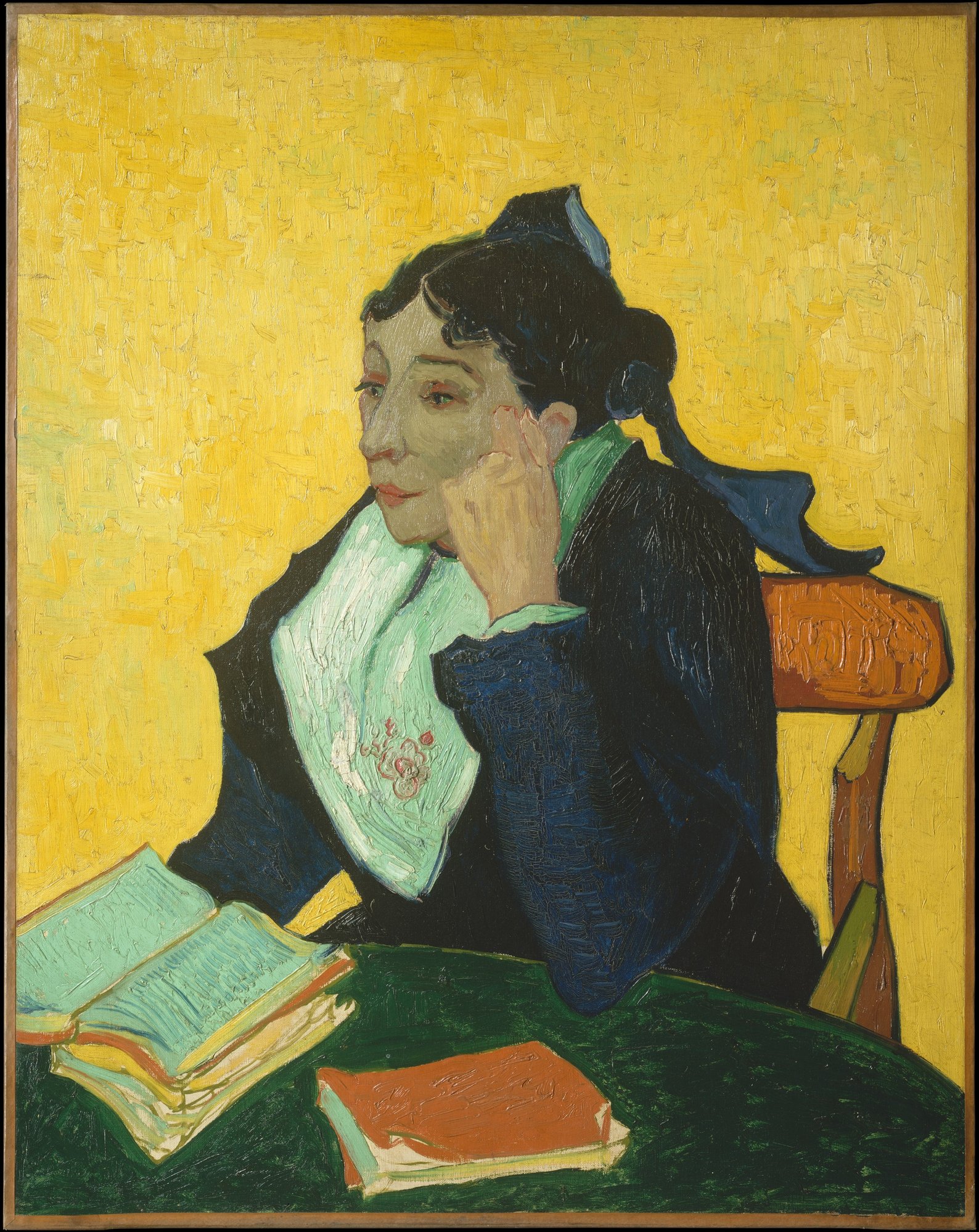
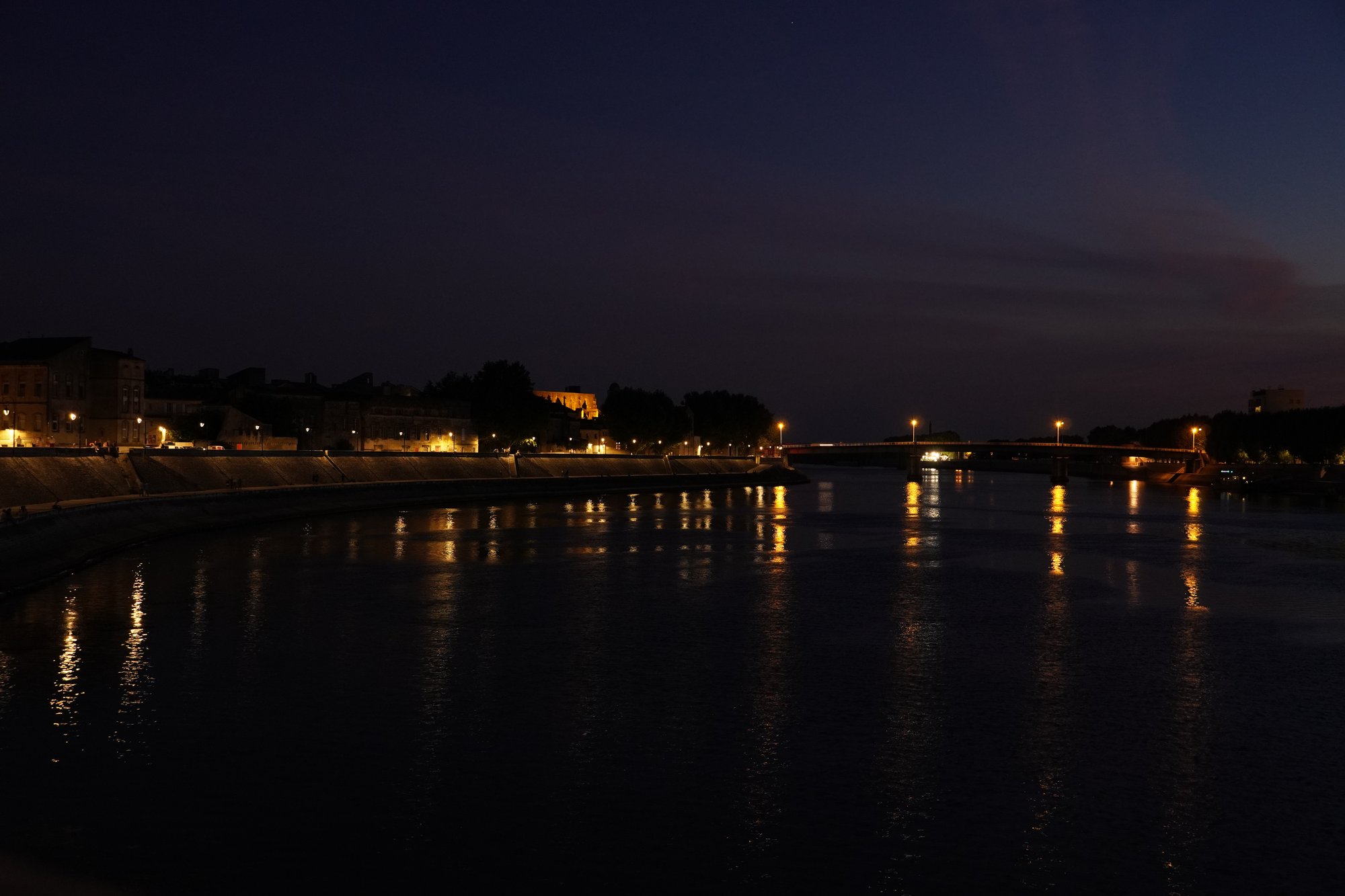
Then walk into the Van Gogh rooms. Starry Night Over the Rhone, the Bedroom in Arles, the self portrait from Saint-Remy, two versions of the Doctor Gachet study. The Orsay has the second largest Van Gogh collection in the world after the Van Gogh Museum in Amsterdam. Stand in front of Starry Night Over the Rhone for at least three minutes. He painted it in September 1888 from the riverbank in Arles, working at night with candles stuck into the brim of his hat so he could see the canvas. Chiaro has the letter he wrote Theo about it three nights later read in his own words, if you want the candles described in the painter’s own voice. The reflections of the gas lamps are not blue. They are yellow ochre running into deep ultramarine. You can see the brushstrokes physically push the light onto the water.
When you have had enough Van Gogh, go look out the clockface itself. From behind the glass you see the Tuileries on the other side of the Seine, framed by the giant Roman numerals. Take the picture. Go back down.
How long to spend at Musee d’Orsay by hours
Here is the actual map. Adjust to taste.
Three hours total. Forty minutes ground floor for Manet, Courbet, the early Degas. Twenty-five minutes middle level for Rodin and the decorative arts. Seventy minutes top floor for Monet, Renoir, Cezanne, Van Gogh, the clock. Twenty-five minutes margin for the cafe behind the clock, the bookstore, and the inevitable wrong turn.
Four hours: add thirty minutes on the top floor and walk slower. Five hours: take a real lunch at the cafe Campana, the one with the surrealist gold wave hanging from the ceiling. The food is fine. The view through the great clock is the actual reason to sit there.
The Orsay museum half day, meaning two hours, is enough only if you accept the trade. Skip the middle level entirely. Do Olympia for ten minutes, do the Van Goghs for thirty, do Origin of the World, do Monet’s Cathedrals, do one Renoir, leave. You will see roughly a quarter of the museum. You will remember almost all of it. The Orsay rewards this kind of focused visit better than the Louvre does, because the building is smaller and the chronology is tight.
The supporting cast nobody plans for
The Orsay’s secret weapon is the stuff that is not on the highlight reels. Whistler’s Mother is here, on permanent display in a quiet room, and it is much smaller and much grayer than reproductions suggest. The Bonnard intimacies are upstairs. The Toulouse-Lautrec posters and oil sketches are upstairs too. There is a model of the Paris Opera house in cross section that takes a full ten minutes to actually understand. There is a small American art room with a Sargent. There are two Klimts the Vienna museums would kill to have back.
If you find yourself with extra time, the right move is not to circle back to the Impressionists. The right move is to find one artist you’ve never heard of and stand in front of three of their paintings. The Orsay is dense enough that this works.
What the great clock taught me
Here is the thing about the building that I keep coming back to. The Orsay used to send people somewhere. It was a place you arrived at and then left from. Trains pulled in under the glass roof, passengers stepped off carrying suitcases, and within the hour they were in the south of France or in Bordeaux or sitting in a cafe down the street. The whole architecture was about transit. About not staying.
Now it sends you somewhere else. You walk in, you look at Olympia for ten minutes, you ride the escalators up through sixty years of French painting, and when you walk back out onto the Quai Anatole France with the Tuileries across the river, you are not the same person who walked in three hours ago. The building is still in the business of moving people. It just changed cargo.
The paintings are the same ones the Manets and the Cezannes and the Vincents painted in the 1880s. The stories were all there the whole time. Sometimes you just need somebody whispering them in your ear at the right moment.
Three hours. Three floors. Manet first. Don’t skip the middle level. The clock is at the end, not the beginning.
Image credits
- 2022-08-07 21.22.51, DSC05079 Starry Night van Gogh.jpg — Jakob Hagedorn. Source, CC BY-SA.
