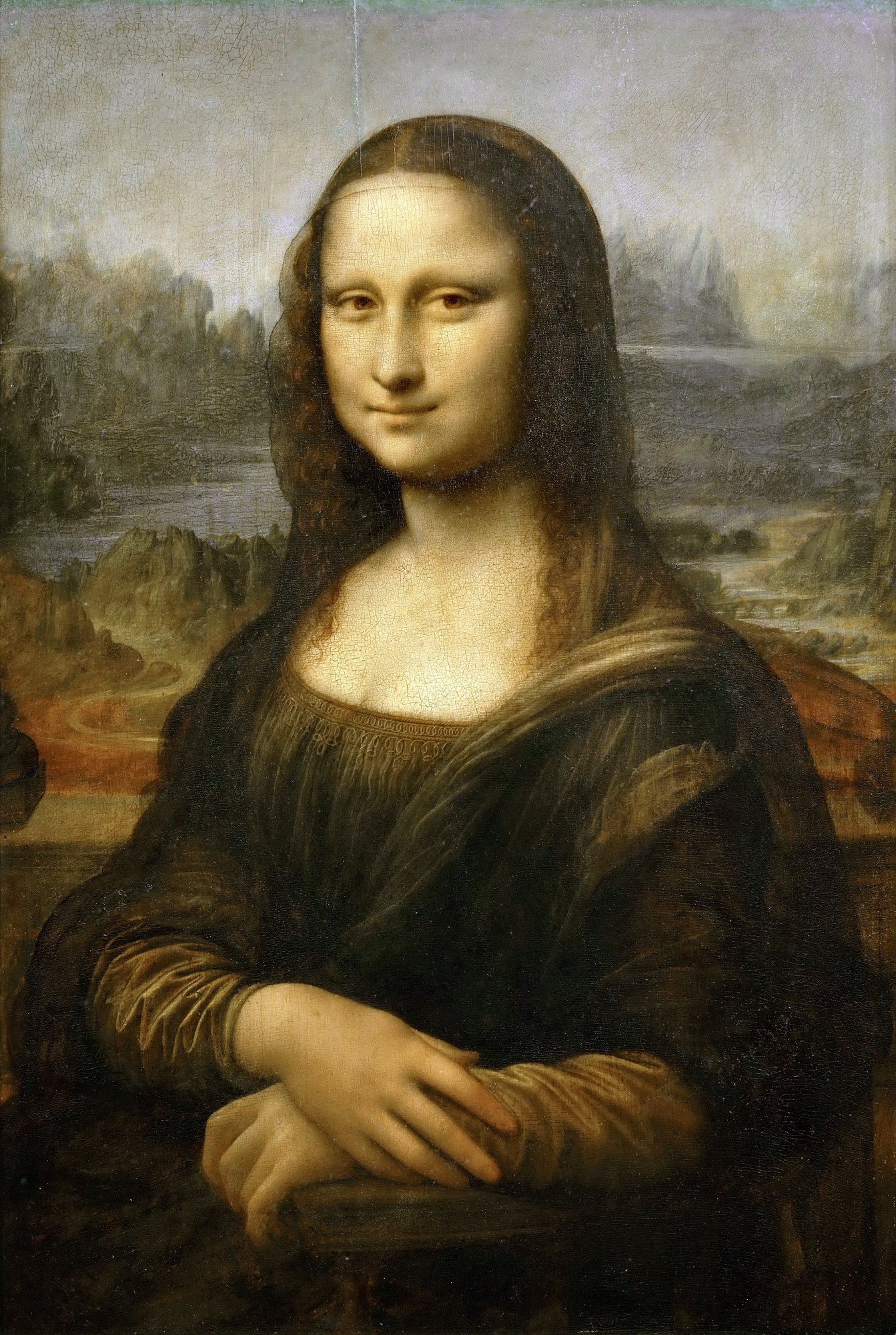
The first thing nobody tells you about the Louvre Museum Mona Lisa room is that you will not be alone with her, ever, at any time the museum is open. There are people in front of her at 9:02 a.m. on a Wednesday in February. There are people in front of her at 5:55 p.m. on a Sunday in August. The line in the Salon Carré does not stop. It flexes and redistributes itself depending on the hour, but it does not stop.
The second thing nobody tells you is that the room she hangs in is one of the most hostile viewing environments in any major museum in Europe. Bulletproof glass. A wooden railing a full two meters from the painting. A phalanx of guards directing traffic like airline gate agents. The crowd pressing forward from both sides. You will get, on average, between sixty and ninety seconds at the front of the line before the social pressure of the people behind you starts to make staying feel rude. Sixty to ninety seconds is not a lot of time to take in the most famous painting in the world. It helps to know what you are looking for before you get there — or to have Chiaro narrating the three things worth seeing while you stare at her, because reading the wall label from fifteen feet back through a forest of phones is not possible.
Where in the Louvre is the Mona Lisa
Here is the simplest answer to the Louvre Museum location question: she lives on the first floor of the Denon wing, in a room called the Salle des États, reached via the Grand Gallery. The Louvre has three main entrances — through the Pyramid, through the Carrousel shopping mall, and through the Porte des Lions — and every one of them funnels you into an underground ticketing area from which you pick one of three wings. To reach the Mona Lisa you want Denon. Follow the signs for Italian painting. You will climb one set of stairs, walk past Canova’s sculpture of Cupid and Psyche, and enter the Grand Gallery, and from there the signs take over entirely. There is no possible route that is not marked. The arrows assume you came for her. Most people did.
The walk to her matters because of what happens along the way. The Grand Gallery is a quarter-mile corridor of Italian masterpieces — Leonardo, Raphael, Titian, Caravaggio. If you walk it without stopping, you will clear it in five minutes and arrive at the Salle des États still fresh. If you actually look at the paintings, the Grand Gallery can eat two hours before you ever reach her. This is the paradox: the walk to the painting is, in some ways, more rewarding than the painting, because on the walk you can actually stand in front of the art.
What the room was designed to do
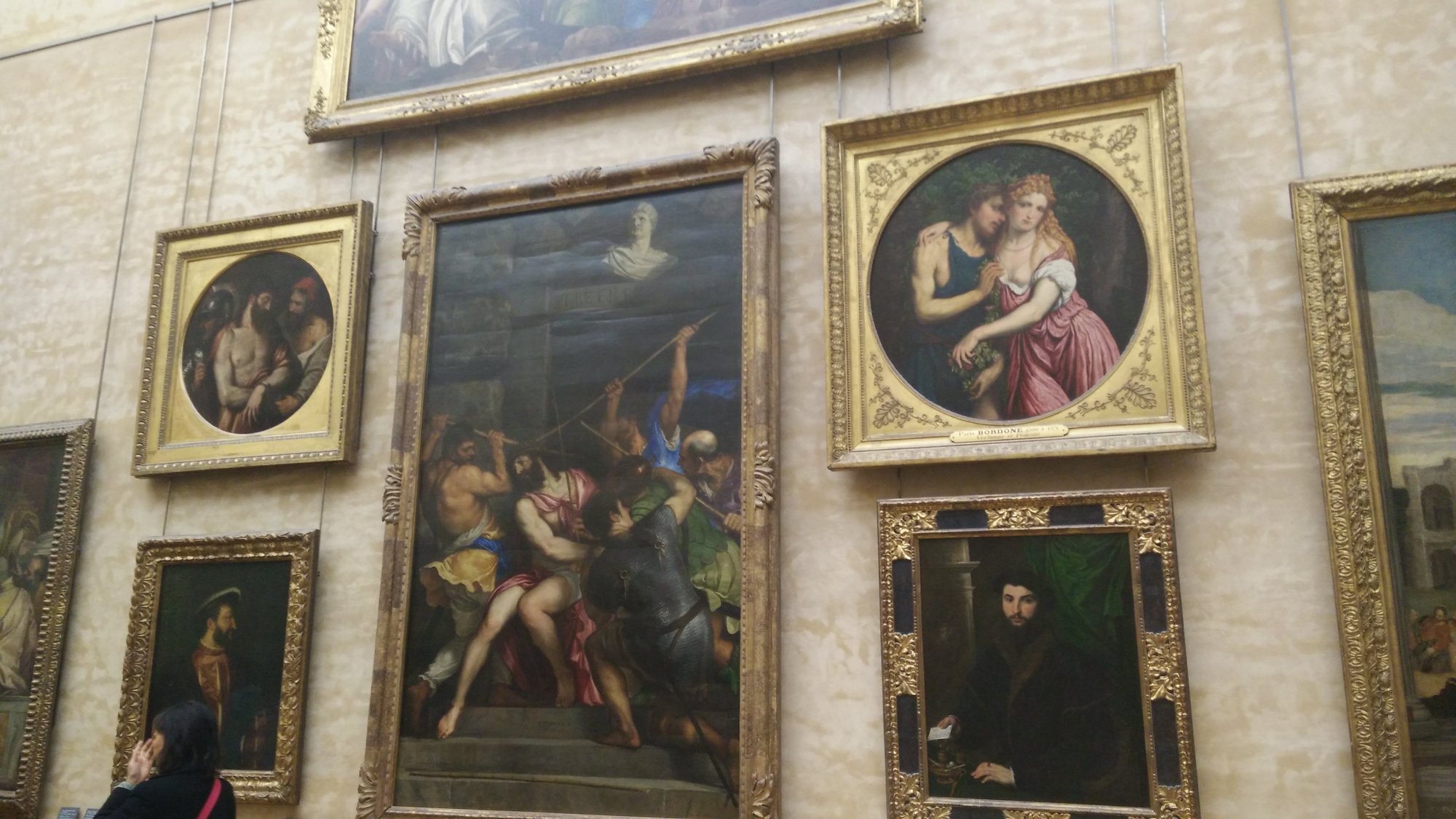
The Salle des États was renovated in 2005 for €4.8 million specifically to manage the crowds coming to see her. Before the renovation, she hung on a pillar in the middle of the room. People circled her. The crowd bottlenecked. It was chaos. The new design moved her to her own wall, pushed back the barrier, installed new glass, and hung Veronese’s Wedding at Cana on the wall directly across from her — the largest painting in the Louvre and, not incidentally, a piece grand enough that people were supposed to look at it while they waited.
It did not work. People in the Salle des États do not look at the Veronese. They look at the Mona Lisa and then they look at each other’s phones, and when the guard waves them forward they turn and walk out without turning their heads. The Wedding at Cana is the best-attended ignored painting in art history. The room was designed to solve a traffic problem and what it revealed instead is that the traffic is what people came for.
Here is a trick: if you want to see the Veronese properly, approach the room from the opposite direction. Walk through the French paintings first, enter the Salle des États from the south end, and you will find yourself standing in front of the Wedding at Cana with your back to the line. Almost nobody does this. You will have one of the grandest canvases in Europe almost to yourself while a couple hundred people jostle behind you to see something smaller.
The ninety seconds at the front of the line
Here is what to do when your turn comes.
Do not start with her eyes. Everyone starts with her eyes. Her eyes are the most photographed feature of any face on earth and they will give you back exactly what you already know. Start with her hands instead. They are folded in her lap, one resting on the other, and they are painted with a stillness that almost nothing in portraiture matches. Leonardo was the first painter to understand that a hand at rest is a portrait too, and these particular hands — calm, ringless, arranged with unselfconscious grace — are where the whole painting’s mood lives.
Then look at the veil. It is so thin that you can see her hairline through it. The light falls on it the way light falls on actual fabric, not the way it falls on painted fabric. This is Leonardo’s signature trick, the sfumato, a Renaissance word for the soft smoky transitions between light and dark that he spent his life refining. In reproductions you cannot see it. In person, in the ninety seconds you have, it is the thing you will remember.
Then go to the landscape. The background behind her makes no geological sense — a winding road, a bridge, a river that runs at two different heights on her left and right. It is a world Leonardo invented. He was not painting a place; he was painting the idea of a place, with the same care he gave the face. Half of the painting’s strangeness comes from the fact that you cannot tell where she is sitting. Somewhere between a balcony and the end of the world.
Only then look at her mouth. You will have about twenty seconds left. The mouth is where the famous ambiguity lives, and it will give you what it gives everyone: a smile, or something smile-adjacent, that changes depending on where you stand. Shift your weight to your left foot and then to your right. The expression moves. This is not a trick of your eyes. Leonardo built it into the paint, using the same technique that blurs the edges of the veil — the corners of her mouth dissolve into shadow, so your peripheral vision, which is how you read expressions, sees a different face than your direct gaze does.
Ninety seconds. That is all you get. Use them.
Before and after: the rest of the Denon wing
You came to the Louvre for her, but you are a twenty-minute walk from most of the museum’s greatest hits, and you will regret skipping them.
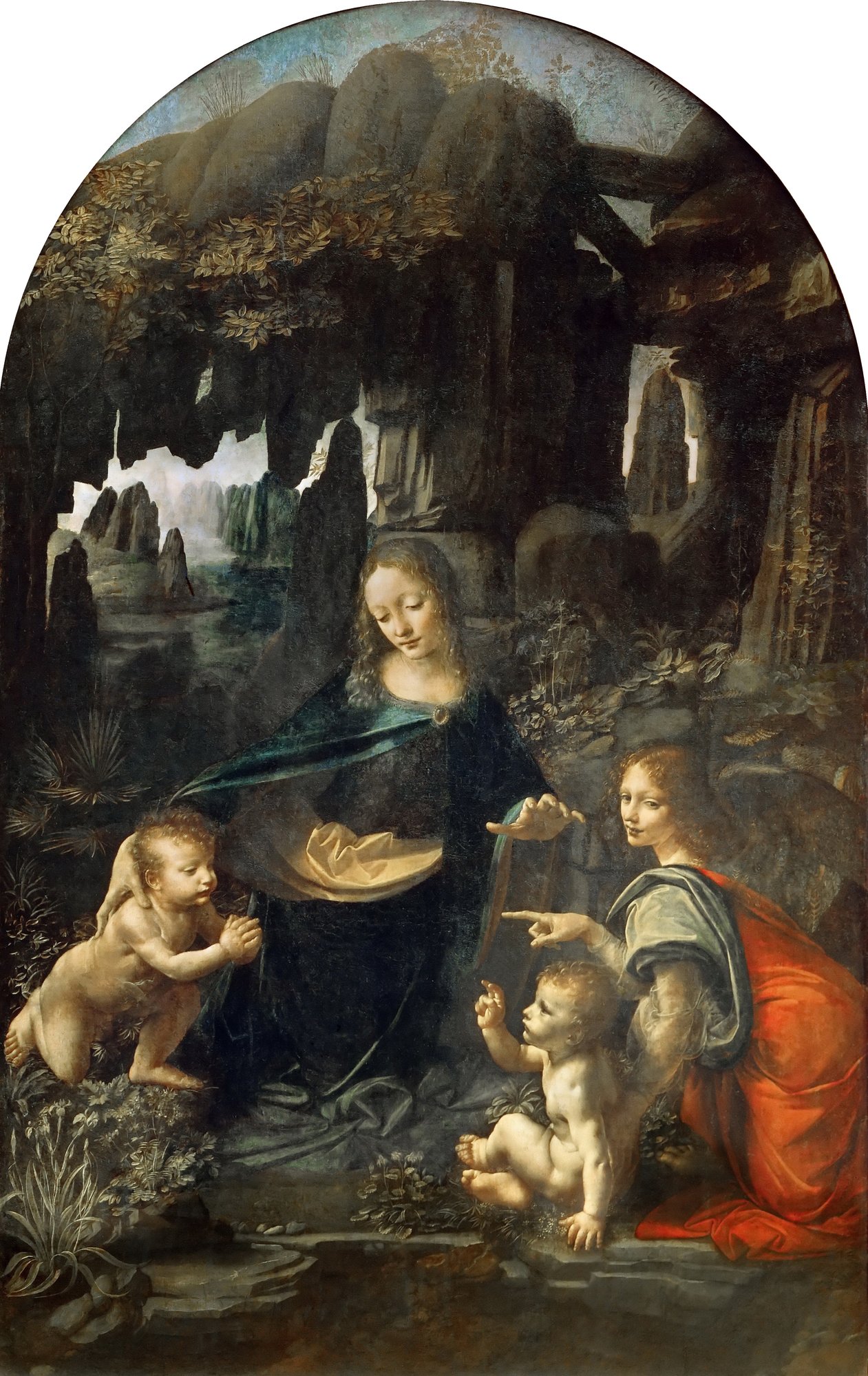
Before her, in the Grand Gallery, you passed four other Leonardos: the Virgin of the Rocks, Saint John the Baptist, La Belle Ferronnière, and the Virgin and Child with Saint Anne. All four are hanging in the open, with no bulletproof glass and no line, and any one of them is worth more of your attention than you will be allowed to give the Mona Lisa. The Virgin of the Rocks in particular is one of the strangest pictures Leonardo ever made — a nighttime cave scene with an angel pointing at a baby John the Baptist while Mary holds out her hand like she is about to pick up something fragile.
After her, if you keep walking, you reach the great French history paintings: David’s Coronation of Napoleon, Géricault’s Raft of the Medusa, Delacroix’s Liberty Leading the People. These hang in a room you can cross in thirty seconds and that you should spend at least twenty minutes in. They are the Louvre highlights you did not come for and will leave talking about.
If you have more time, climb down to the Egyptian rooms. The Louvre Museum Egyptian collection is one of the two or three best outside Cairo, assembled by Jean-François Champollion — the man who cracked the hieroglyphs — when he served as the museum’s first Egyptian curator in the 1820s. The seated scribe, with his alabaster eyes still somehow alert after 4,500 years, is on par with anything upstairs.
A history of the Louvre Museum Mona Lisa
The bulletproof glass is there because people have tried to damage her. A Bolivian man threw a rock at her in 1956 and chipped the paint near her elbow. A woman threw a piece of birthday cake at her in 2022, hitting the case and sliding down the glass without touching the painting. In between, smaller incidents, most of which never made the papers. The museum has responded each time by thickening the glass, moving the barrier further back, and adding more guards. This is the part of her story people least like to think about: the most famous painting in the world is, in some ways, now being protected not from thieves but from its own fans.
It was not always like this. The Louvre Museum history of this particular painting is simple until the early twentieth century: before 1911, the Mona Lisa hung on an ordinary wall in the Salon Carré with no case at all. A guard was supposed to be nearby but often was not. The painting was stolen that year by a glazier who had helped install the first protective glass in front of it, and it was gone for two and a half years. When it came back the museum began the slow process of building the fortress she now lives inside. If you read the Louvre Museum official site, the story they tell is a tidy one. The story that is actually written into the architecture of her room is messier.
A field guide to the crowd
The online reviews are not wrong about the Mona Lisa room. It is crowded. It is stressful. It does not feel like a museum; it feels like an airport gate. The nearby attractions — the Tuileries gardens just outside, the Place du Carrousel, the Seine — offer more quiet and sometimes more beauty. News coverage of the Louvre today is almost always some variant of “record visitors, crowd issues at Mona Lisa, museum studying new solutions,” and there is always a new solution being studied.
Here is what you actually do. You go. You stand in line. You take your ninety seconds and you use them well. You walk out and you spend the rest of your visit on the paintings you did not come for, and when you leave you will find that the memory you keep is not the bulletproof box — it is the small quiet Vermeer you found upstairs, or the Veronese you discovered by turning around, or the Géricault detail that ambushed you when you were tired.
What the Salle des États used to look like, what was in the Napoleon apartments next door, how she ended up in France in the first place — all of it is upstream of the ninety seconds. The ninety seconds are the part only you can do.
Image credits
- Italian paintings in the Louvre, room 711 (15575277199).jpg — Nathanael Burton. Source, CC BY-SA.
.jpg)