The old audio guide was a numbered box on a lanyard. You stood in front of a painting, found the little placard with the number, punched it into the keypad, and listened to the same ninety seconds of narration that every other person holding the same box was hearing that day. The guide did not know who you were. It did not know you had spent the last hour in the Renaissance rooms, or that you had asked about Caravaggio twice already, or that you read Italian, or that you were tired and wanted the short version. It said the same thing to everyone, in the order the museum decided, and when it finished, it stopped.
Chiaro 2.0 is built on the opposite idea. You point your camera at the thing in front of you, and in a few seconds you are listening to a guide built for that object, in your language, picking up from everything you have already seen. When it finishes, it keeps going if you want it to. This is the version of Chiaro we have been trying to build since the beginning, and it is live now.
Point at anything and listen
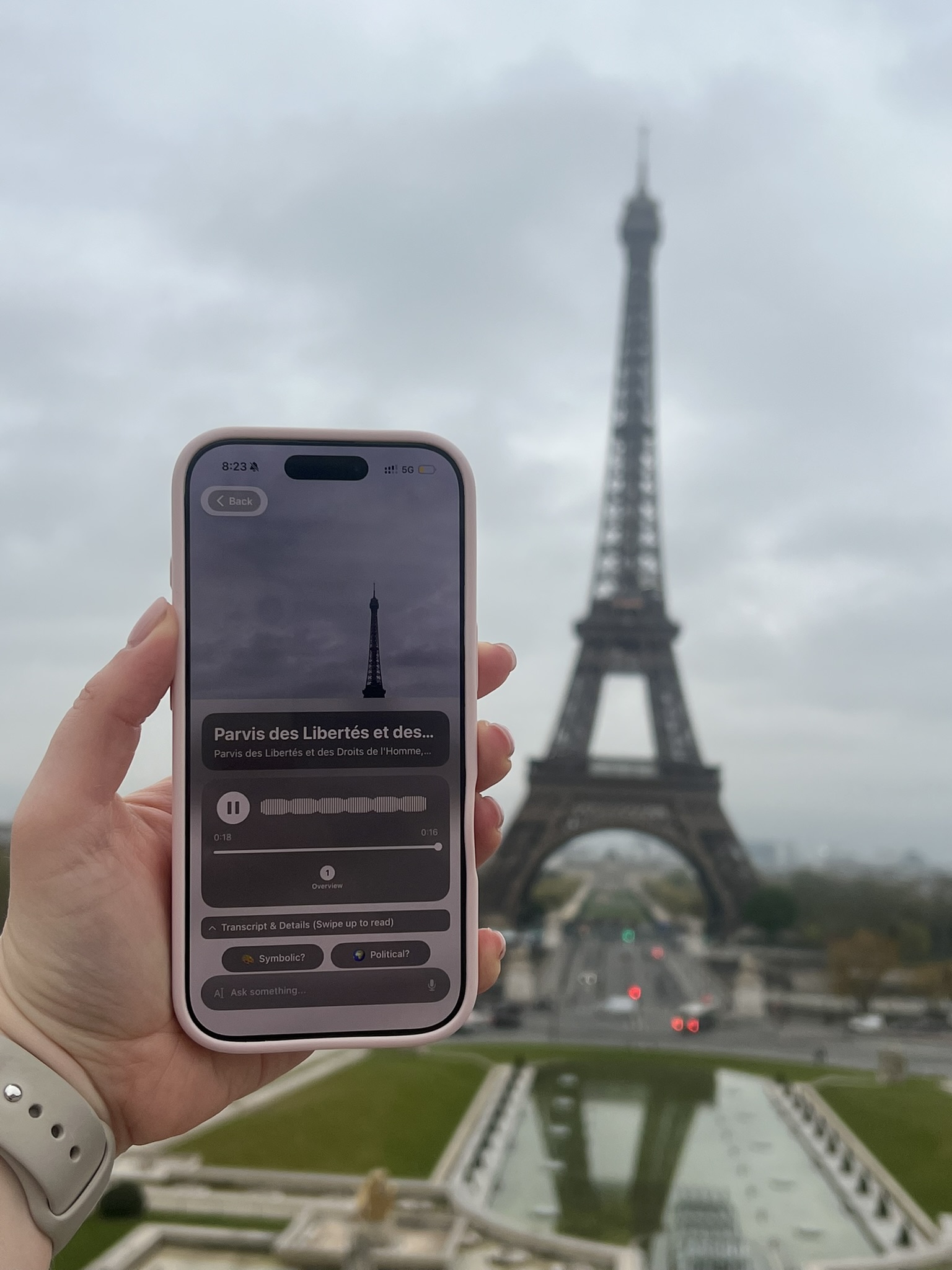
The center of Chiaro 2.0 is a new recognition flow, and it is the fastest and most accurate one we have ever shipped. It is the best on the market right now, and we have tested it against the alternatives to be sure of that.
You point your camera at a building, a statue, a painting, a street. Chiaro recognizes it and tells you what it is, why it matters, and what makes it worth looking at twice. The whole thing is built to be used while you are still looking at the object, not after. No typing. No prompting. You snap, and you listen.
It works on nearly anything you can point a camera at. It is at its best where you would most want a guide standing beside you: museums, historical city centers, famous landmarks, sculpture. Recognizing art is the hardest version of this problem, harder than recognizing a famous building or a street sign, and it is the version Chiaro was built around first. That is why it holds up everywhere else.
The guide that keeps going
The old audio guide ended when the recording ran out. Chiaro does not.
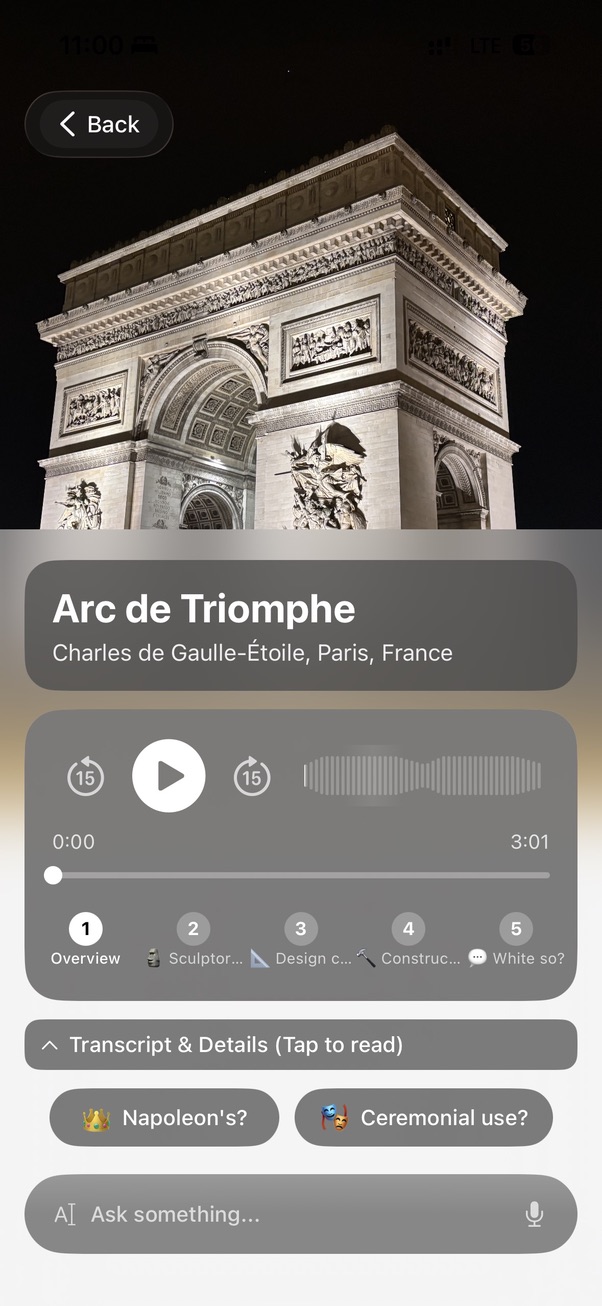
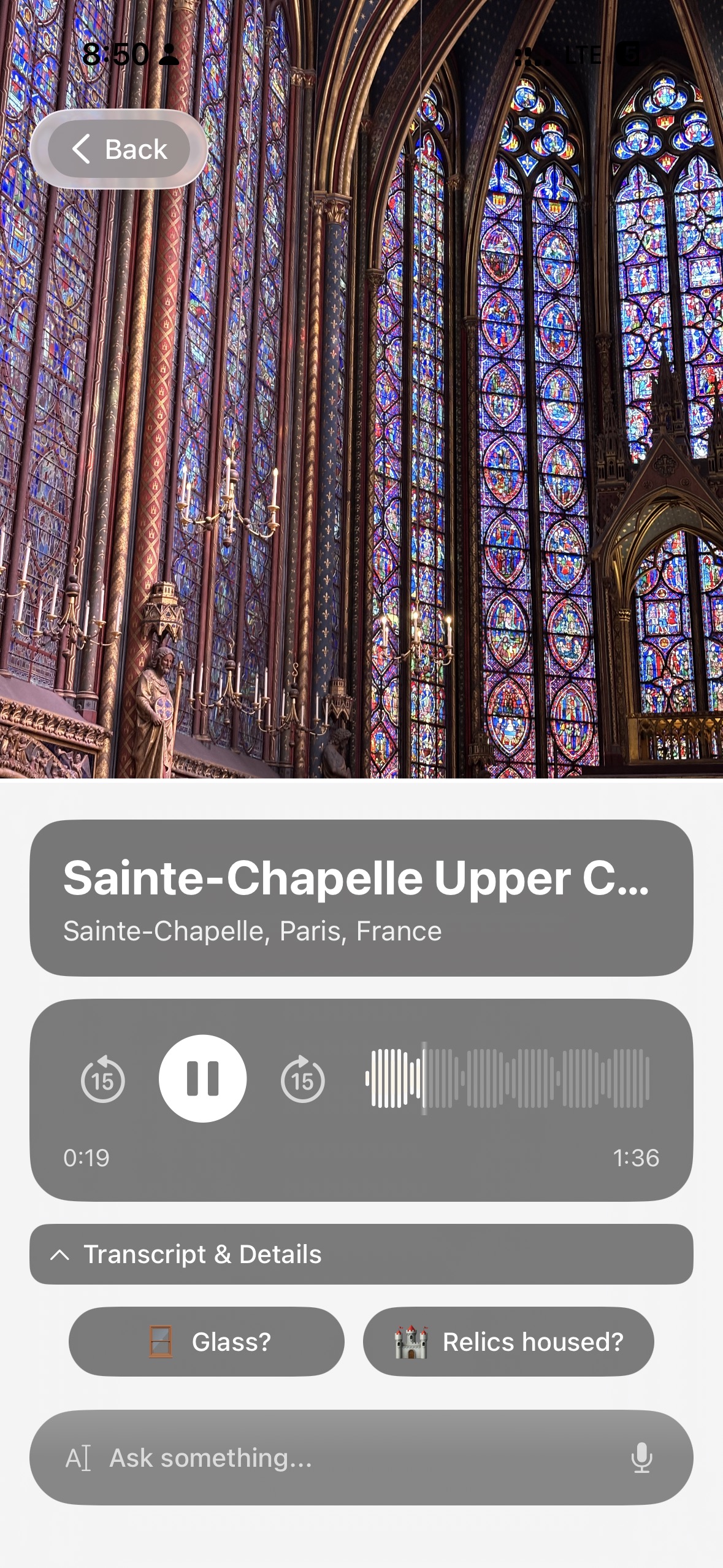
After the first guide plays, follow-up buttons offer the next thread: why it was built here, what was happening in the city the year it was made, who paid for it. Tap one and the story continues. Or ask out loud, in your own words, with voice input, so you never have to stop and type. The guide is a conversation that stays open as long as you are curious, and closes the moment you walk away.
The guide that knows your context
This is the part that makes a Chiaro guide yours and not a script read to everyone in the room.
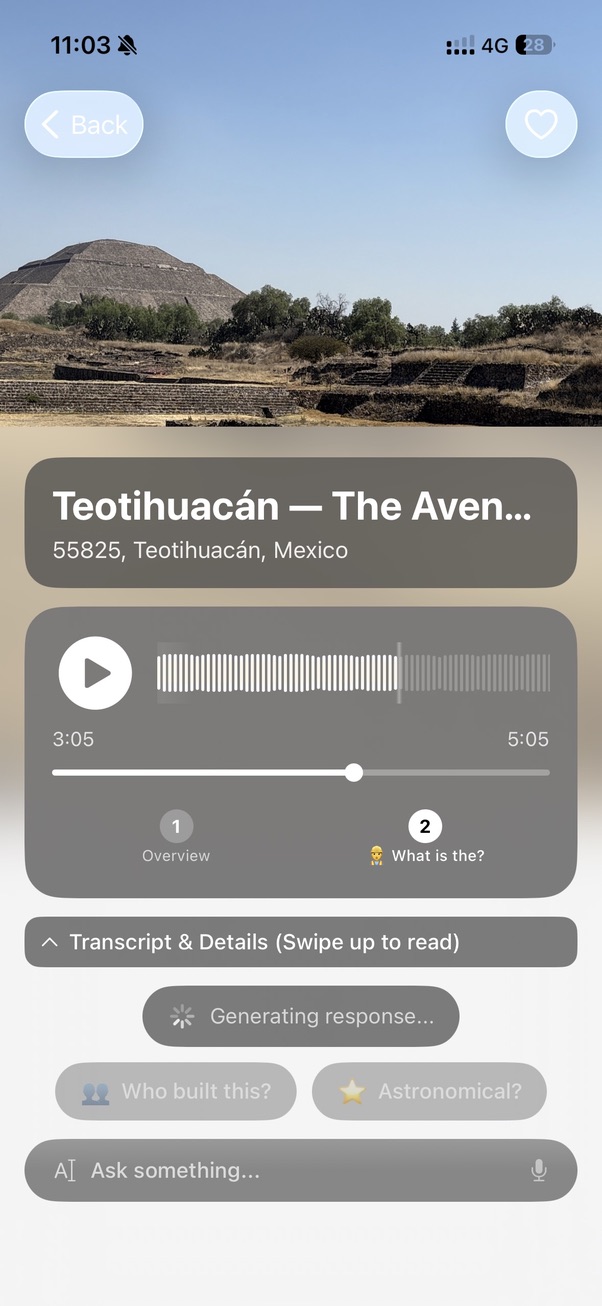
Chiaro remembers what you have been doing. If you keep digging into the history of what you are seeing, it gives you more history. If a place connects to the history of your own country, it tells you about that connection. And if you do not want the deep version, if you just want a clear and simple explanation of what you are looking at, you say so, and every guide after that is shaped to fit.
Come back to something you have already seen, snap it again, and Chiaro does not repeat itself. It picks up where it left off and goes deeper. The second visit is a different guide than the first, because you are a different visitor than you were.
Context is the whole thing. The same statue should not sound the same to a first-time tourist and to someone on their third trip to the city who has been reading about the sculptor all week. Chiaro is built to tell the difference.
Now in ten languages
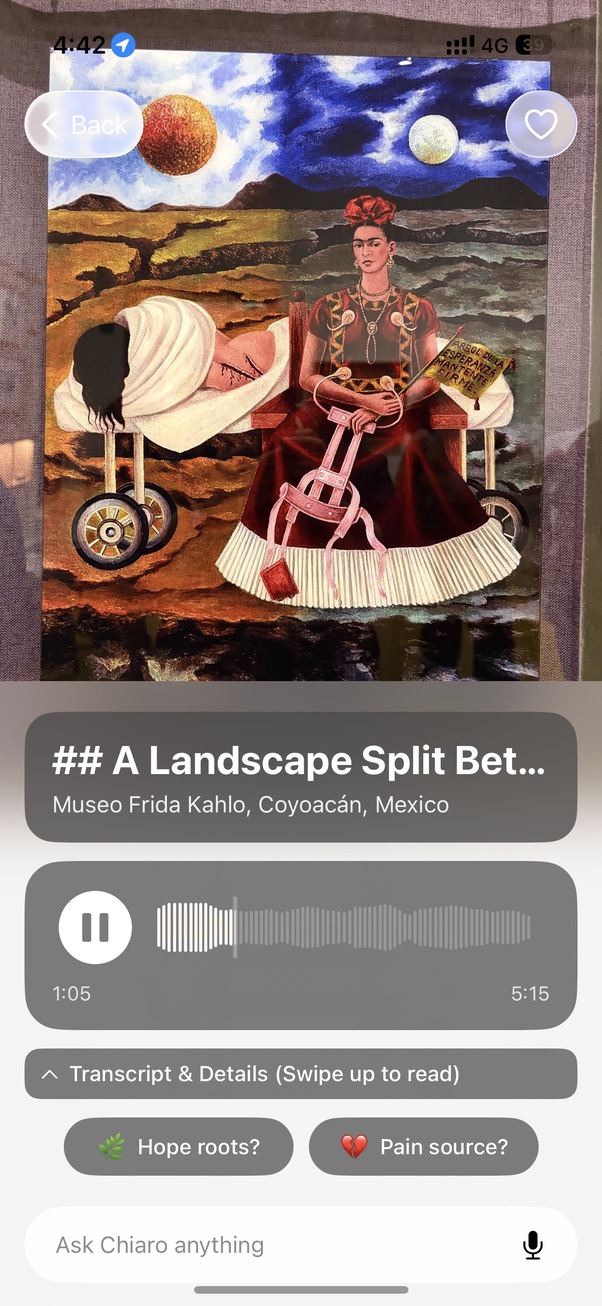
Chiaro 2.0 speaks English, Spanish, French, German, Italian, Portuguese, Russian, Simplified Chinese, Japanese, and Korean, with a native voice in each. Not subtitles, not a translation read awkwardly over the original, but a guide that speaks the language you think in.
What a guide is for
The numbered box on the lanyard had one job: to deliver a fact while you stood still. Chiaro has a different job. It is built to be used while you are moving, looking up, walking through a place, and to send your attention back out into the room rather than down into a screen. Chiaro means “clear” in Italian, and the whole point has always been to add clarity to the place you are standing in.
Chiaro 2.0 is live now. Open it on something near you, a building you pass every day, a church you have never stepped inside, a painting you cannot quite place, and listen.
Snap. Listen. Explore.