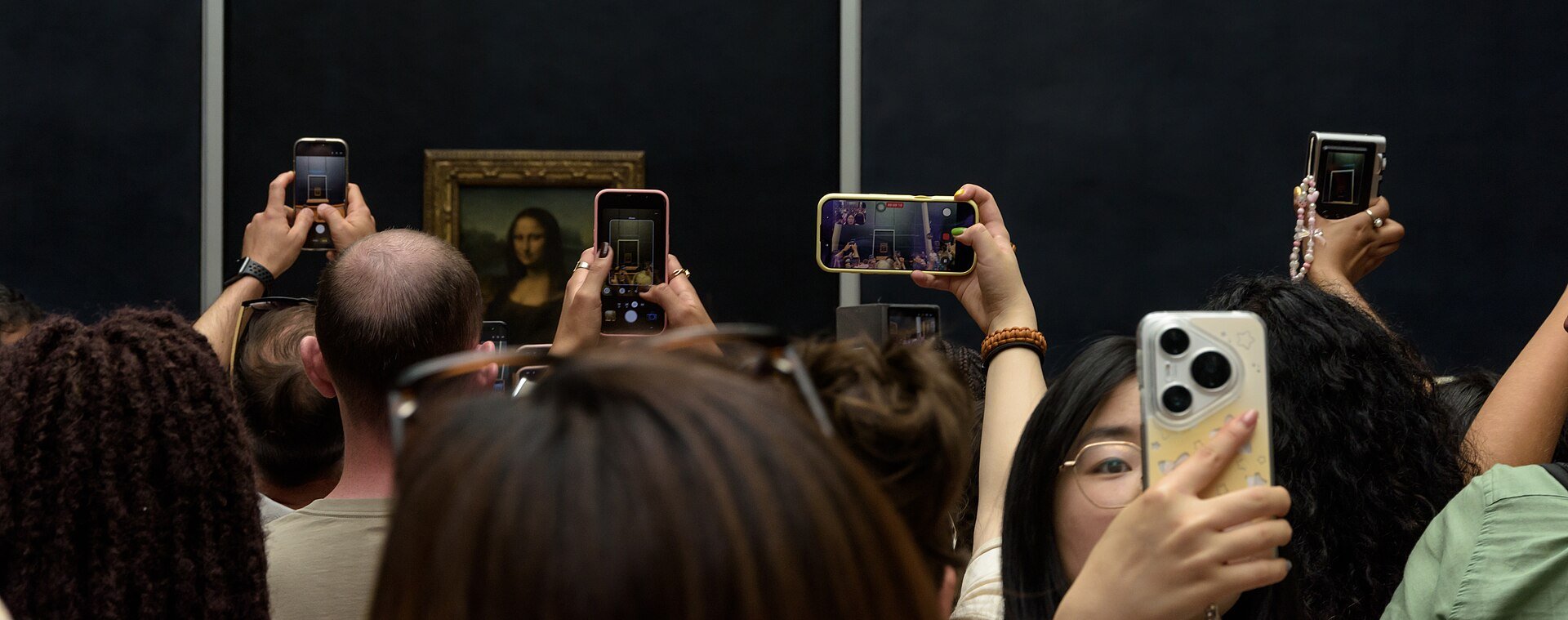
If you’ve ever walked out of a big art museum tired, a bit bored and slightly guilty about it, the problem probably wasn’t you. It was the plan. Most people visit a museum the way they’d visit a supermarket: walk every aisle, look at everything for three seconds, and leave with sore feet and nothing they remember.
You don’t need to know anything about art to have a great museum visit. You need a better plan. Here’s one, in plain terms, from people who spend a lot of time in museums.
If you want help with the looking itself, what to do once you’re standing in front of one painting, we covered that in how to understand art when you know nothing about it. This post is about everything around that: how to plan the visit, where to go once you’re inside, and when to leave.
1. Pick five works, not fifty

Photo by Nuno Antunes on Unsplash
The Louvre has around 35,000 works on display. Nobody sees them all, and trying to is the fastest way to see none of them properly.
Before you go, pick three to five things you actually want to see. Use the museum’s website, a “highlights” list, or one of our guides, like what to see at the Louvre or the Prado visiting guide. Go to those first, spend real time with each, and treat everything else as a bonus. You’ll leave remembering five paintings instead of forgetting five hundred.
2. Go early, or go late
Crowds change everything. The same painting feels completely different with two people in front of it instead of two hundred. Most big museums are calmest right at opening and in the last couple of hours before closing, and many have one or two late-opening evenings a week. Check the museum’s own website for the current hours before you go. They change, and so do closing days. The Louvre, for example, is closed on Tuesdays.
3. Start with the room you like, not the famous one
You don’t have to start with the masterpiece. If you like landscapes, go to the landscapes. If you like portraits of people who look like they’d be fun at dinner, go there. Liking something is a perfectly good reason to look at it, and once you’re warmed up, the famous rooms make more sense.
4. At the famous painting, turn around
Every museum has its one painting with the crowd. Go and see it, take your photo, and then turn around.
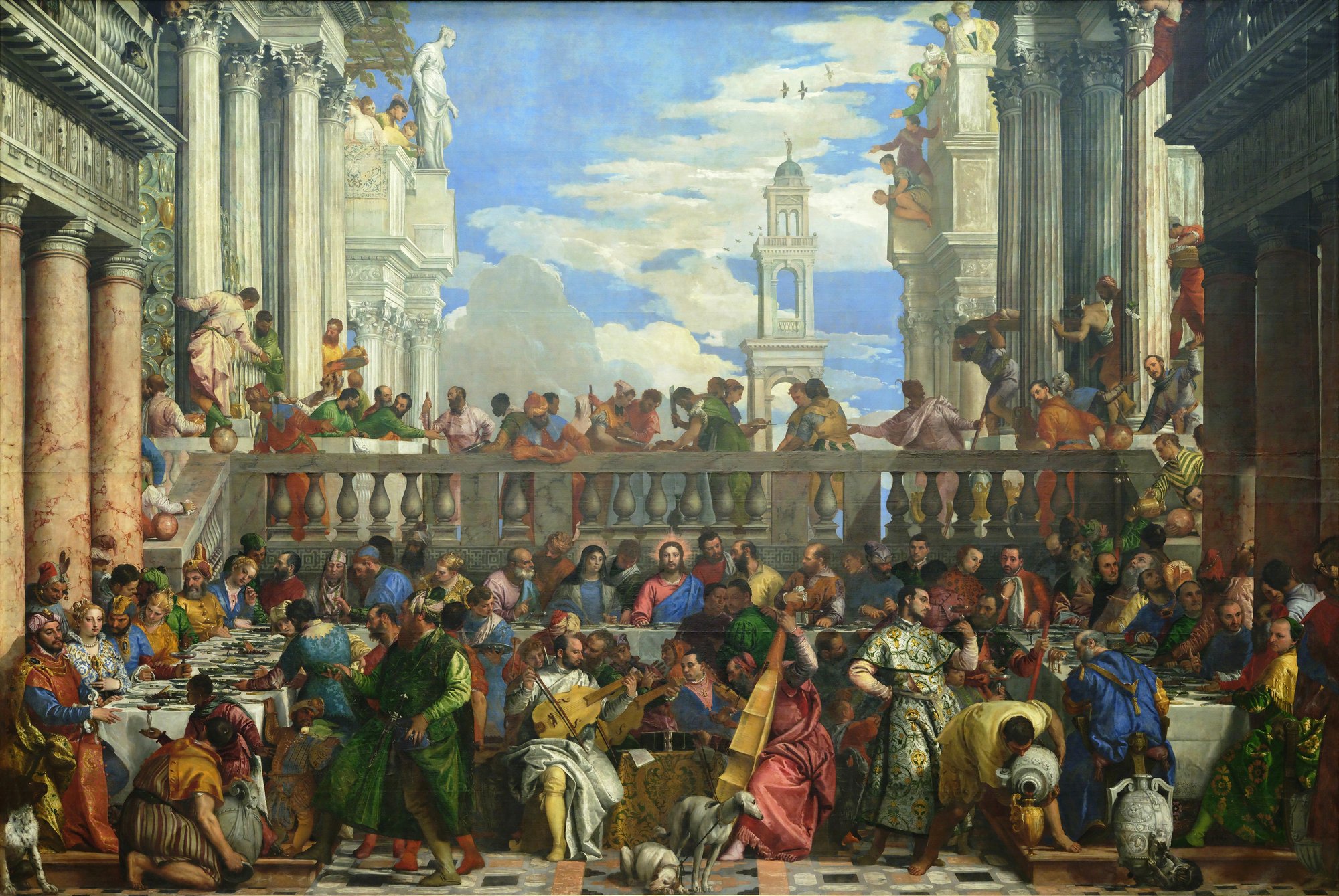
In the Louvre’s Salle des États, the room with the Mona Lisa, the wall behind the crowd holds Paolo Veronese’s Wedding at Cana: the largest painting in the museum, about ten metres wide, packed with around 130 figures, and almost nobody is looking at it. You can stand right in front of it while the crowd faces the other way. We told its story, including how Napoleon’s soldiers cut it up to carry it from Venice, in our Wedding at Cana post.
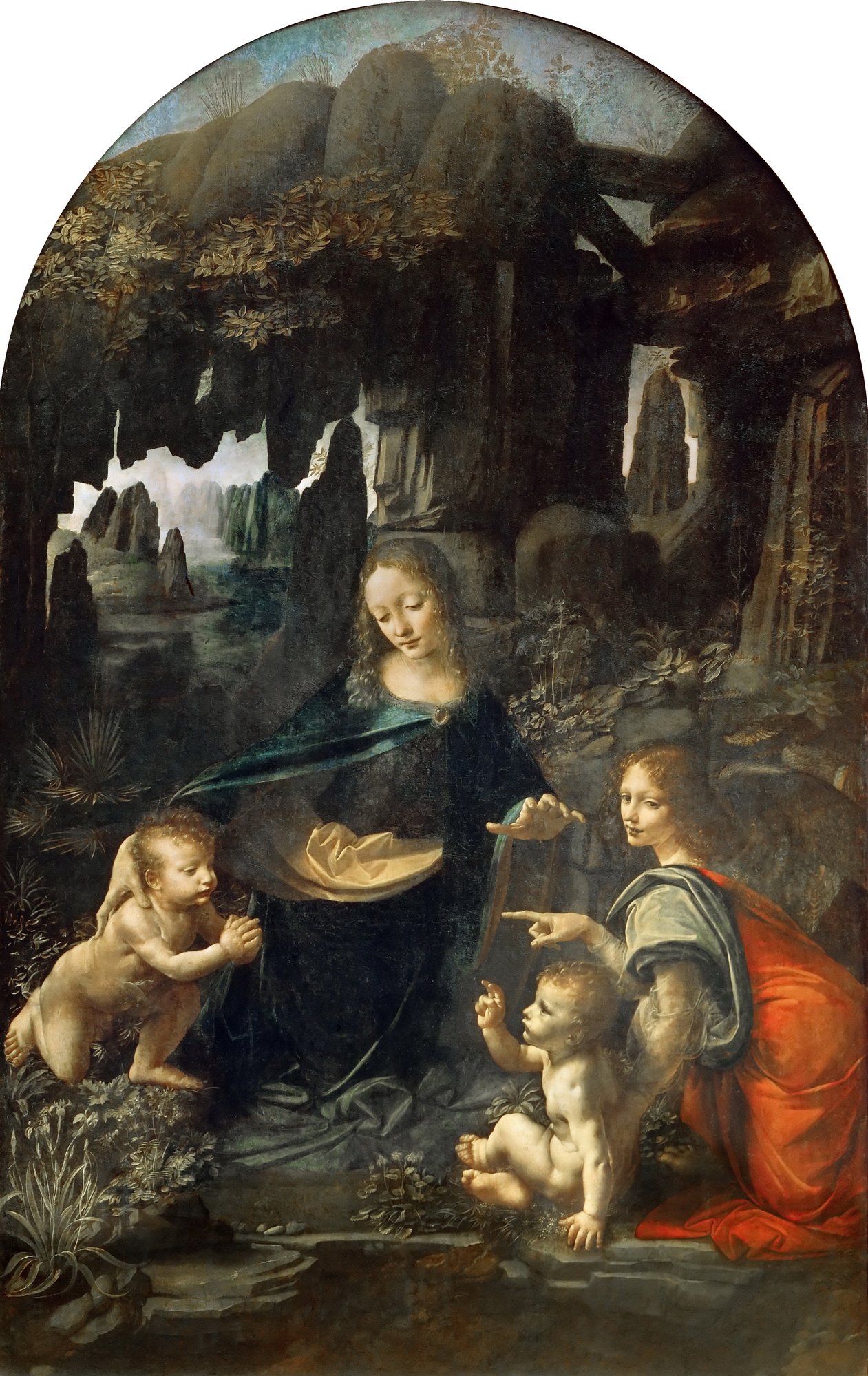
The same goes for the rest of the building. The Mona Lisa line is long; Leonardo’s Virgin of the Rocks, out in the Grande Galerie nearby, usually has no line at all. The Mona Lisa post has more on how to handle that room.
5. Sit down
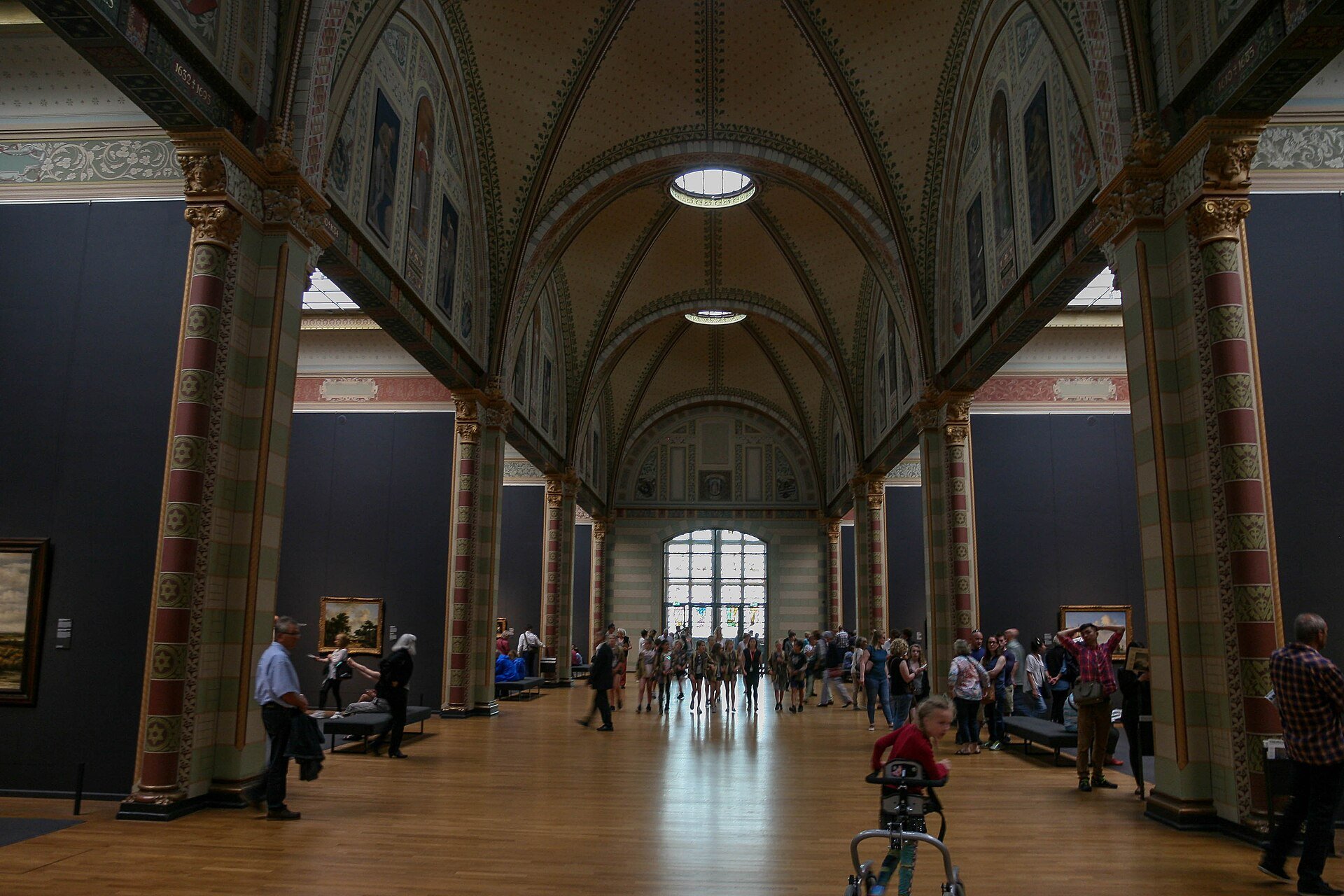
Museums put benches in front of the paintings they think are worth your time. Use them. Sitting for five minutes in front of one painting will teach you more than walking past forty. Your eye starts to wander around the canvas on its own, and you notice things: a face in the background, a dog under the table, a signature in a corner.
6. Leave before you’re tired
There’s a name for that heavy-legged, glazed-eye feeling: “museum fatigue”. Researchers have been writing about it for more than a century. After an hour or two, attention drops off a cliff, and everything starts to look the same.
So plan for it. Two hours is plenty for most people. Take a coffee break in the middle, and eat properly before you go in. If you’re still enjoying yourself, great, stay. But leaving while you still like it is how you end up wanting to come back.
7. Use the gift shop as a test
Here’s a trick that works surprisingly well. On your way out, go to the postcard rack and pick the one card you’d actually buy. That’s the work that stuck with you. Buy it, and next time you’re at a museum, look for more by the same artist. That’s how a taste starts: not from a textbook, but from one postcard on the fridge.
8. Check for free or cheaper hours
Many museums have free entry for some visitors, free evenings, or cheaper tickets at certain times. Under-18s often get in free at the big European museums. The rules vary a lot and change often, so check the museum’s own website for the current rules before you plan around them.
9. Bring a guide that explains things
The wall label has about forty words, and it has to serve everyone from a schoolchild to a professor. What most people actually want is someone standing next to them saying “look at this bit, here’s why it matters”. That’s what an audio guide is for.
How Chiaro helps in a museum
Chiaro is an audio guide that starts with a photo. It’s built for exactly the visit described above: a few works, seen properly, with your eyes on the painting rather than on your phone.
One photo in, a story out. Point your camera at a painting, a sculpture or a fresco. Chiaro recognizes it and tells you what it is, who made it and why it matters, out loud. Audio starts in seconds, so you keep looking at the work, not the screen.
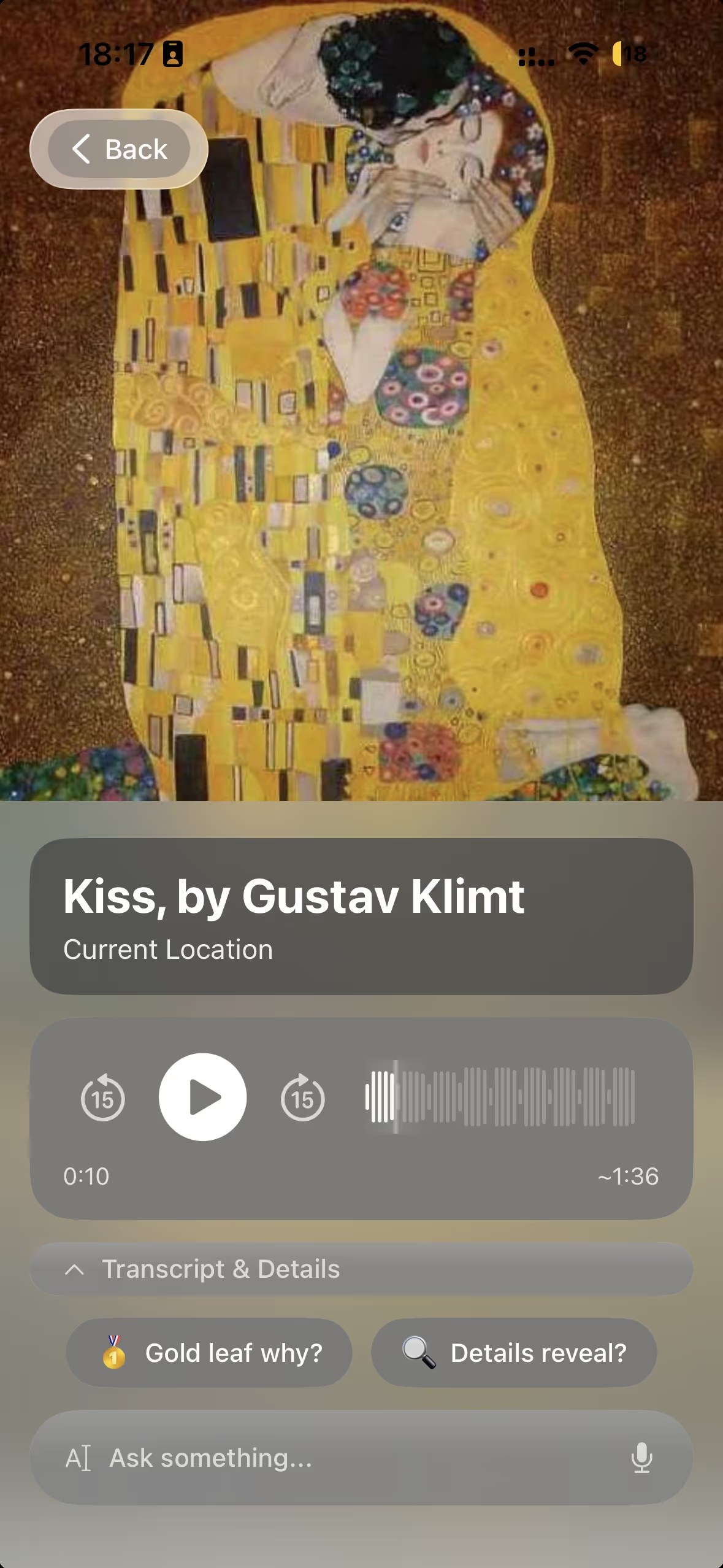
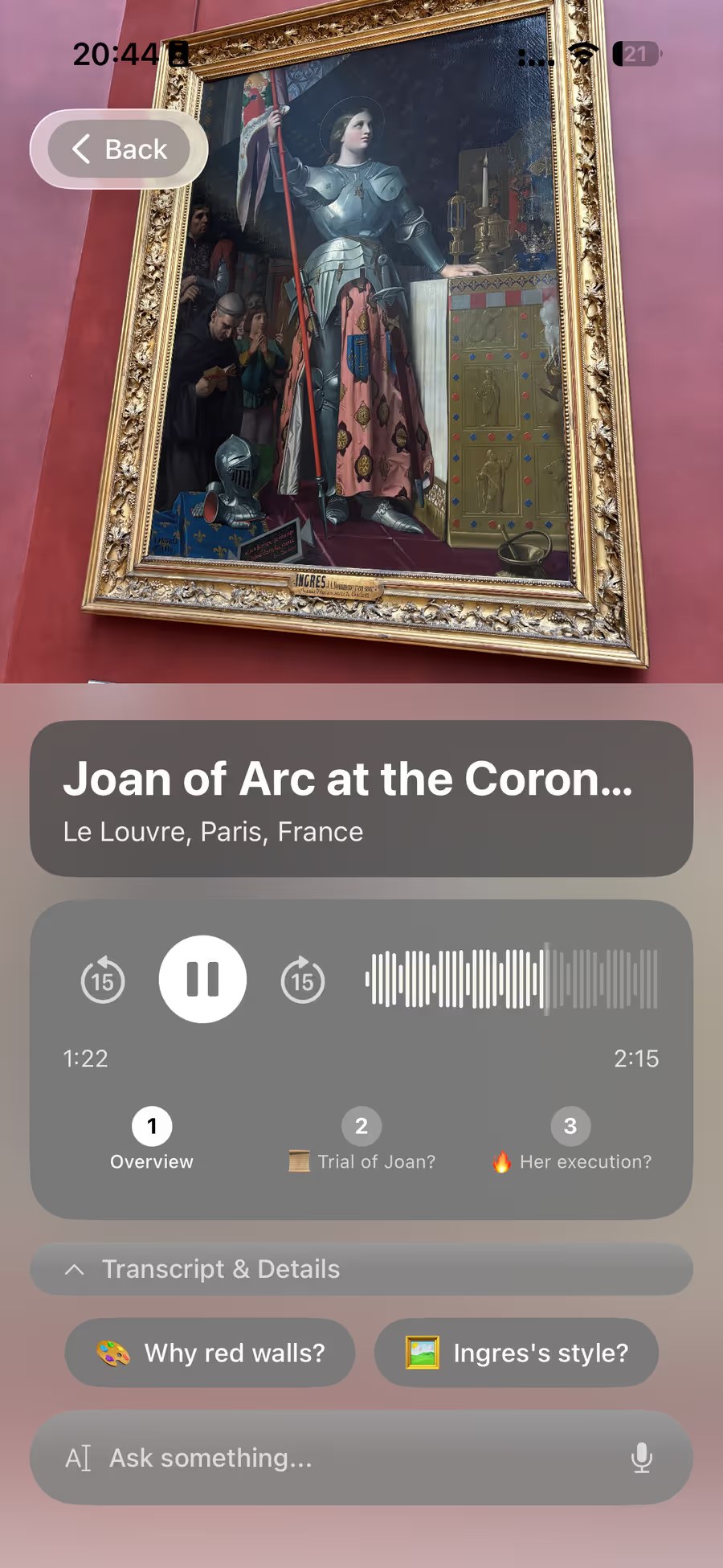
A private art historian in your pocket. In a museum, Chiaro goes deeper: composition, symbols, the story behind the work. It’s the “look at this bit” that the label leaves out.
Curious? Just ask. Type or say any question, including “why is this famous?” or “what am I supposed to be looking at?”, and Chiaro answers out loud. Follow-up buttons suggest the next thread if you can’t think of one. When the answer depends on today, like whether a painting is on loan or a room is closed, it checks the web.
In your language. Chiaro speaks 18 languages, in a woman’s or a man’s voice, with a choice of accent for English, Spanish and Portuguese.
It remembers your day. Every evening Chiaro turns what you saw into a short story, a Filo, that connects the dots between the works you saw. Tap Go deeper on any thread. Pin anything you want to find again, and plan tomorrow in one tap, with opening hours, the weather and a backup plan for rain.
See how recognition works
The museum pages on the Chiaro website are a demo of what the app does: five stops in each museum, the kind of guide Chiaro builds when you point it at a work, playing in your browser with no account. They also make a decent starting shortlist for tip number one. Try the Louvre, the Musée d’Orsay, the Prado, the Rijksmuseum, the National Gallery in London, the Belvedere in Vienna, home of The Kiss, or the Metropolitan Museum of Art in New York. In the gallery itself, the app works on any work you stop at, not only the five.
FAQ
How long should I spend in an art museum?
For most people, about two hours, with a break in the middle. After that, attention drops sharply. It’s better to leave wanting more than to drag yourself through the last hour.
How many paintings should I try to see?
Three to five that you really look at, plus whatever catches your eye along the way. Seeing a few works properly beats walking past hundreds.
What should I do if I don’t like the famous paintings?
Nothing. You don’t have to like them. Go and find the room you do like, and spend your time there.
Is an audio guide worth it?
If you don’t know much about art, it’s the single biggest upgrade to a museum visit. A good guide tells you what to look at and why, so you’re not left guessing in front of the label. Chiaro does this from a photo of any work, in 18 languages.
Enjoy it
A museum isn’t an exam, and nobody’s checking whether you saw the right things. Pick a few works, look at them properly, sit down when you’re tired, and leave when you’ve had enough. Do that a few times and one day you’ll notice you’ve started to get it.
Chiaro means “clear” in Italian. Get it on the App Store, point it at the next painting you don’t get, and listen.
Snap. Listen. Explore.