Most people who say they “don’t get art” are standing in front of a painting, feeling that there is a right answer, and assuming everyone else in the room knows it. They don’t. The person next to you reading the wall label is reading the wall label because they don’t know either.
You don’t need an art history degree to understand a painting. You need a way of looking, a few questions to ask, and, ideally, someone to tell you the one fact that makes the whole picture click. This post gives you the first two. The third is what Chiaro is for.
Start by slowing down

Photo by Pauline Loroy on Unsplash
The single most useful thing you can do costs nothing: stand there longer. Studies of museum visitors keep finding the same thing. People spend well under half a minute in front of a typical artwork, and a fair share of that is spent reading the label. You can’t understand something you looked at for less time than it takes to read a text message.
So pick one painting, not twenty, and give it two full minutes before you read anything. It will feel long. That’s the point. Your eye will start to move around the picture on its own, and you’ll notice things you walked past the first time.
Five questions that work on any painting
You don’t need a theory. You need questions. These five work on a Renaissance altarpiece, an Impressionist landscape and a modern abstract canvas alike.
1. What do I see? Describe it as if to a friend on the phone. People, objects, a place, a time of day. Skip meaning for now. Just inventory.
2. Where does my eye go first, and why? Painters steer you. The brightest spot, the sharpest edge, the figure everyone else is looking at. Once you notice where you were sent, you start to see how the picture is built.
3. What’s strange? Every great painting has something odd in it: a figure looking straight out at you, a shadow going the wrong way, a detail that doesn’t belong. The strange thing is almost always the door into the meaning.
4. When and for whom was it made? A painting was a job. Someone paid for it, and they wanted something: a saint for an altar, a portrait to send to a future bride, a scandal to get noticed at an exhibition. Knowing who the client was explains a surprising amount.
5. What do I feel, and how did the painter make me feel it? You’re allowed to dislike it. Just ask what made you feel that way. Colour, scale, the expression on a face. That’s the craft.
Three paintings, worked through
Here is what the five questions do in practice.
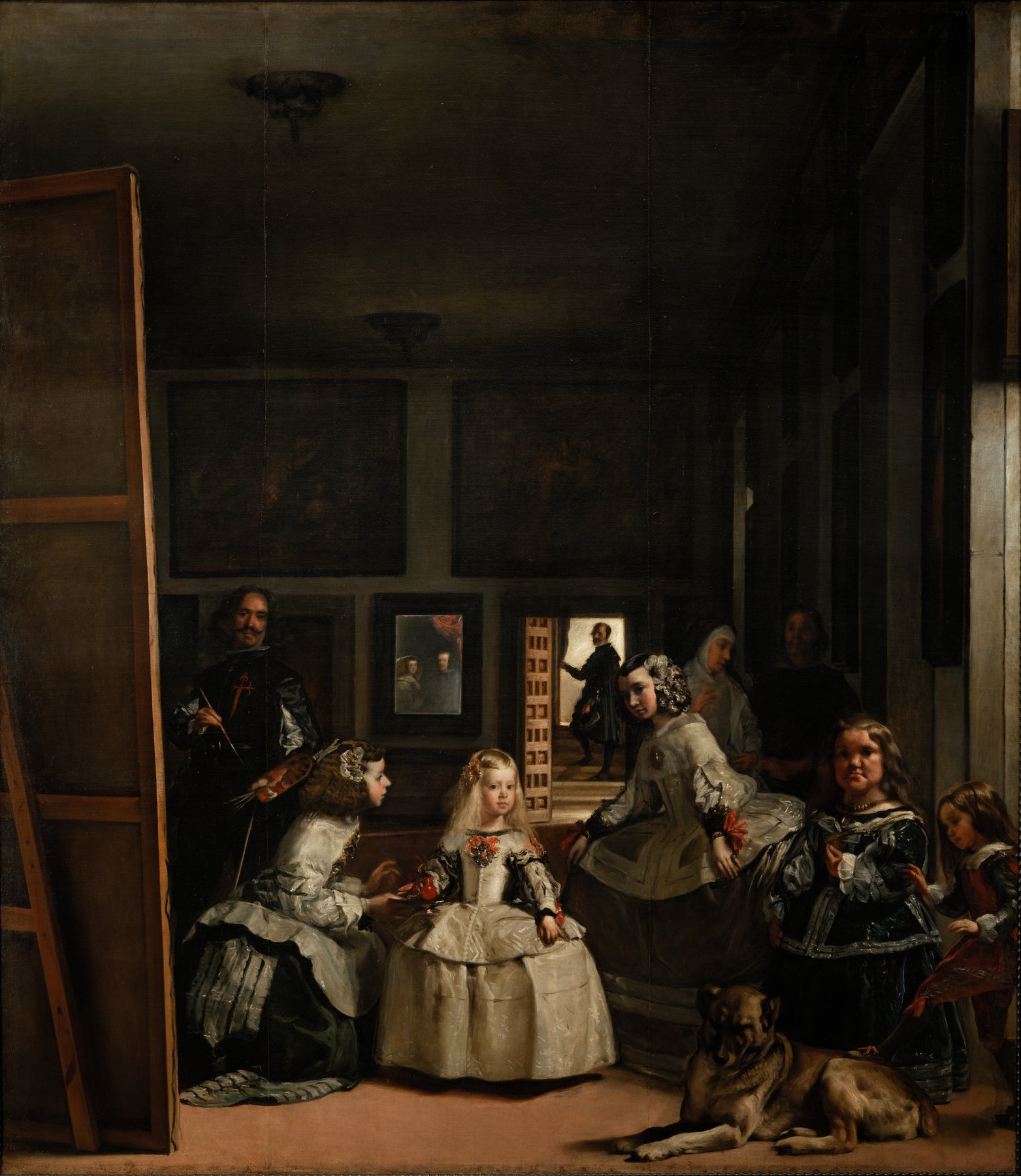
Las Meninas, Velázquez (1656)
What’s strange? The painter is in the picture, standing at a huge canvas, looking straight at you. So is a little princess and her ladies-in-waiting. And in a mirror on the back wall, small and blurry, are two more people: the king and queen of Spain.
That mirror is the door. If the king and queen are reflected there, they must be standing where you are standing. Velázquez has put you in the place of the royal couple, and the whole room is looking at you. Once you see that, you can’t stop seeing it. We went through every figure in our Las Meninas post, and you can see it at the Prado.
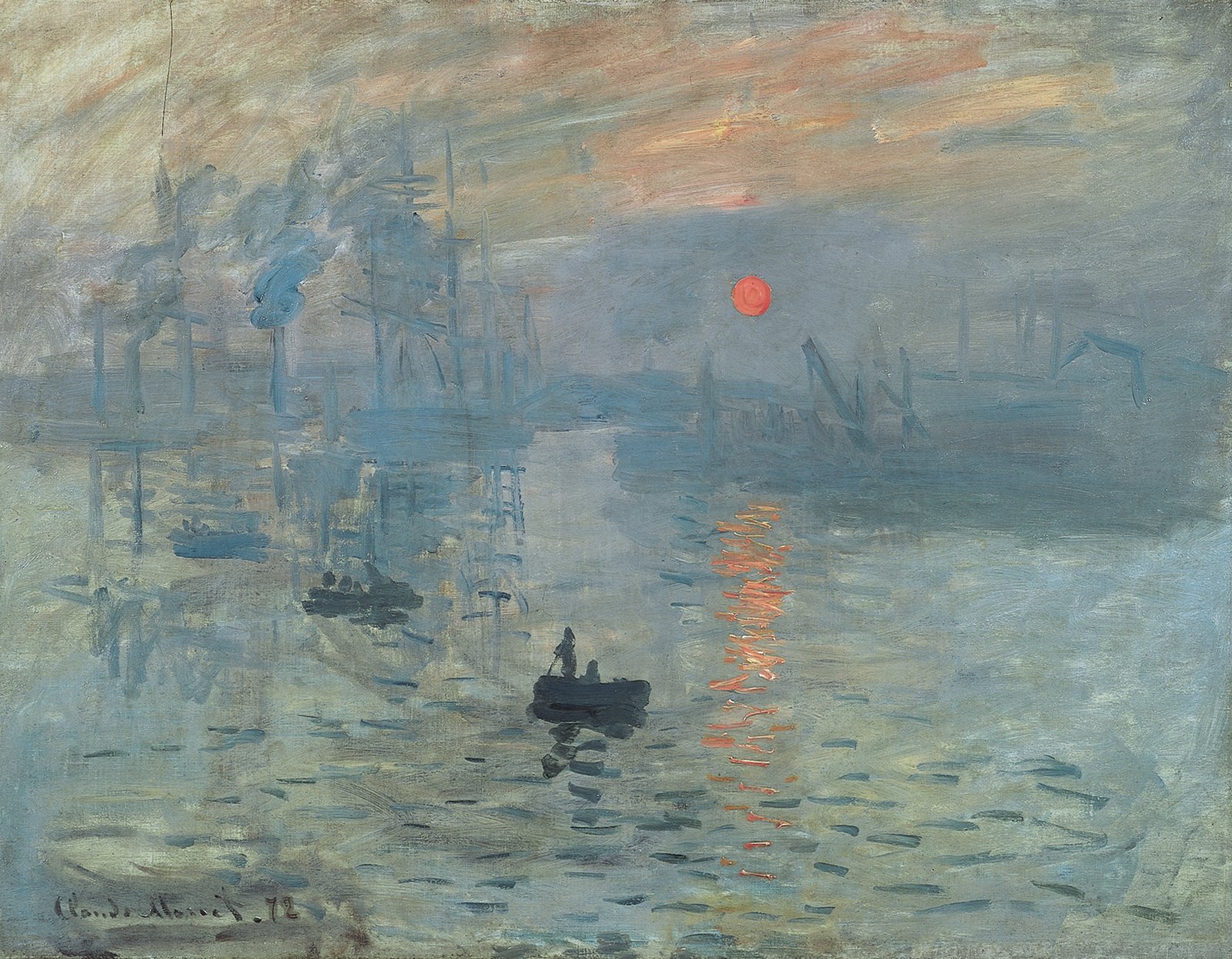
Impression, Sunrise, Monet (1872)
What do I see? A harbour in fog, a few dark boats, an orange sun and its reflection. What’s strange? It looks unfinished. The brushstrokes are visible and loose, the boats are a few smudges.
When and for whom? That unfinished look was the point, and in 1874 a critic mocked it by borrowing the title: these painters were mere “Impressionists”. The insult stuck and became the name of the movement. The painting that looks like a sketch is the reason the word exists. The full story is in our Impression, Sunrise post.
The Third of May 1808, Goya (1814)
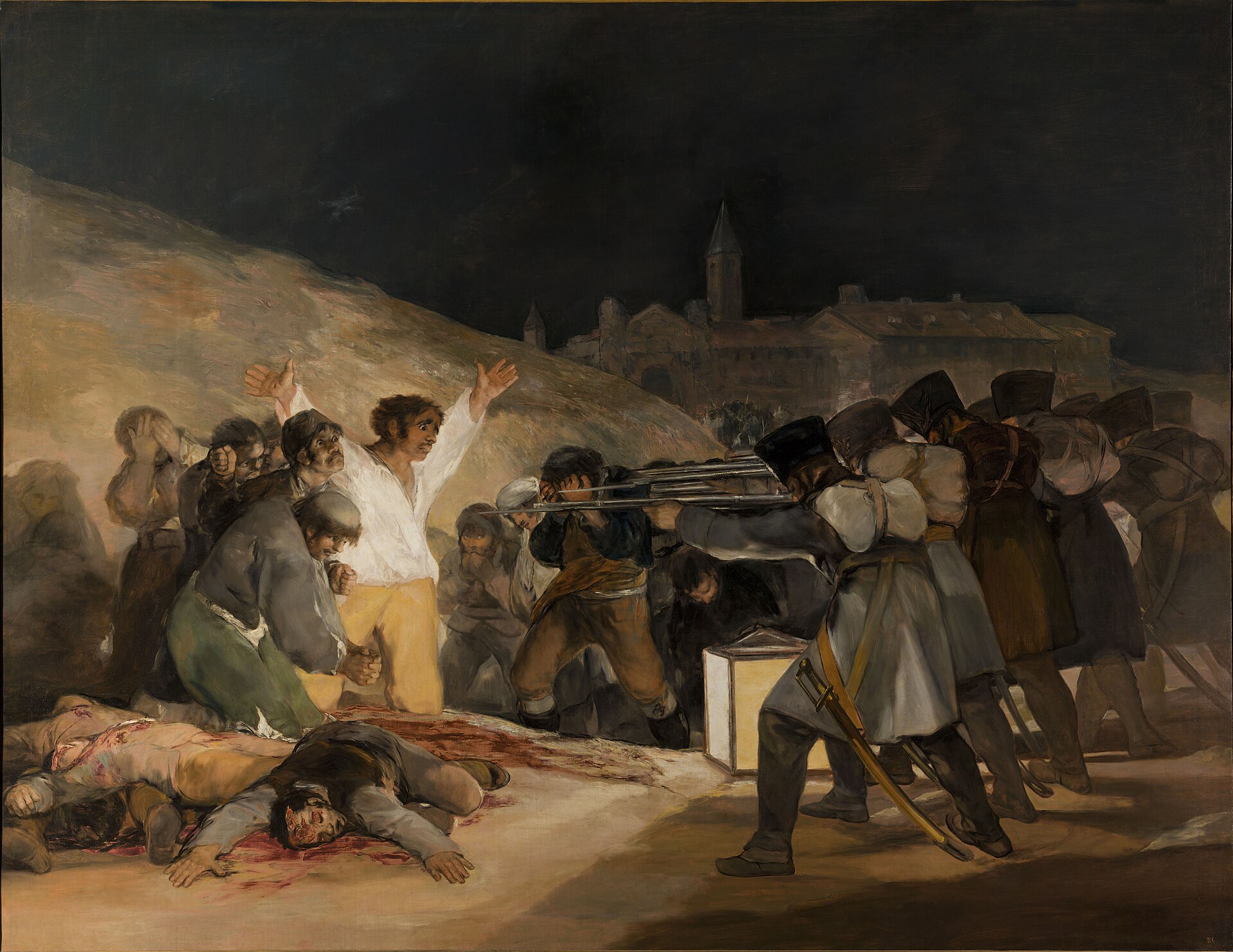
Where does my eye go first? To the man in the white shirt, arms raised, lit by a lantern on the ground. What’s strange? The soldiers shooting him have no faces. They are a row of backs and rifles.
What do I feel, and how? Goya gave the victim a face and took it away from the killers, which makes one a person and the others a machine. The raised arms echo a crucifixion. You don’t need to know any of the history to feel it, and once you know the history, it hits harder. Our post on the painting has the rest.
The one fact that unlocks it
The five questions take you a long way. But some paintings have a single fact that you can’t get from looking, and without it you miss the point.
Look at Michelangelo’s Creation of Adam and you see God reaching out to Adam. Learn that some doctors have argued the red shape around God is drawn like a human brain, and you’ll never see it the same way again. Whether or not Michelangelo meant it, which we argued about in our Creation of Adam post, it makes you look harder at the painting.
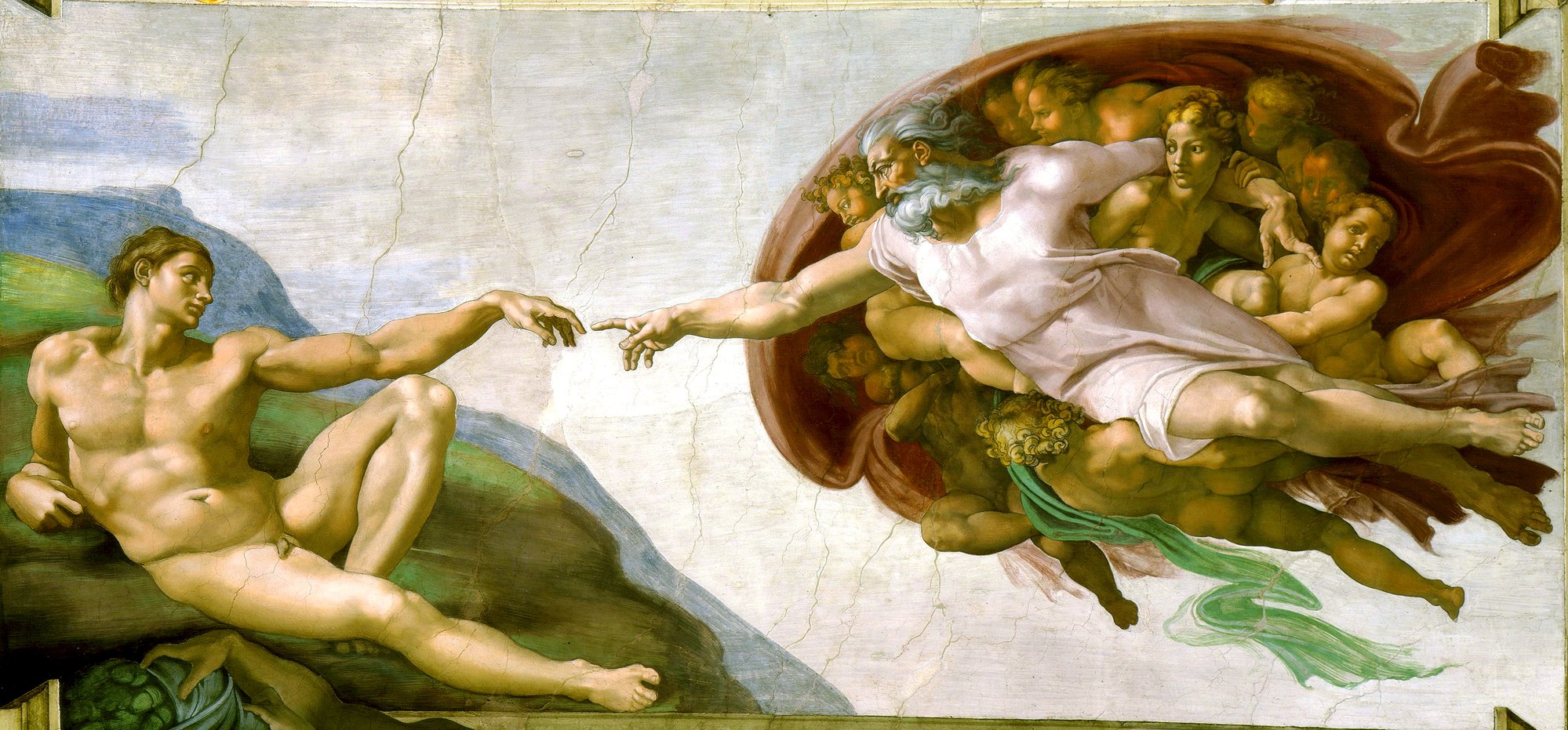
That fact is what a good guide gives you. It’s also what the wall label usually leaves out, because the label has forty words and has to serve everyone.
How Chiaro helps you understand what you’re looking at
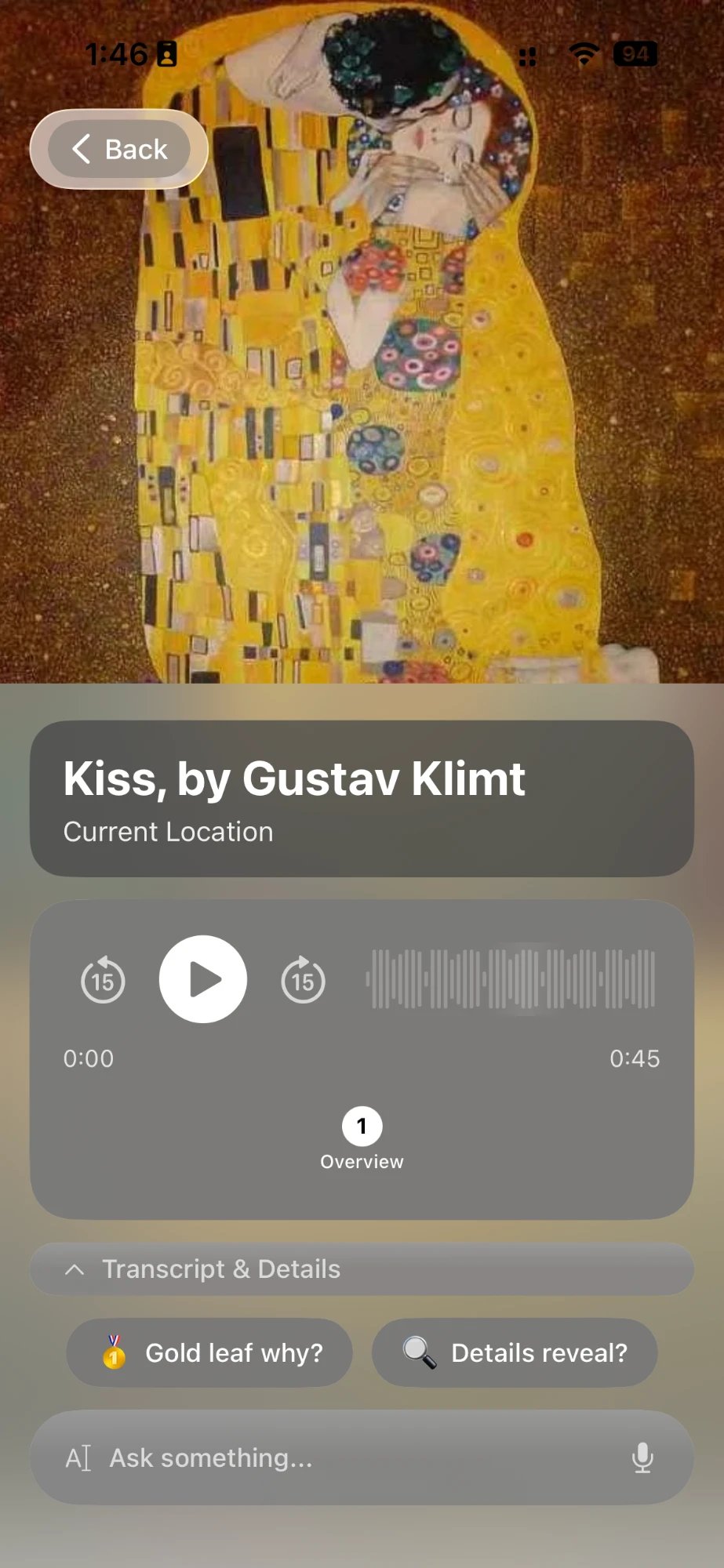
Chiaro is built for exactly this moment: you’re in front of a painting, you’ve looked, and you want someone to tell you what’s going on.
One photo in, a story out. Point your camera at a painting, a sculpture or a fresco. Chiaro recognizes it and tells you what it is, who made it and why it matters, out loud, within seconds. Your eyes stay on the painting, not on the screen.
A private art historian in your pocket. In a museum, Chiaro goes deeper: the composition, the symbols, the story behind the work. That’s the same ground the five questions cover, with the facts filled in.
Curious? Just ask. You don’t have to know the right words. Type or say any question, even “why is this famous?” or “what am I supposed to be looking at?”, and Chiaro answers out loud. When the answer depends on today, like whether the painting is on loan, it checks the web.
It adapts to you. If you want the simple version, say so, and every guide after that is shaped to fit. If you keep asking about technique, you get more technique. Snap a painting you’ve already heard about and Chiaro picks up where it left off instead of repeating itself.
In your language. Chiaro speaks 18 languages, in a woman’s or a man’s voice, with a choice of accent for English, Spanish and Portuguese. Art is hard enough without also translating in your head.
It connects the dots. Every evening Chiaro turns what you saw into a short story of your day. That’s where the Caravaggio you saw in the morning and the church you walked past in the afternoon turn out to belong to the same story. Tap Go deeper on any thread, and pin anything you want to find again.
Practice before the museum
The best time to learn how to look is before you’re in a crowded gallery. The museum pages on the Chiaro website are a demo of how the app works: five stops in each museum, the kind of guide Chiaro builds when you point it at a painting, playing in your browser with no account. Try the Louvre, the Prado, the National Gallery, the Musée d’Orsay or the Rijksmuseum. Listen to one at home, then try the five questions on the real thing, with the app doing the same for whatever painting you stop at.
FAQ
How do I start understanding art as a complete beginner?
Pick one painting, look at it for two minutes before reading anything, and ask: what do I see, where does my eye go, what’s strange, who was it made for, and how does it make me feel. Then find out one fact about it. That’s the whole method.
Do I need to know art history to enjoy a museum?
No. Art history helps, but you can understand a lot of a painting by looking carefully. A guide fills in the facts you can’t see, like who the figures are or why the painting caused a scandal.
Is there an app that explains paintings?
Yes. Chiaro recognizes a painting from a photo and explains it in an audio guide, in 18 languages, with follow-up questions you can type or ask out loud.
What if I just don’t like a painting?
That’s fine. Ask why. Disliking something for a reason you can name is already understanding it.
Look up
Understanding art isn’t a test you pass. It’s a habit: slow down, ask questions, find the strange thing, learn one fact. Do that in front of enough paintings and one day you’ll notice you’re the person in the room who knows where to look.
Chiaro means “clear” in Italian. Get it on the App Store, point it at the next painting you don’t understand, and listen.
Snap. Listen. Explore.