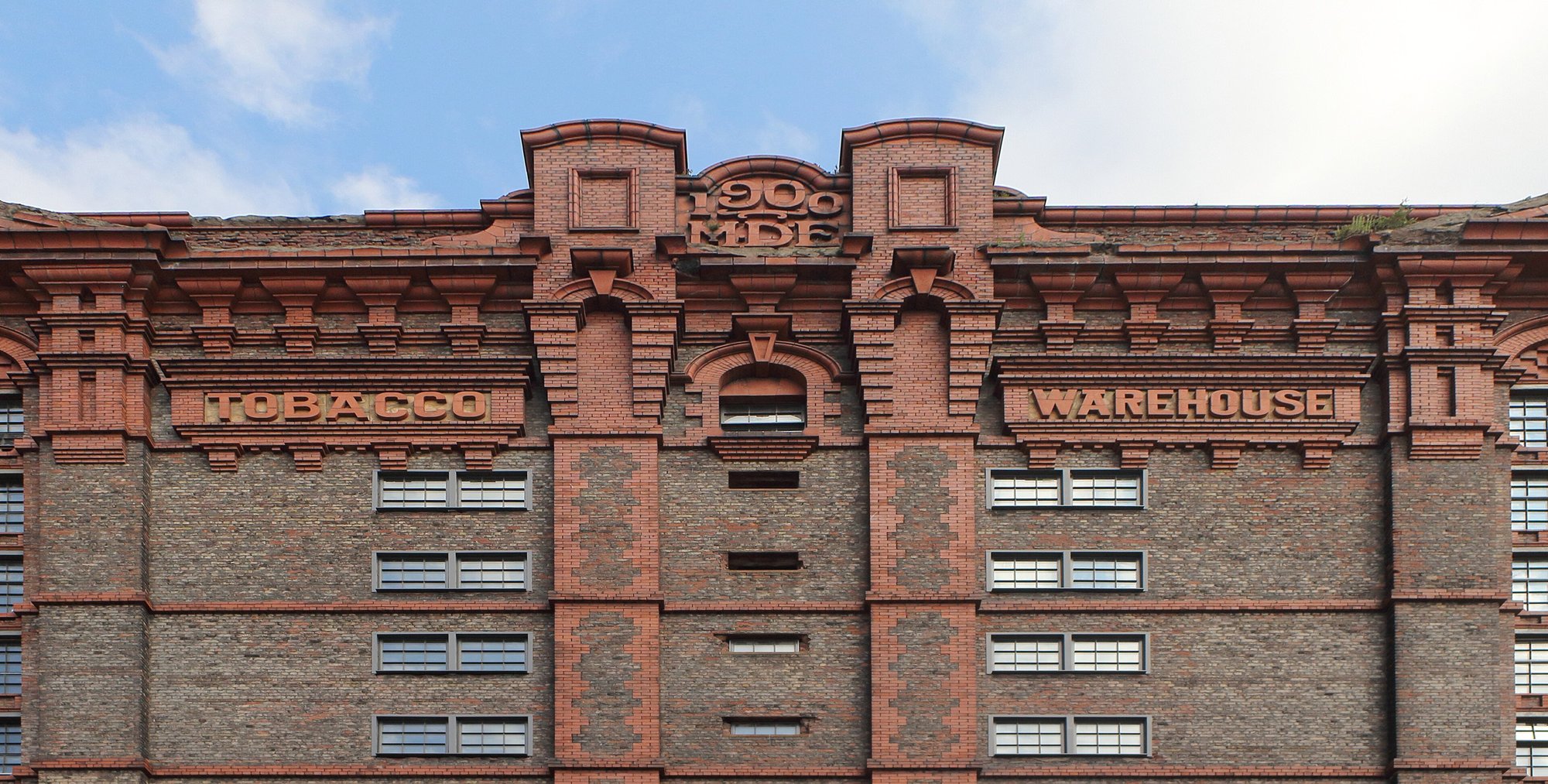
Every town has one. The old building you walk past every day: a bank that’s now a bar, a house with a carved date over the door, a warehouse with a faded painted name you can just about read. At some point you stop and wonder who built it, what it used to be, and what happened inside.
Finding out is easier than it has ever been. Some of it you can read off the walls. Most of the rest is online, in registers, map collections and archives that used to need a trip to a reading room. And if you want the story right now, while you’re standing on the pavement, there’s a faster way.
If you just want to know what a building is, start with our guide to finding out what building you’re looking at. This post is about the next step: its history.
Start with the building itself

Before you search anything, look. Old buildings carry a surprising amount of their own paperwork.
Datestones. Builders and owners often carved a year into the wall, over the door, in a gable or on a keystone, sometimes with the owners’ initials. A datestone gives you a starting point, with one caution: it can mark a rebuilding or an extension rather than the original construction.
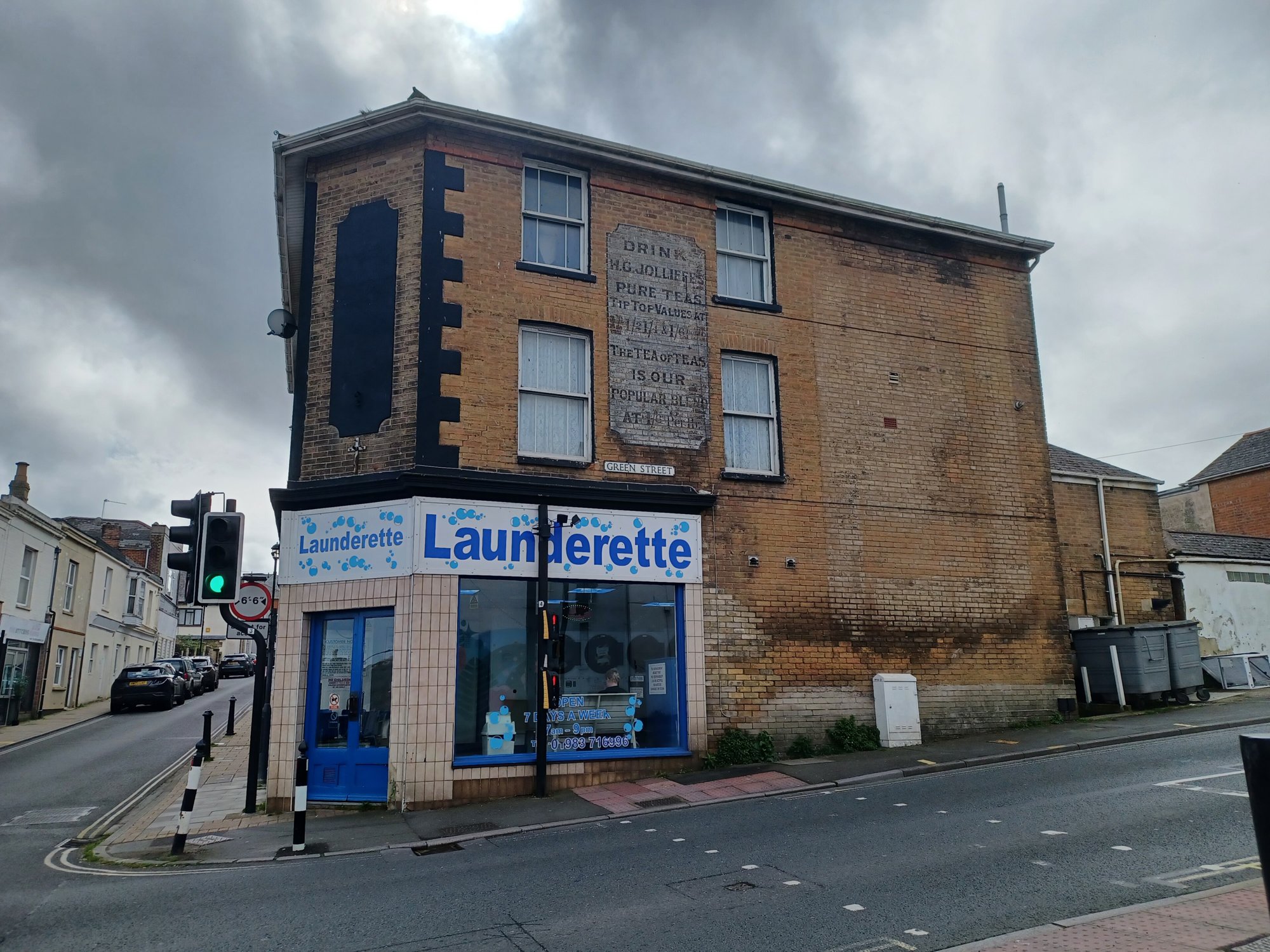
Ghost signs. Faded painted adverts high on brick walls are the remains of businesses that once traded there: a grocer, a laundry, a brand of soap that disappeared decades ago. They tell you what the building was used for, and the name on the sign is something you can search for later.
Fire marks. In Britain and America, many buildings still have a small metal plaque high on the front wall, put up in the 18th and 19th centuries by fire insurance companies to show the property was insured. The company’s name and symbol on the plaque are a clue to when the building was insured and who insured it.
Blocked windows and doors. A window that has been bricked up, a doorway filled in, a line where the brick changes colour: each is a change to the building you can see. In Britain, some bricked-up windows date from the window tax, which charged householders by the number of windows from 1696 until 1851, although many were simply blocked when rooms were rearranged.
The style. Even without a date, the architecture narrows things down. Sash windows, a classical doorcase, Gothic pointed arches, cast-iron shopfronts, Art Deco lettering: each belongs to a period. A local architecture guide or a quick search for the style will give you a range of decades.
Check the heritage registers
If a building is old and interesting, there’s a good chance someone has already written it up, because it’s officially protected.
- England: Historic England’s National Heritage List for England covers more than 400,000 listed places. Each entry gives a grade, the date it was listed and, often, a description of the building and its history. Scotland, Wales and Northern Ireland keep their own registers.
- France: the Ministry of Culture’s POP, Plateforme ouverte du patrimoine, brings together the national heritage databases. Mérimée is the one for buildings: monuments historiques and the buildings surveyed by the regional heritage inventory.
- United States: the National Register of Historic Places, run by the National Park Service, lists buildings, districts and sites. Nomination forms often include a detailed history, photographs and the reasons the place matters.
Most other countries have an equivalent. Search for your country’s name plus “heritage register” or “listed buildings”. City and regional governments often keep their own local lists too.
Look at old maps and old photos

Photo by Alex Boyd on Unsplash
Maps tell you when a building first appears, and what stood there before it.
Historic map collections. National libraries have put huge collections of old maps online. In the United States, the Library of Congress holds the Sanborn fire insurance maps, drawn for insurers from the 1860s onward. They show every building on a street, with its outline, the number of storeys, the building materials and often what the building was used for. Britain has the Ordnance Survey’s historic town plans and county maps, many of them viewable online through the National Library of Scotland.
Compare two maps a few decades apart and you can often date a building to within a few years: it isn’t there on the first map, and it is on the second.
Old street views. For more recent changes, Google Street View keeps older images of many streets. On a computer, open Street View and look for the clock icon or the “See more dates” option to step back through earlier years. Busy city streets usually go back the furthest.
Old photographs and postcards. Local history groups, library collections and postcard dealers are full of pictures of streets from a hundred years ago. Search for the street name and the town, and add “old photo” or “postcard”.
Go to the archives
For the full story, with the names of the people who lived and worked there, you need records.
Local archives and libraries. Most towns and counties have a record office or a local history library. Staff there know which deeds, building plans, rate books and photographs survive for your street, and they’re usually glad to help.
Census records and directories. Censuses tell you who lived at an address and what they did for a living. Old trade and street directories list businesses address by address, year by year, so you can follow a shop from the grocer to the bank to the bar. Many are searchable online through national archives and genealogy websites.
Local historical societies. Someone has very often researched the building before you. Local societies publish journals, run walks and answer questions. Ask them.
Or get the story on the spot
All of that is the slow way, and it’s worth doing for a building you care about. But most of the time you’re out walking, you’ve just stopped in front of something old, and you want to know now.
That’s what Chiaro is for.
One photo in, a story out
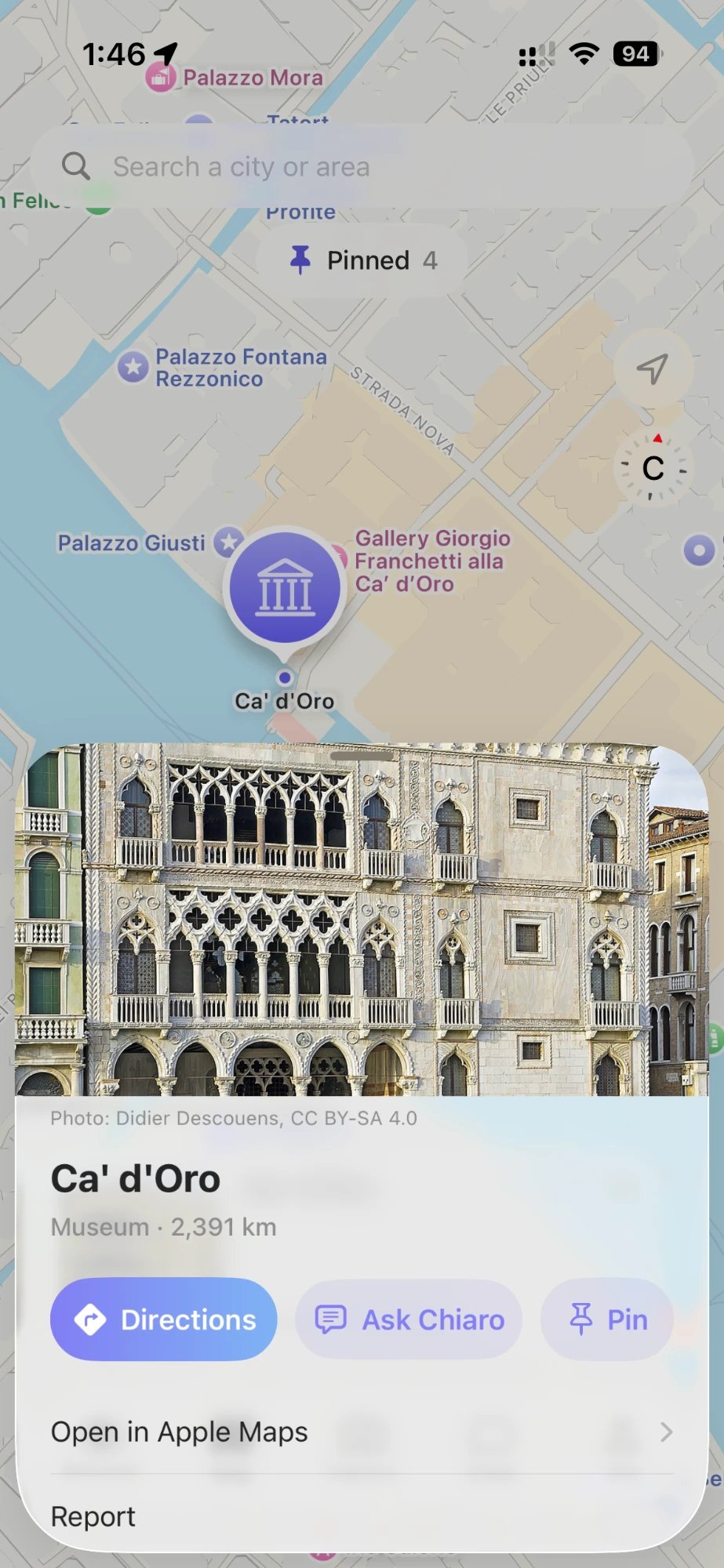
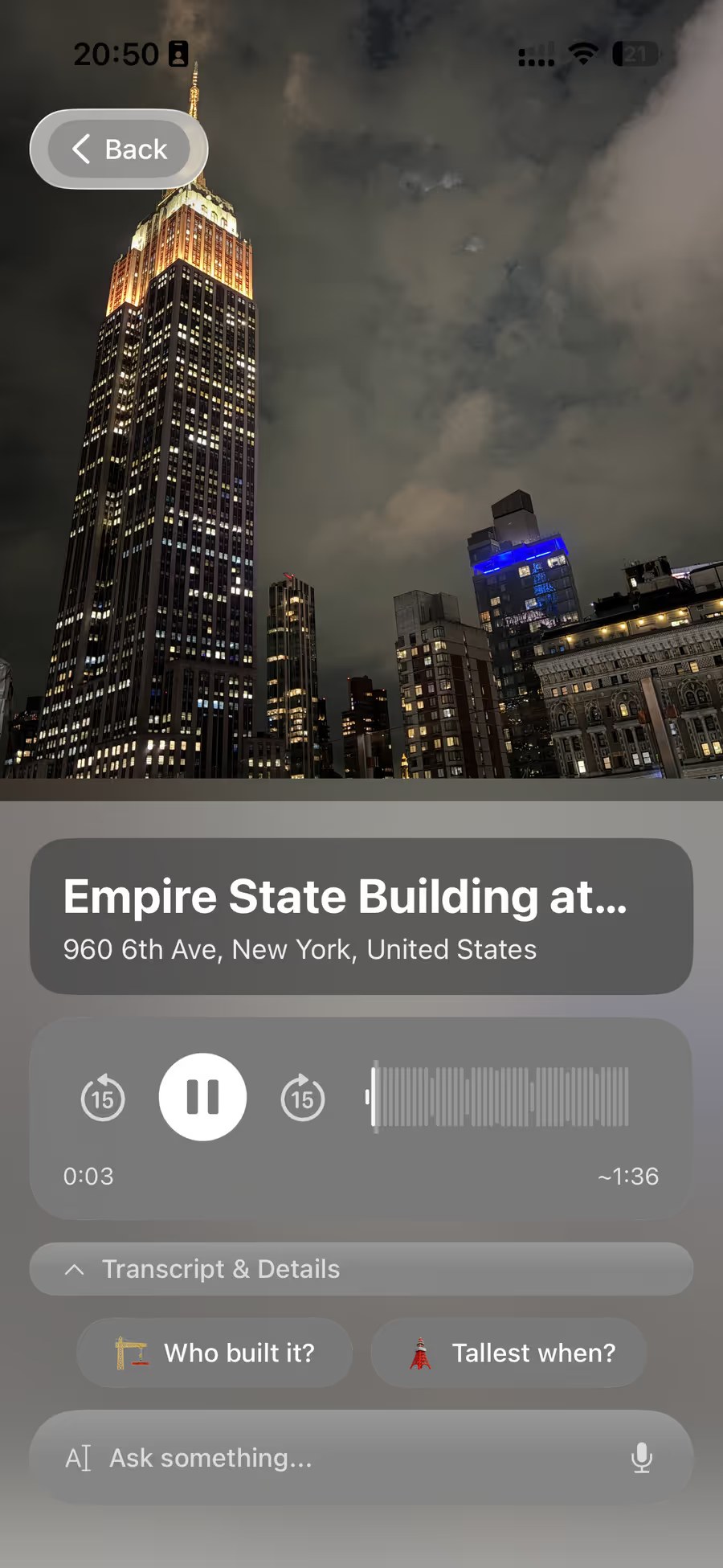
Point your camera at the building. Chiaro recognizes it and tells you what it is, who built it and why it matters, out loud, within seconds. You keep looking at the building instead of the screen, which is when you notice the datestone, the ghost sign and the bricked-up window the guide is telling you about.
Chiaro works almost anywhere you point it: towers, bridges, churches, a mural on a back street. If it has a story, Chiaro finds it. There are no city packs to download.
Curious? Just ask
The first guide is where the history starts. Type or say any question, like “what was this building before?”, “who lived here?” or “why is that window bricked up?”, and Chiaro answers out loud. When the answer depends on today, like whether the building is open to visitors, Chiaro checks the web and brings back today’s answer.
It keeps the thread
Chiaro remembers what you’ve already asked about. If you keep asking about history, you get more history. Come back to the same building another day and it picks up where it left off instead of repeating itself.
Every evening, Chiaro turns what you saw into a short story of your day, a Filo, that connects the dots: the warehouse you passed in the morning and the merchant’s house you saw in the afternoon may turn out to belong to the same family. Tap Go deeper on any thread, and pin anything you want to come back to.
In your language
Chiaro speaks 18 languages, in a woman’s or a man’s voice, with a choice of accent for English, Spanish and Portuguese. Place names appear in your language and the local one, side by side.
See how recognition works
The landmark and museum pages on the Chiaro website are a demo of what the app does once it recognizes a building: five stops at each of 80 places, the kind of guide Chiaro builds from your photo, playing in your browser with no account. Grand Central Terminal, the Tower of London and Prague Castle are good places to start. The building on your own street isn’t on that list, and doesn’t need to be: in the app, a photo is enough.
FAQ
How do I find out when my house or a building near me was built?
Look for a datestone on the building, check whether it’s on your country’s heritage register, and compare old maps from different decades to see when it first appears. Your local archive or record office can help with deeds and building plans.
Is there a free way to look up the history of a building?
Yes. Heritage registers such as the National Heritage List for England, France’s POP and the US National Register of Historic Places are free to search online, as are many historic map collections and digitized directories.
Can an app tell me the history of a building from a photo?
Yes. Chiaro recognizes a building from a photo and tells you its history in an audio guide, and you can ask follow-up questions out loud.
What if the building isn’t famous?
Ordinary buildings are often the most interesting to research. Start with the clues on the walls, then the maps and directories. Chiaro works almost anywhere you point it, not only on famous landmarks.
Look up
Most old buildings have a story nobody has told you. Some of it is written on the walls, some of it is in an archive, and some of it you can hear standing on the pavement outside. Chiaro means “clear” in Italian. Get it on the App Store, point it at the oldest building on your street, and listen.
Snap. Listen. Explore.