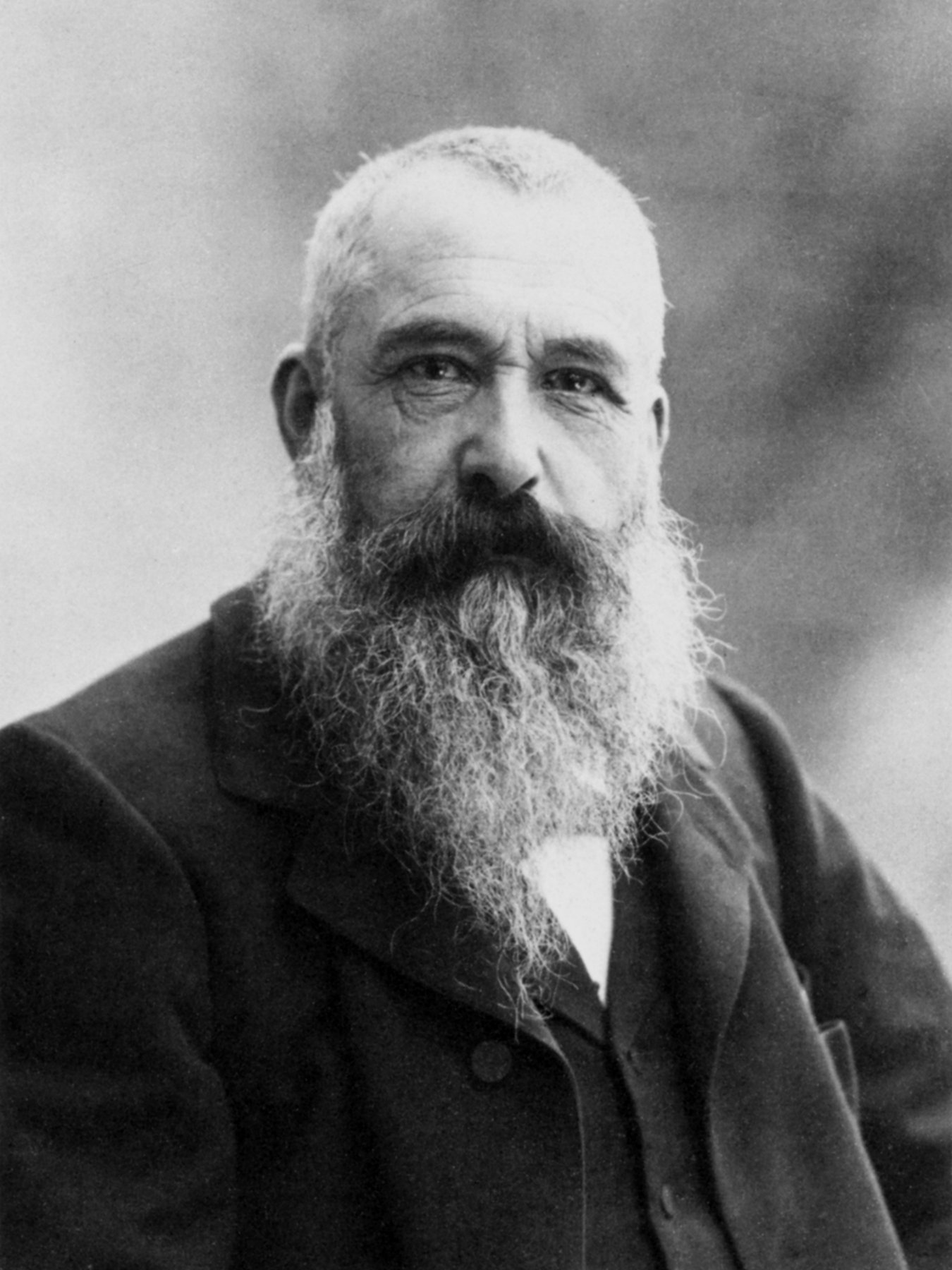
In April 1874, in a borrowed photographer’s loft on the Boulevard des Capucines in Paris, thirty painters opened a show. They had named their group the Société Anonyme des Artistes Peintres, Sculpteurs, Graveurs, etc. — a deliberately bureaucratic name designed to mock the official Salon. The show ran for four weeks. It cost a franc to get in. It made almost no money, drew small crowds, and got reviews ranging from baffled to nasty. Among the thirty painters were eight people who would, over the next twenty years, change how the entire western world looked at light, weather, water, weekends, ballet rehearsals, and the suburbs of Paris. The Impressionism painters were not a school. They were not a manifesto. They were a friend group of about fifteen people who painted next to each other in the 1860s and 1870s and ended up reinventing painting almost by accident.
This is a guide to the eight names that matter most. The ones whose work you will actually see if you walk through the Musée d’Orsay, the Orangerie, the Marmottan, or any major museum’s nineteenth-century galleries. Not the entire roster. The roster runs to about twenty-five names, and if you are a specialist you can argue for thirty. But the impressionism famous artists list everybody actually needs comes down to these eight. We will go in roughly the order you will meet them at the Orsay, ground floor up.
What “Impressionist” actually means
Before the names, a quick definition because the term is used loosely. An Impressionist painter, in the strict sense, is one who showed at one or more of the eight Impressionist group exhibitions held in Paris between 1874 and 1886. That is the only objective criterion. Cézanne showed at the first and the third. Édouard Manet, the painter most associated with launching the movement, never showed at any of them and refused to call himself an Impressionist. Seurat showed at the eighth and is usually filed under post-Impressionism. The official roster of impressionism key artists from the eight shows is messier than the popular memory of it.
What unites them stylistically is shorter and easier to describe. They painted outdoors when possible, en plein air, on portable canvases. They worked fast, often finishing in one or two sittings, to capture changing light. They left brushstrokes visible rather than blending them. They preferred bright color taken straight from the new chemical-pigment tubes the industrial revolution had just put on the market over the brown-and-tan academic palette. They painted ordinary modern subjects — train stations, suburban gardens, weekend rowers, dancers in rehearsal, the new boulevards Haussmann had cut through Paris — rather than mythology and history. And they hung work where the public could see it, outside the official Salon.
That is the whole technical program. The rest is biography.
1. Claude Monet, the founder by accident
Born in Paris in 1840, raised in Le Havre, dead in Giverny in 1926. If Impressionism has a founder, it is Monet, and only because his small harbor study Impression, soleil levant, painted in 1872 and shown at the 1874 exhibition, gave the movement its name when a satirical critic used “Impressionist” as a mocking label and the painters kept it.
Monet is the one who took the principles to the absolute extreme. He painted the same subject — haystacks, poplars, Rouen Cathedral, the lily pond at Giverny — over and over again at different times of day and in different weather, treating each canvas as a single freezing of a single light condition. The Rouen Cathedral series alone is thirty canvases. The water lilies are around two hundred and fifty. He was, by the end of his life, almost entirely a painter of light on water and stone.
The most useful Monet to look at first is whichever of his series paintings is closest to you. The Orsay has five Rouen Cathedrals hung side by side. The Orangerie has the eight enormous Nymphéas panels in the dedicated underground rooms. The Marmottan has the Sunrise. The Met in New York has Haystacks. Stand in front of any of them and you can see what almost a hundred fifty other painters tried and mostly failed to imitate. He is also the longest-lived of the group by far, dying at eighty-six and outliving Impressionism itself by twenty years.
2. Pierre-Auguste Renoir, the painter of pleasant Sundays
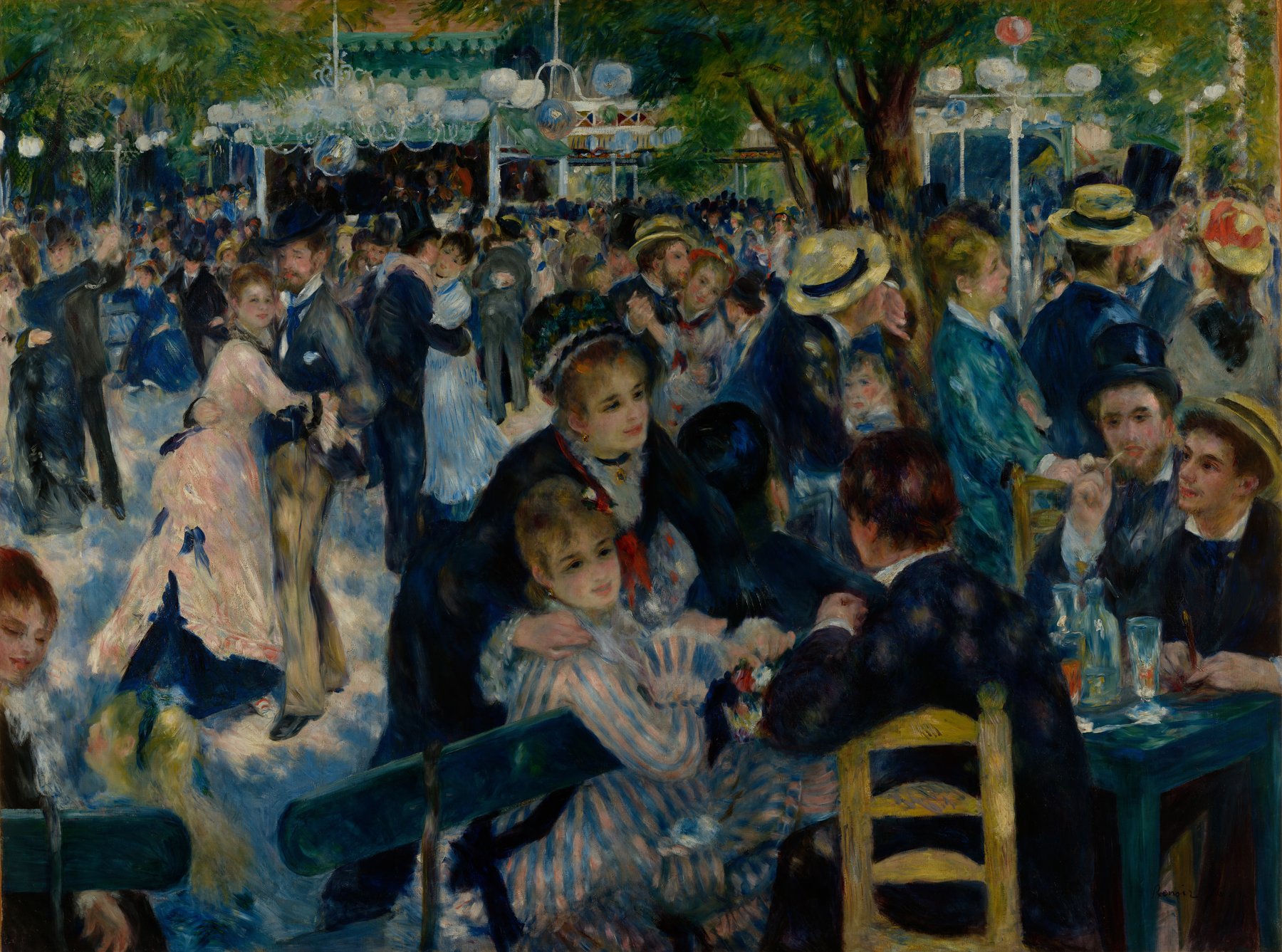
Born in Limoges in 1841, dead in Cagnes-sur-Mer in 1919. Renoir is the painter you will find easiest to like and hardest to take seriously, which is unfair to him because at his best he is one of the great figure painters of the nineteenth century.
He came up the same way Monet did, painting in the forest of Fontainebleau outside Paris in the early 1860s and showing in Salons when he could. His breakthrough was Bal du moulin de la Galette, painted in 1876 and shown at the third Impressionist exhibition in 1877. It is six feet wide and four feet tall and shows about thirty Parisians dancing under string lights at an open-air Sunday gathering on the Butte Montmartre. The dappled light coming through the leaves makes everyone’s faces and clothes vibrate. The whole painting feels like a perfect Sunday afternoon. The painting hangs at the Orsay today and is one of the works visitors stand in front of longest.
Renoir’s late work, the heavy nudes from the 1890s and 1900s, is harder to defend. He developed arthritis in his sixties and had to have brushes tied to his hand. The figures got soft. But the painter of the 1870s and early 1880s, the painter of the Boating Party at the Phillips in Washington and the Moulin de la Galette at the Orsay, is one of the few who could make a Sunday afternoon look like the most important thing that ever happened.
3. Edgar Degas, the Impressionist who hated being called one
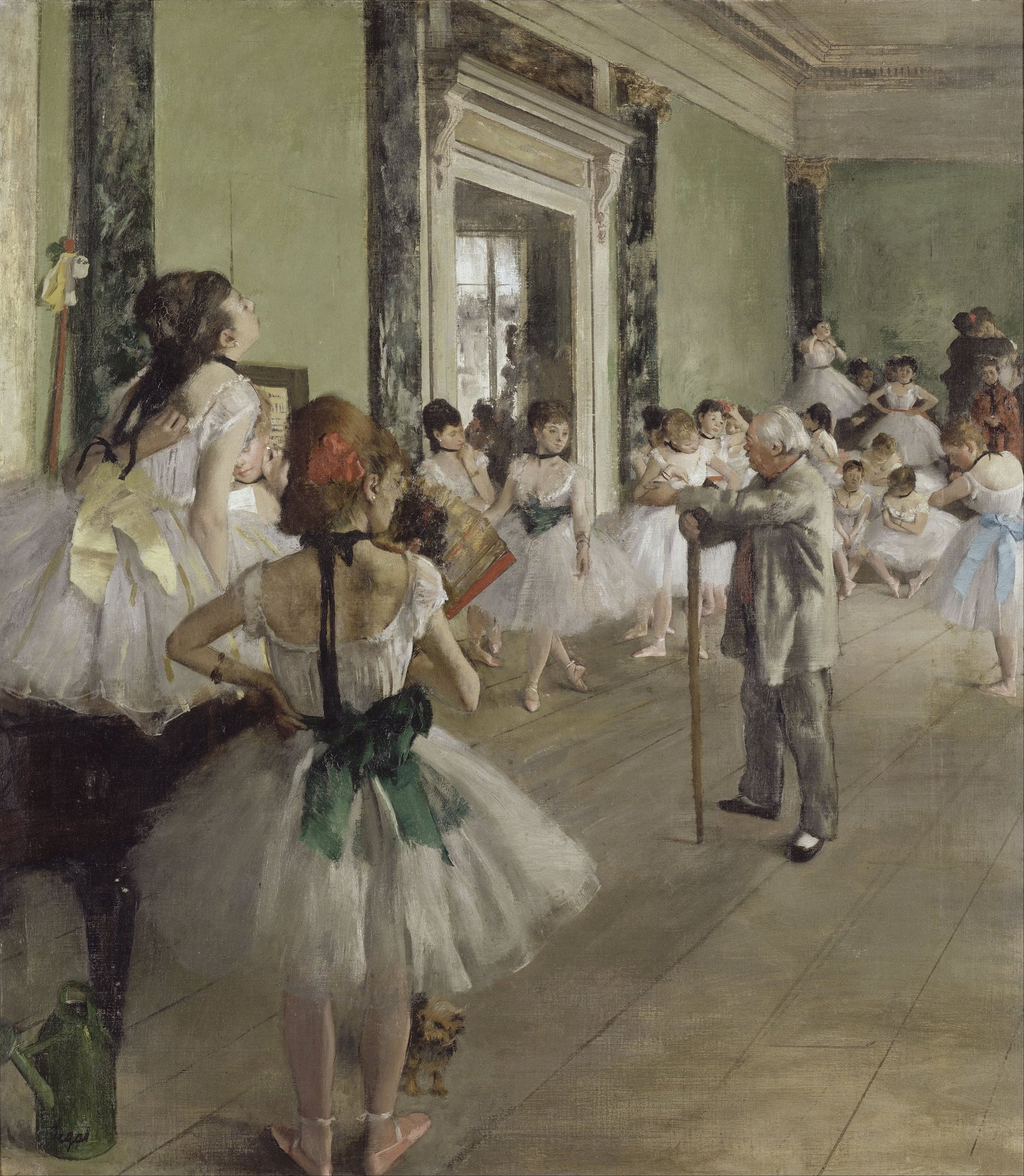
Born in Paris in 1834, dead in Paris in 1917. Degas is the awkward case. He showed at seven of the eight Impressionist exhibitions, more than any other painter except Pissarro. He is on every Impressionism roster ever written. And he hated the label. He preferred “realist” or “independent.” He almost never painted outdoors. He drew obsessively in studio. His subject was the human figure under artificial light, especially the bodies of dancers, jockeys, laundresses, and women bathing.
Degas is the one to look at if you think Impressionism only means landscapes. The Orsay has dozens of his ballet rehearsal scenes, painted from a vantage point that is almost always slightly off-center, slightly cropped, slightly behind a column or a rail. He had been a serious student of the Italian Renaissance in his twenties and his draftsmanship is on a different level from anybody else in the group. The pastels he made of women bathing in shallow tin tubs in the 1880s and 1890s are some of the most psychologically intimate works in nineteenth-century painting.
He also made a few hundred sculptures, all in wax, almost all of them dancers and horses. Bronze casts of about seventy of them exist now, mostly posthumous. The most famous is the Little Dancer Aged Fourteen, the only sculpture Degas ever exhibited in his lifetime, shown at the sixth Impressionist exhibition in 1881. She is at the Orsay too, in a glass case, dressed in a real tutu the museum changes every few years.
4. Camille Pissarro, the only painter at all eight shows
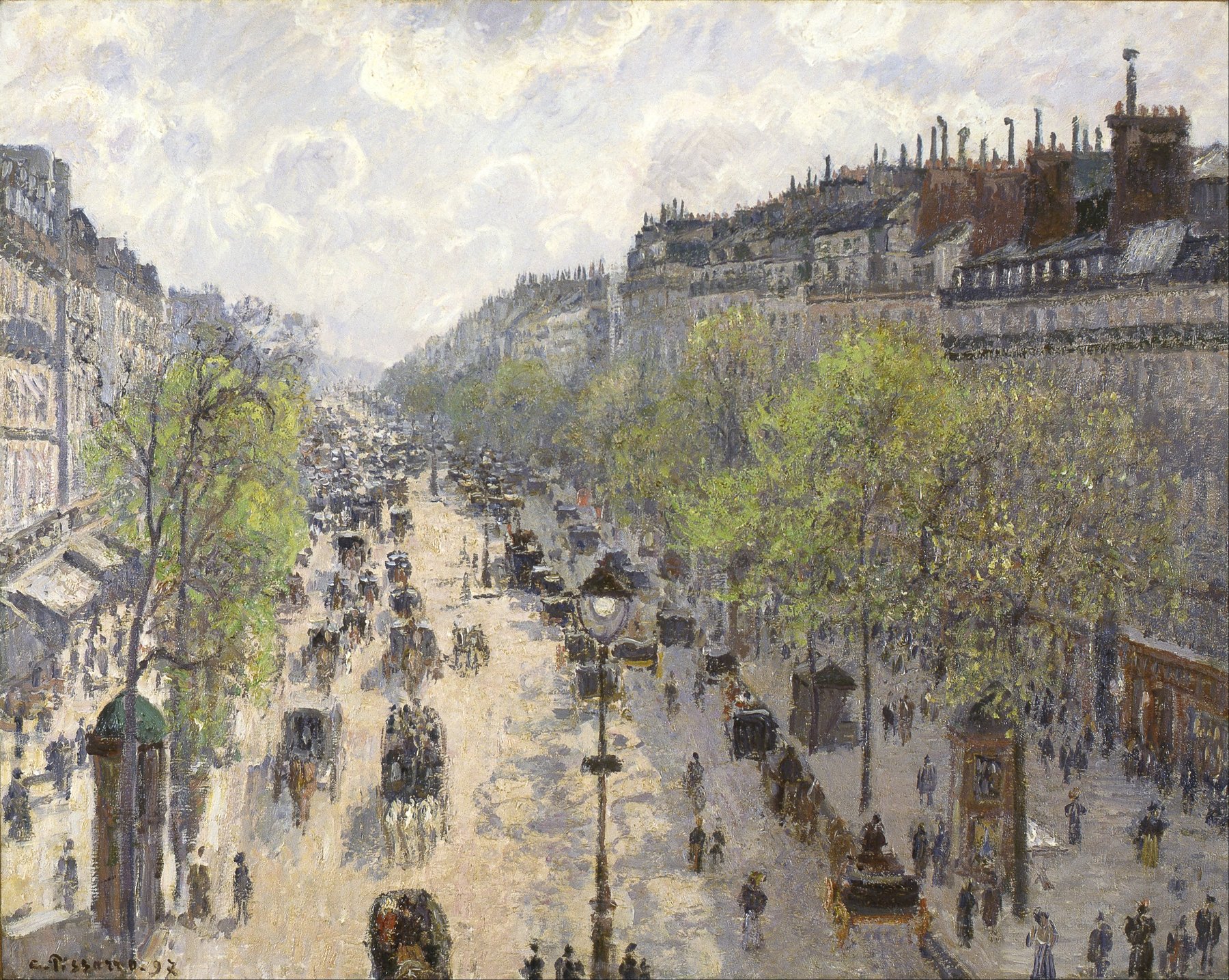
Born in Saint Thomas in 1830, dead in Paris in 1903. Pissarro is the painter without whom the group does not hold together. He was the oldest. He was the one most committed to the political and aesthetic arguments. He was the one Cézanne called “a father” and credited with teaching him to paint. He was the only painter to show at all eight of the Impressionist group exhibitions between 1874 and 1886.
His subject for most of his career was rural France. Peasants in fields, market days in small towns, the village of Pontoise where he lived for fifteen years. In the late 1890s, when he was suffering from a chronic eye infection that made working outdoors dangerous, he switched to painting Paris boulevards from rented hotel windows. The series of Boulevard Montmartre pictures he produced between 1897 and 1898 — about a dozen views of the same street at different times of day, in different weather, painted from the same fourth-floor window of the Grand Hôtel de Russie — is one of the great documents of late nineteenth-century Paris.
Pissarro is the painter to look at when you want to understand the Impressionist commitment to a subject. He painted the same farmer’s hut at Pontoise twenty times. He painted the boulevard at Montmartre fourteen times. The variations are not small.
5. Alfred Sisley, the Englishman who never left France
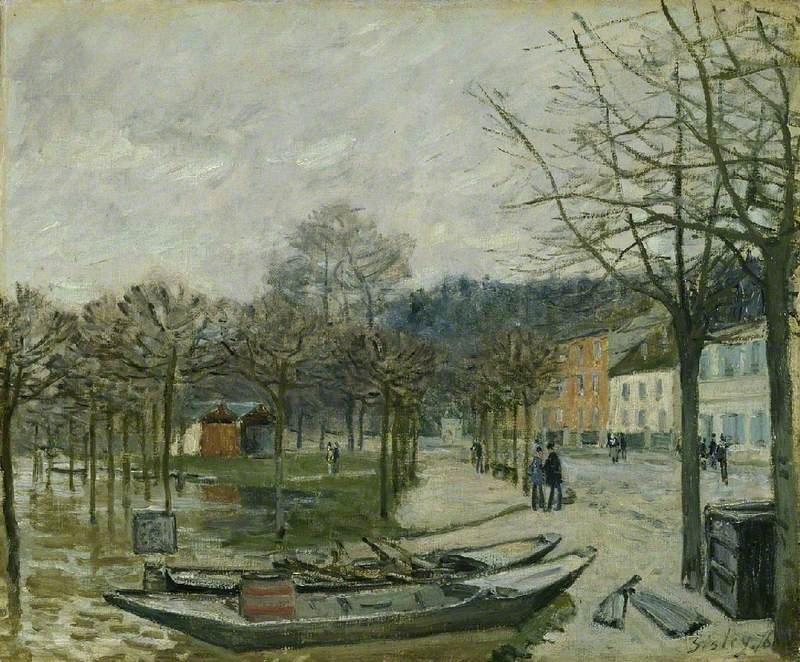
Born in Paris in 1839 to English parents, dead in Moret-sur-Loing in 1899. Sisley is the most underrated of the group. He painted only landscapes. He never broke into the official Salon. He sold almost nothing in his lifetime. He died poor of cancer of the throat at fifty-nine, the year before the prices of his paintings went up tenfold.
His best work is a series of canvases he made in 1876 of a small flood in the Seine-side village of Port-Marly. The water came up to the second-floor windows and stayed for a few days. Sisley painted it from a rowboat and from the dry side of the embankment, six paintings in a week. The water is the subject, but the real subject is the way the small wine merchant’s storefront sits half-drowned in it, and the way the reflections of the upper windows make the whole scene feel underwater whether you are looking at the dry parts or the wet parts.
He is the painter who made the strongest argument that landscape is the central Impressionist subject. He stuck to it for thirty years, even when nobody was buying. The Orsay has six of his Port-Marly floods. They are easy to walk past, in a side gallery on the fifth floor. Don’t.
6. Berthe Morisot, the painter the men kept underestimating
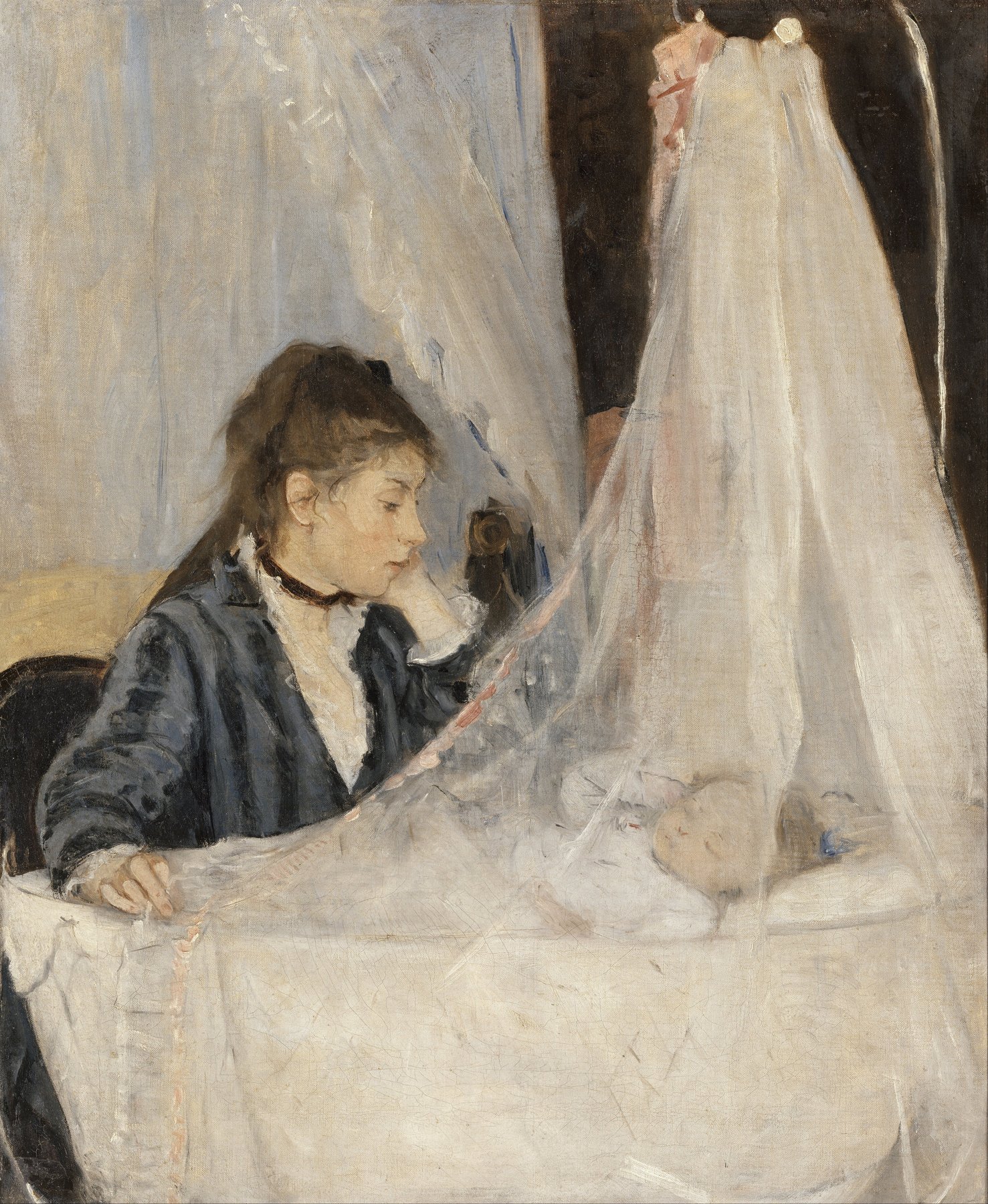
Born in Bourges in 1841, dead in Paris in 1895. Morisot was the first woman to join the Impressionist group and one of only two women on the list of impressionism famous artists most people will ever encounter, the other being Mary Cassatt. She showed in seven of the eight Impressionist exhibitions, missing only the fourth, in 1879, because she had just had a baby.
Her subject was domestic life. Women reading. Mothers with their children. Sisters dressing each other for an evening out. A young woman at a ball. The Cradle, her best-known work, was made in 1872 and shows her sister Edma watching her newborn daughter sleep. It hangs at the Orsay. It is forty-six by fifty-six centimeters, smaller than a sheet of letter paper turned long, and it is one of the most psychologically loaded paintings of the entire movement.
Morisot was also Édouard Manet’s student, his model, his friend, and after 1874 his sister-in-law. She married Manet’s brother Eugène, and the family ties to Édouard kept the Manets and the Impressionists tangled together throughout the 1870s. She is the painter who showed that Impressionism could go indoors and still work, that you could apply the open-air looseness of the brushwork to a quiet domestic scene and find something the academic painters had never tried. The Orsay has more of her work than most visitors realize.
7. Mary Cassatt, the American
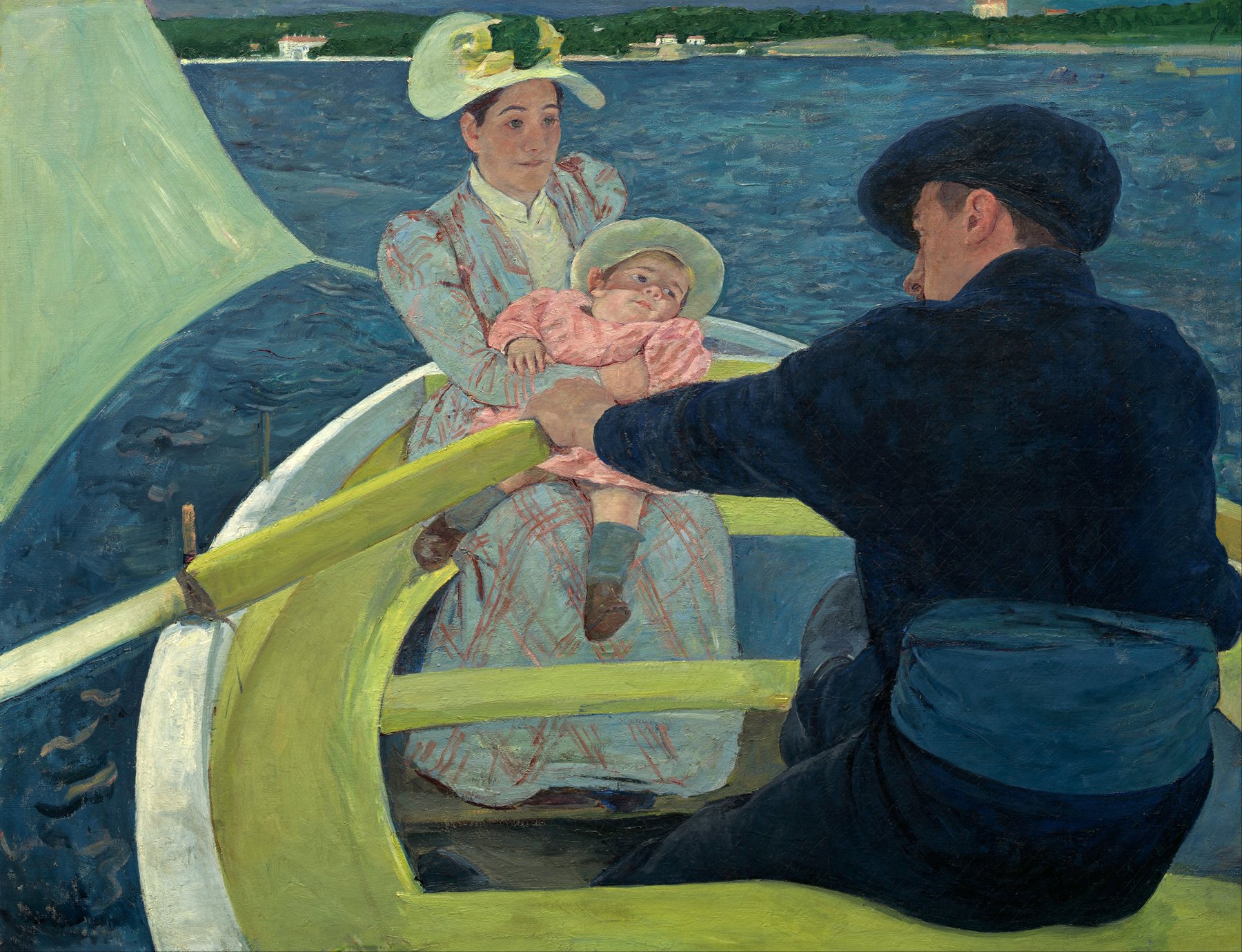
Born in Pittsburgh in 1844, dead near Paris in 1926. Cassatt is the American outlier in a French movement, an upper-middle-class Pennsylvanian who moved to Paris in 1874, met Degas in 1877, and was invited to show with the Impressionists from the fourth exhibition onward. She showed in four of the eight.
Her subject for most of her career was the same as Morisot’s. Women, mothers, children, daughters. She painted them with a directness and a structural toughness that Morisot did not always reach for. The Boating Party, made in 1893 and 1894 and now hanging at the National Gallery in Washington, is a six-foot-wide canvas of a Catalan oarsman in a small boat with a woman and a baby. The man’s back is half the painting. The woman’s face is almost in profile. The composition is borrowed from Japanese prints, which Cassatt was studying intensely at the time, and the whole thing reads more like a film still than a painting.
Cassatt is also the painter who effectively imported Impressionism to the United States. Her brother Alexander was the president of the Pennsylvania Railroad and a major collector. Through his collecting and through her advice to American friends — the Havemeyers in New York, in particular — a substantial portion of the Impressionist work that ended up in American museums in the early twentieth century came in through Cassatt. Without her, the Met and the Boston MFA and the Art Institute of Chicago would have very different walls today.
8. Gustave Caillebotte, the engineer who collected his friends
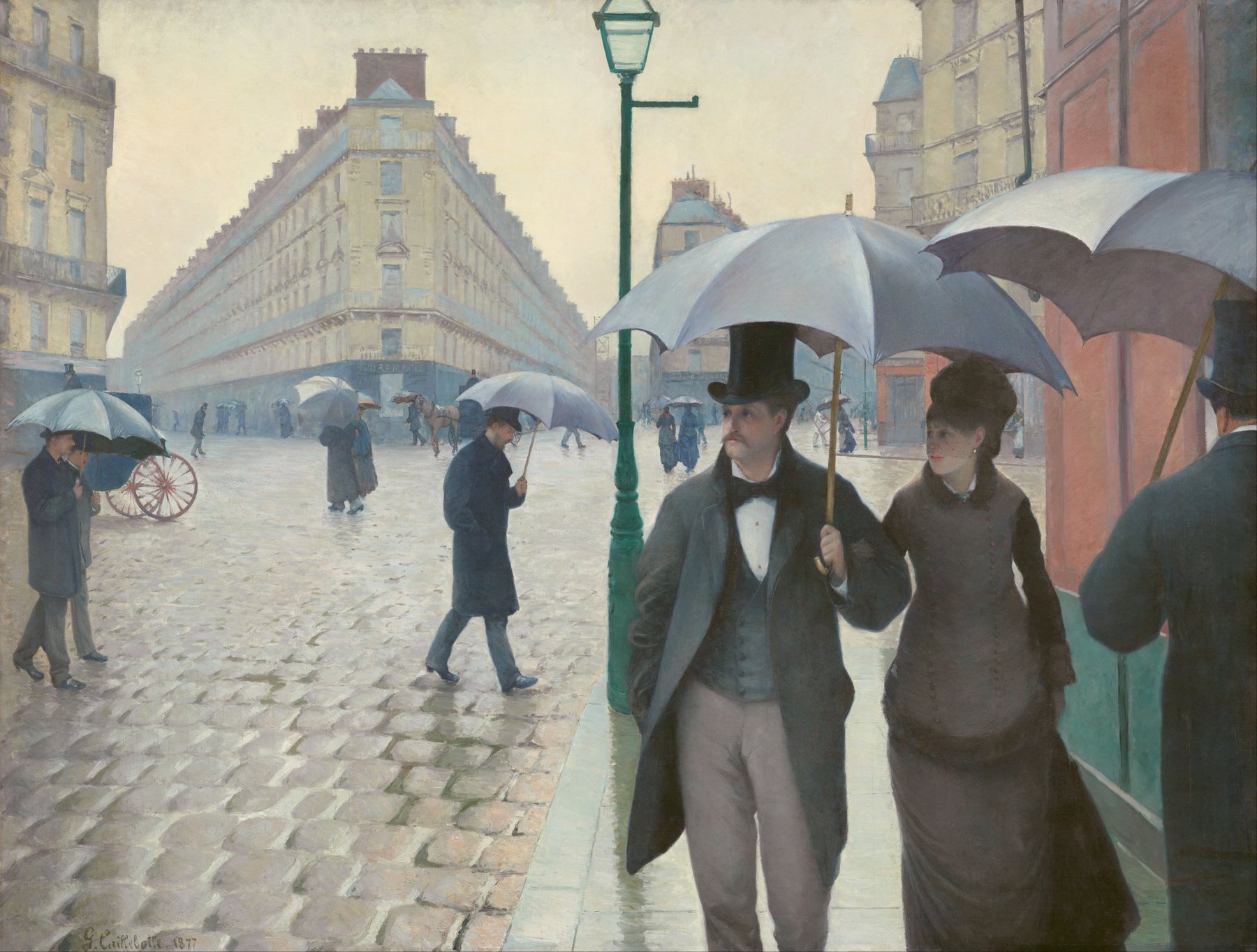
Born in Paris in 1848, dead in Gennevilliers in 1894. Caillebotte is the painter who almost did not make it onto the impressionism painters list because for most of the twentieth century he was remembered as a collector first and a painter second, and the painter half of him got read as merely competent. The reread of his work in the 1970s and 1980s changed all of that. Today he is on every roster.
He came from money, which is part of the story. He trained as a lawyer, then as a naval engineer, then in painting at the École des Beaux-Arts. When his father died in 1874 he inherited a fortune. He spent the rest of his life in two parallel projects: making his own paintings of the working-class and bourgeois Paris around him, and quietly buying up Monets and Renoirs and Degas paintings nobody else would buy at prices that kept his friends solvent. He paid the rent on Monet’s studio for two years. He paid for the third Impressionist exhibition out of pocket.
His own paintings are some of the strangest in the movement. Paris Street; Rainy Day, painted in 1877 and now at the Art Institute of Chicago, is nine feet wide. It shows a single intersection in the new Haussmann boulevards near the Gare Saint-Lazare, on a rainy day, with figures walking under umbrellas at slightly off angles. The perspective is forced almost violently. The cobblestones are painted with the precision of a draftsman. The clothes are painted like Impressionism. The painting almost feels like a photograph taken with a wide-angle lens. Caillebotte was painting modern Paris before anybody else figured out how. Chiaro reads out the description he wrote in his 1894 will leaving sixty-seven Impressionist canvases to the French state, the bequest that took five years of fighting to get the Louvre to accept and that became the founding collection of what is now the Orsay’s Impressionist gallery.
The men who sometimes count and sometimes don’t
A short list of the painters who routinely show up on impressionism key artists lists but who fit awkwardly:
-
Édouard Manet (1832-1883) is the painter whose Olympia and Luncheon on the Grass shocked Paris in 1863-65 and made the loose-brushwork, modern-life argument that the younger painters then took up. He never showed at any of the eight Impressionist exhibitions, refusing on the grounds that the official Salon was still the only legitimate venue. He is usually filed as a precursor to Impressionism rather than a member of it.
-
Paul Cézanne (1839-1906) showed at the first and third exhibitions and then mostly stopped, retreating to Aix-en-Provence to paint the same mountain over and over. He is filed as post-Impressionist.
-
Vincent van Gogh (1853-1890) is often listed in tourist-guide rosters of impressionism famous artists. He arrived in Paris in 1886 and learned everything he could from Impressionist work in two years, but his own short career belongs to post-Impressionism. The impressionism van gogh confusion is one of the most persistent in casual writing about the movement.
-
Frédéric Bazille (1841-1870) was a close friend of Monet’s and the founding bankroller of the early group. He died in the Franco-Prussian War at twenty-eight, four years before the first Impressionist exhibition. He is on every roster as the missing seventh painter who would have been a major figure if he had lived.
What unites them, finally
The Impressionism painters were a small group. They knew each other personally. They borrowed money from each other and married into each other’s families. They argued about technique and politics. They all painted, in different ways, the same fundamental claim: that the modern world — trains, suburbs, weekend dances, rehearsal halls, the new boulevards — was as worthy a subject for serious painting as the Greek and Roman gods the Académie had spent two centuries painting.
The reason they matter is that they won the argument. A century and a half later, almost everything you see in any major art museum’s modern wing depends on the technical and conceptual claims they made. Photographs of working harbors are art. Quick sketches are finished paintings. Light is the subject. Weather is the subject. Modern life, painted while it was still happening, is the subject.
The eight names above are the ones whose work made that argument hardest.
The kicker
A friend group of about fifteen people. Eight of them painters who mattered. One impromptu show in a borrowed photographer’s loft. One bad joke from a satirical critic that the painters refused to take as an insult and turned into a name. A century and a half later we still call it Impressionism, and the way most people see paintings of light and water and Sunday afternoons came out of the same loft on the Boulevard des Capucines.
Image credits
- Claude Monet 1899 Nadar crop.jpg — Nadar (1820-1910). Source, Public Domain.
- Auguste Renoir - Dance at Le Moulin de la Galette - Google Art Project.jpg — Pierre-Auguste Renoir (1841-1919). Source, Public Domain.
- Edgar Degas - The Ballet Class - Google Art Project.jpg — Edgar Degas (1834-1917). Source, Public Domain.
- Camille Pissarro - Boulevard Montmartre, Spring - Google Art Project.jpg — Camille Pissarro (1830-1903). Source, Public Domain.
- Alfred Sisley (1839-1899) - The Flood at Port-Marly.jpg — Alfred Sisley (1839-1899). Source, Public Domain.
- Berthe Morisot - The Cradle - Google Art Project.jpg — Berthe Morisot (1841-1895). Source, Public Domain.
- Mary Cassatt - The Boating Party - Google Art Project.jpg — Mary Cassatt (1844-1926). Source, Public Domain.
- Gustave Caillebotte - Paris Street; Rainy Day - Google Art Project.jpg — Gustave Caillebotte (1848-1894). Source, Public Domain.


_-_The_Flood_at_Port-Marly_-_PD.69-1958_-_Fitzwilliam_Museum.jpg)


