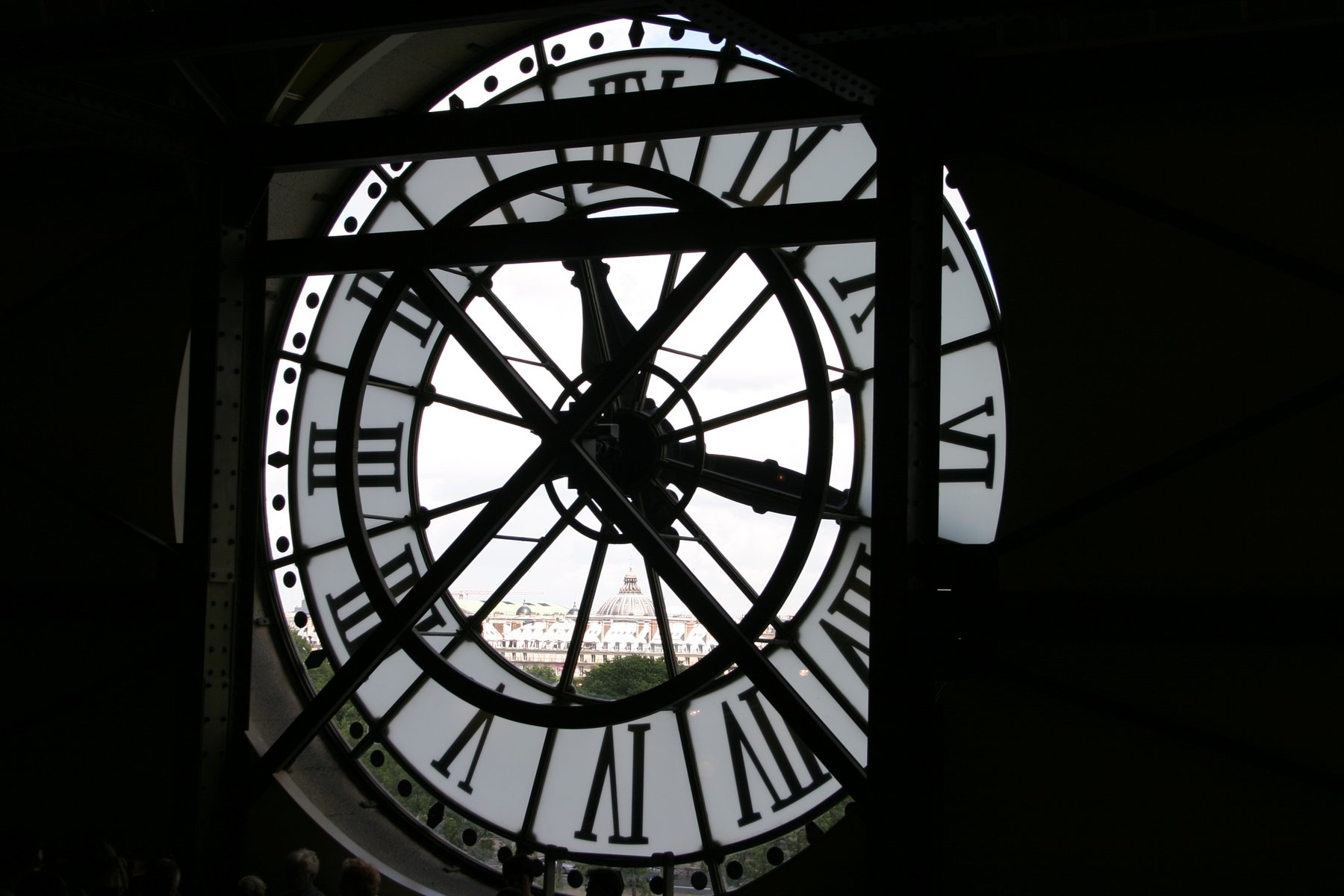
There are only three museums in Paris that matter for Impressionism, and one of them is so far west of the tourist core that most first-time visitors never set foot in it. The other two are visible from the same Right Bank balcony if you know where to look. The first is the Musée d’Orsay, an old train station on the Quai Anatole France that holds the largest concentration of Impressionist paintings in the world. The second is the Musée de l’Orangerie, a former orange-tree greenhouse on the western edge of the Tuileries gardens that holds Monet’s eight wall-sized water lily panels in two oval rooms designed by the painter himself. The third is the Musée Marmottan Monet, a small mansion on the western edge of the sixteenth arrondissement that holds the painting that named the entire movement and ninety-four other Monets that were the painter’s own personal collection. Three buildings. Roughly a thirty-minute walk between them, end to end, if you skip the Marmottan, which most one-day Paris visitors will. The impressionism museum Paris question, in other words, is not actually about which museum to visit. It is about which two of three you can fit into a day and which one you have to come back for.
This is a guide to all three. What is in each one. Why you should care. The order to do them in. The fourth museum nobody mentions but probably should — the Petit Palais. And the day trip out to Giverny, the impressionism museum giverny option, if you have a second morning to give.
Why Paris is the Impressionism city
Before the museums, a quick context note because it answers the question a lot of visitors have. Why is so much Impressionism in Paris and not, say, in London or New York?
Two reasons. The first is geographical. Impressionism was a Paris movement. The painters were a small group of friends who lived in or near Paris in the 1860s and 1870s, painted next to each other in the forest of Fontainebleau and the suburbs of the Seine, showed in eight group exhibitions in Paris between 1874 and 1886, and ended up centered around the dealers Paul Durand-Ruel and Ambroise Vollard, both of whom had Paris galleries. The collections that ended up in Paris were either bought by these dealers and never sold, or bequeathed to the French state by the painters themselves and their patrons.
The second is the Caillebotte bequest of 1894. Gustave Caillebotte, the engineer-painter who had used his inheritance to keep his friends solvent through the lean 1870s, died at forty-five and left his collection of sixty-seven Impressionist canvases to the French state. The state took five years to fight through the legal and curatorial objections, but in 1899 finally accepted thirty-eight of them. Those thirty-eight paintings — two Cézannes, eight Monets, eight Renoirs, seven Pissarros, six Sisleys, four Manets, two Caillebottes, one Degas — became the founding nucleus of what is now the Impressionist gallery at the Orsay. Without that bequest, half the major canvases in Paris today would be in private hands or in American museums.
Three buildings hold roughly ninety percent of the Impressionist work in Paris between them. Here they are, in the order you should do them.
1. Musée d’Orsay — the main collection
The Orsay is the obvious one, the one almost every visitor does, and the one that holds the bulk of the impressionism national gallery for France. About four thousand objects on permanent display in a former Beaux-Arts train station on the Right Bank of the Seine. Around three hundred of them are Impressionist or post-Impressionist canvases. The biggest concentration is on the fifth floor, behind the famous thirty-two-foot glass clock, in a row of galleries that runs the length of the old central platform.
What is here, and what is not. The Orsay has eighteen Monets including five from the Rouen Cathedral series, hung side by side. It has eighty Renoirs, more than any other museum in the world. It has sixty Manets including Olympia and Luncheon on the Grass, both on the ground floor, both painted before Impressionism formally existed. It has the largest collection of Degas pastels and oils in the world, including the wax sculpture of the Little Dancer Aged Fourteen. It has twenty-four Van Goghs, the second-largest collection after the Van Gogh Museum in Amsterdam. It has the Caillebotte’s Floor Scrapers and his nine-foot-wide rainy-day painting of the new Haussmann boulevards. It has Pissarros, Sisleys, Cézannes, Berthe Morisot, Mary Cassatt. It has, in short, the trunk of the Impressionist tree.
What it does not have: the Sunrise that named the movement (that is at the Marmottan), and any of the wall-sized Nymphéas Monet made specifically for the post-war French state in the 1920s (those are at the Orangerie). Both gaps are deliberate. The Orsay’s collection ends at 1914, by curatorial design, and the late Monet panels were always intended for a different building.
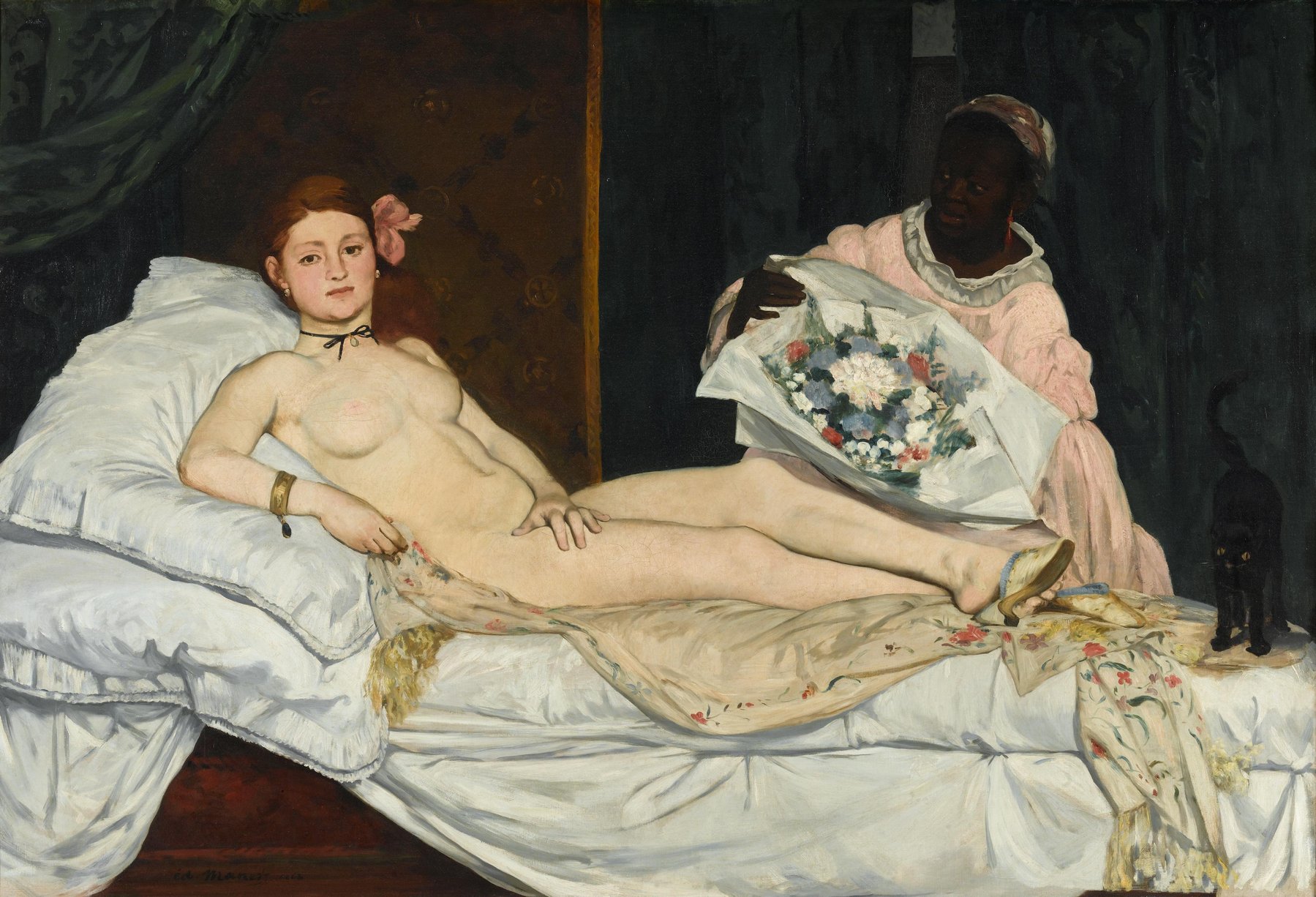
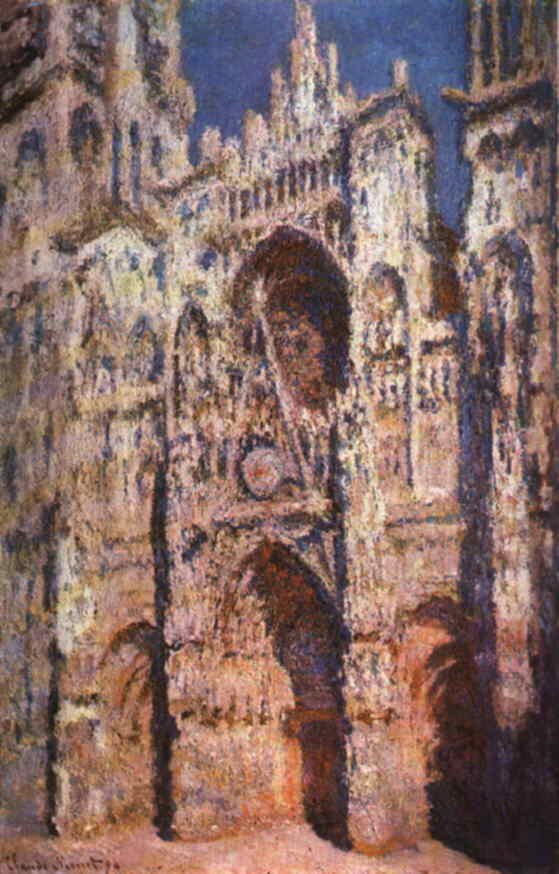
How to do it. Three hours minimum, four is comfortable. Start on the ground floor with Manet’s Olympia and Luncheon on the Grass. Then go up the escalator to the fifth floor for the Impressionists. The order matters. The Manet ground-floor pieces set up everything that comes upstairs. We have a longer guide to the Orsay’s exact route that walks through it floor by floor.
The Orsay is open Tuesday through Sunday. Closed Mondays. Standard adult ticket as of 2026 is around twenty-two euros. The line at the main entrance can run forty-five minutes in summer; the side entrance for ticket holders is on Rue de la Légion d’Honneur and is almost always faster. The audio guide app on your phone is good for the building’s history; for the paintings themselves you are usually better off with a friend who knows the room.
The Orsay’s signature paintings to know before you walk in: Manet’s Olympia, Renoir’s Bal du moulin de la Galette, Caillebotte’s The Floor Scrapers, Degas’s The Ballet Class, Monet’s Rouen Cathedrals (five of them), Van Gogh’s self-portrait from Saint-Rémy and his Bedroom at Arles. Knowing those eight before you arrive will give you an anchor in every gallery.
2. Musée de l’Orangerie — the Nymphéas
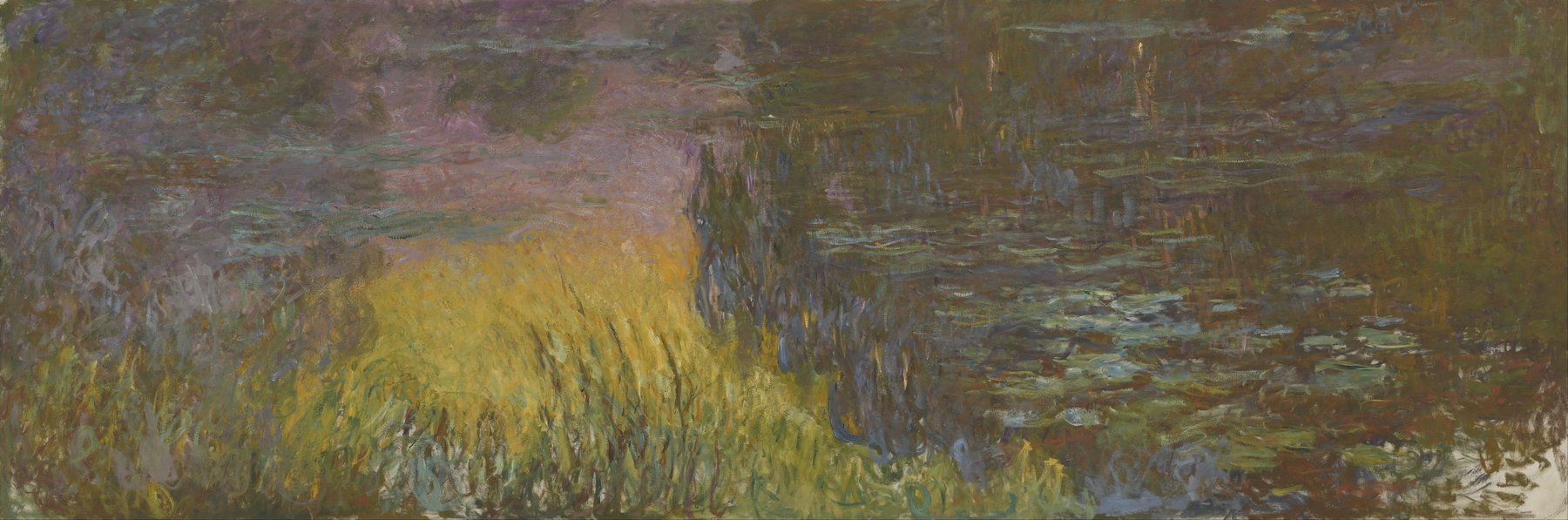
The Orangerie is the smallest of the three big museums, and arguably the most rewarding. It sits on the western edge of the Tuileries gardens, across the river from the Orsay and a ten-minute walk away. The building was originally a heated greenhouse for the orange trees of the Tuileries palace, built in 1852. After the palace burned in 1871, the orangery was repurposed several times — as a sports hall, an exhibition space, an emergency lodging during the First World War. In 1921 the French state agreed to convert it into a permanent home for the eight enormous water lily panels Claude Monet had been working on at Giverny since the early 1910s.
Monet himself designed the two oval rooms on the lower level. Each panel is roughly six feet tall. Some are forty feet wide. Together they cover almost two hundred linear feet of wall. The light is filtered from above through frosted glass to mimic the natural daylight Monet wanted. The two rooms are arranged in a figure-eight loop, so the visitor walks through one full immersive panorama, then crosses through a small connecting passage, then walks through a second one. The whole thing takes about thirty minutes if you are paying attention. It can take an hour if you sit on the central bench in either room and just stop trying to do anything else.
The Orangerie also has the Walter-Guillaume collection on the upper level, donated by the dealer Paul Guillaume’s widow Domenica in 1959 and 1963. About a hundred and fifty paintings. Twenty-five Renoirs. Fourteen Cézannes. Twelve Picassos. Ten Matisses. Eight Modiglianis. Five Soutines. The collection is small and dense and entirely walkable in forty-five minutes. The two together — Nymphéas downstairs, Walter-Guillaume upstairs — make for one of the most efficient art experiences in Paris.
Tickets are about thirteen euros. Lines are usually short. The museum is closed on Tuesdays, which is the opposite of the Orsay’s closed-Monday schedule, so you can do the Orsay one day and the Orangerie the next without a Monday-Tuesday closure conflict. Combined Orsay-Orangerie tickets exist and are slightly cheaper than buying separately.
The signature panels to know: the Setting Sun panel, the Morning panel with the willows reflected in the water, the Clouds panel which is the most abstract. They are all the same lily pond at Giverny, painted at different times of day, in different lights. Monet was eighty-four when he finished them. He was nearly blind from cataracts. They are the late summary of forty years of looking at the same patch of water.
3. Musée Marmottan Monet — the family collection
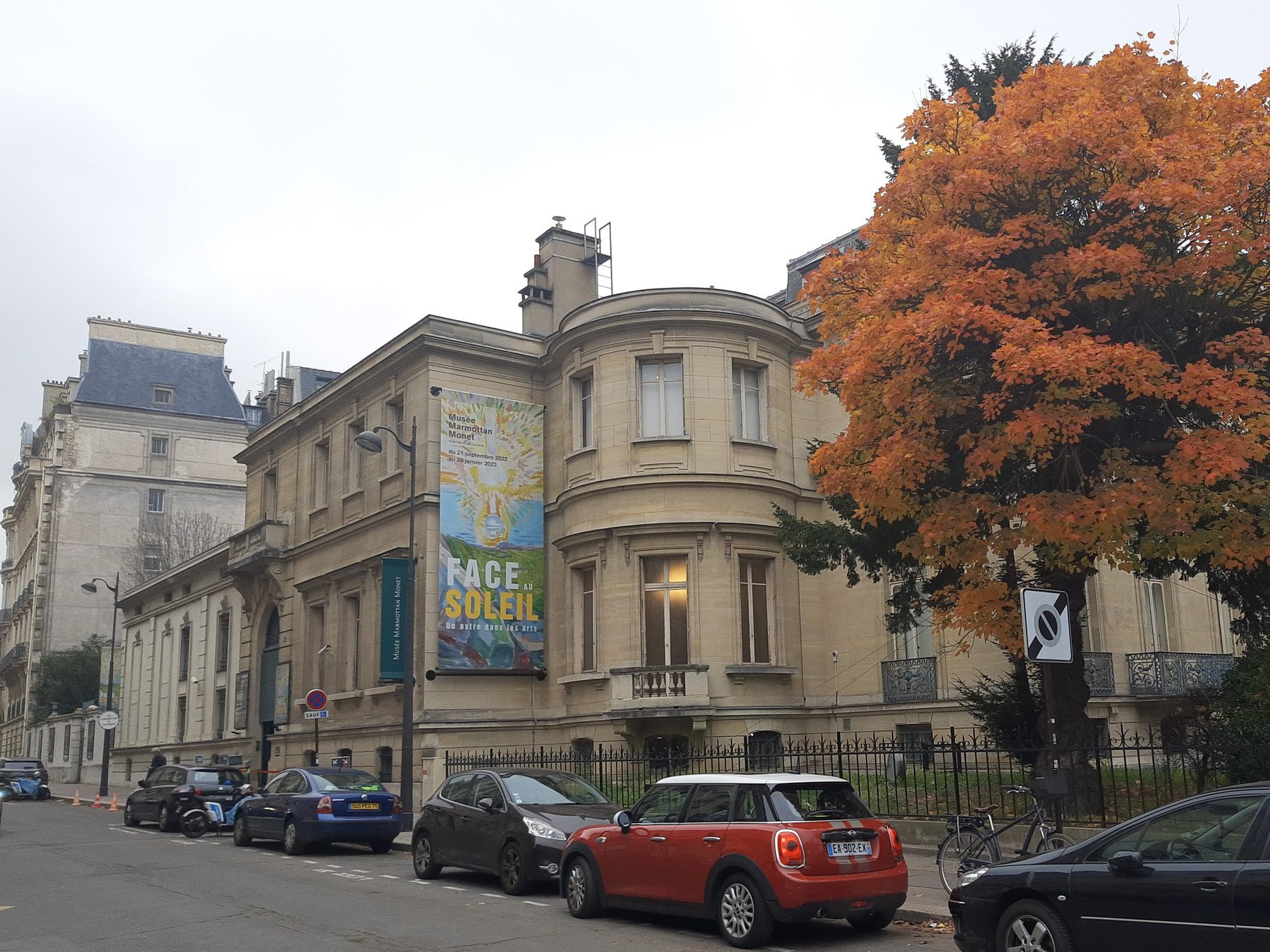
The Marmottan is the museum that nobody mentions in the standard impressionism museum paris listings, and it is the one with the painting that named the movement. It sits at 2 Rue Louis-Boilly in the sixteenth arrondissement, a twenty-five-minute metro ride from the city center, on the western edge of Paris near the Bois de Boulogne. The building is a small mansion that was donated to the Académie des Beaux-Arts in 1932 by an art historian named Paul Marmottan along with his collection of Napoleonic art and furniture. In 1957 a separate bequest from a private collector added the largest collection of Berthe Morisot work in the world, twenty-five paintings. In 1966 Michel Monet, the painter’s only surviving son, donated his father’s personal collection — ninety-four canvases — to the Marmottan along with extensive correspondence and family photographs.
The Monet bequest changed the Marmottan from a small Napoleonic museum into the most-Monet-per-square-meter building in the world. The collection is hung on the third floor in a series of small rooms. Most of it is late Giverny work — water lilies, weeping willows, Japanese bridges, the Grande Allée — painted between 1900 and 1926 when Monet was already an old man working through his cataracts. The latest paintings, from 1922 to 1926, are almost abstract: dense thickets of red and orange and dark green that resolve into recognizable subjects only when you step back six feet.
Among the ninety-four Monets is the Impression, soleil levant. The 1872 Le Havre harbor study that gave the entire movement its name when a satirical critic in 1874 used the title to mock the painters and the painters kept the label. It hangs in a small low-lit gallery, with two benches, on the third floor. There are usually about ten people in front of it at any given time. The room is quiet. The painting is forty-eight by sixty-three centimeters, smaller than most reproductions suggest. It looks like a sketch in person. It looks, in other words, exactly like the kind of painting a satirical critic would have called an “impression” in 1874.
The Marmottan also has the Berthe Morisot collection, which is the second reason to make the trip. Twenty-five works, including her late self-portrait, several of her domestic interiors, and the small landscape studies she made in the Bois de Boulogne in the 1880s. Outside the Orsay, this is the largest Morisot collection in the world.
Tickets are about fourteen euros. Lines are short. The museum is closed on Mondays. The metro stop is La Muette on Line 9 and the walk is about ten minutes through residential streets that feel nothing like central Paris. Chiaro reads out Monet’s December 1872 letter to Paul Durand-Ruel describing “the impression of a sunrise” he had been trying to catch while you stand in front of the orange dollop and the seven flicks of red on the water.
4. Petit Palais — the one nobody mentions
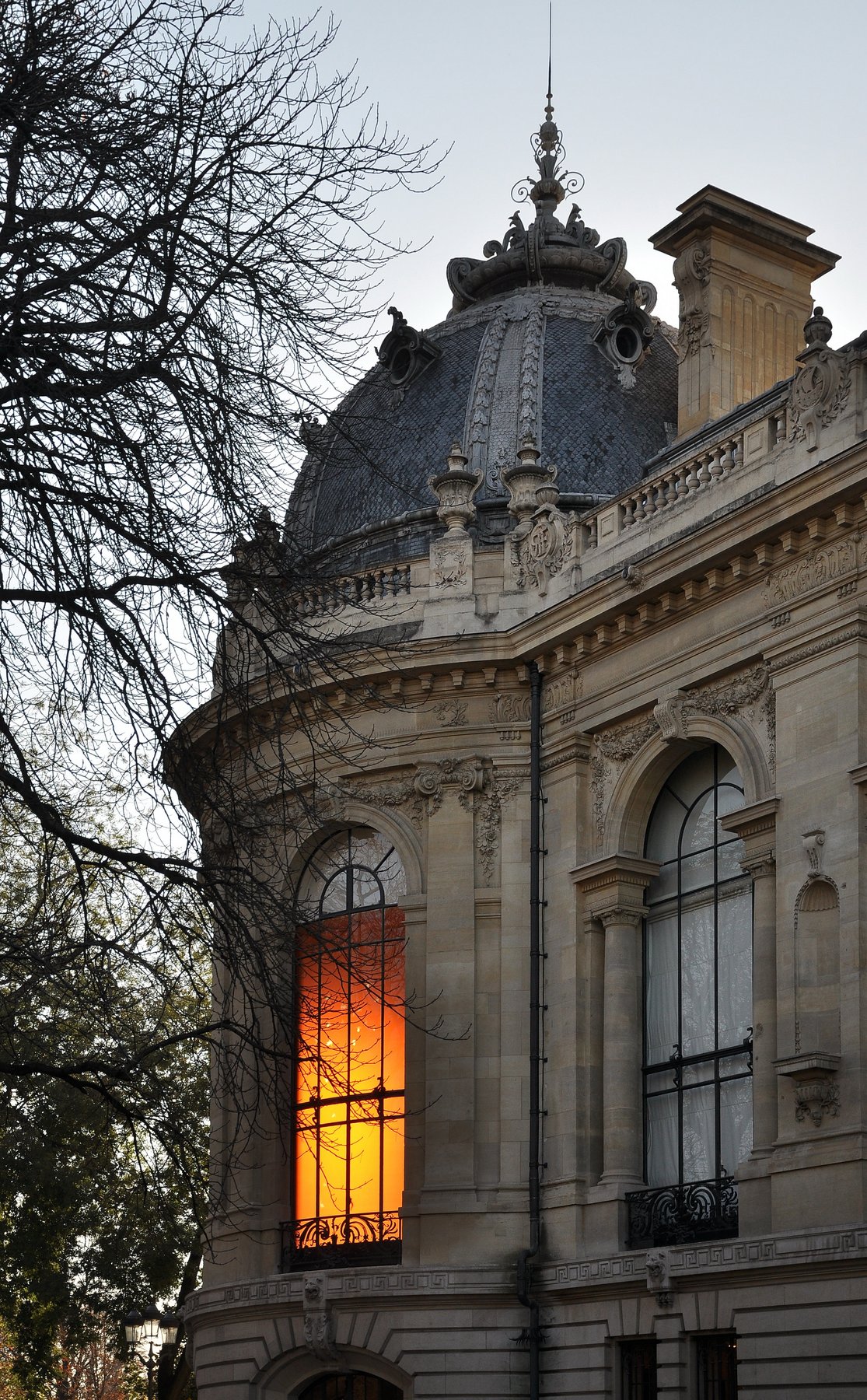
The Petit Palais is the impressionism gallery the standard guides leave out, and it is the only one of the four that costs nothing. It sits on Avenue Winston-Churchill, between the Champs-Elysées and the Seine, in a building purpose-built for the 1900 Exposition Universelle. The collection is the City of Paris’s own art holdings, distinct from the national collections of the Orsay and the Marmottan. It includes about thirteen hundred works on permanent display. Of those, about thirty are Impressionist or post-Impressionist, and about a dozen are first-rate.
The Tuck collection, donated in 1921 by the American philanthropist Edward Tuck, includes pieces by Monet, Sisley, Pissarro, and Berthe Morisot. The Pierre and Denise Lévy bequest in 1976 added Bonnards, Vuillards, and a Cézanne. There is a small Courbet room, a Manet, an early Renoir.
Free admission. Open Tuesday through Sunday. Lines almost never. The crowd is mostly Parisians on a Sunday afternoon and serious art tourists who have figured out it is here. Forty-five minutes is enough to walk through the Impressionist galleries; another forty-five gets you the eighteenth-century French and the Russian Orthodox sections that fill out the rest of the building.
The Petit Palais is the right move if you are doing the Orsay-Orangerie pair on day one, the Marmottan on day two, and you have an extra hour on day three. It is also a good rainy-afternoon refuge for anyone who has overdone the headline museums.
5. The Giverny day trip — the impressionism museum Giverny option
The Fondation Claude Monet at Giverny is technically not in Paris, but it is the impressionism museum giverny option that comes up so often it deserves a paragraph. Giverny is the village in Normandy where Monet bought a farmhouse in 1890 and where he spent the last forty-three years of his life. The house and gardens are open to the public from April through November. The water lily pond is the actual pond from the paintings. The pink-stucco house is the actual house. The studios on the property where he painted the wall-sized Orangerie panels are the actual studios.
There are no Monet paintings at Giverny. They were all sold or donated by the time Monet died, mostly to the Marmottan and the Orangerie. The Giverny visit is about the place, not the canvases. You walk through the upper garden where the irises grow in stripes. You walk across the central path under the rose arches. You go down the tunnel that runs under the road to the lower garden, the water-lily garden. You stand on the small Japanese bridge. You look at the pond. You realize that the pond is much smaller than the paintings make it seem, and that this is the point.
Trains from Gare Saint-Lazare to Vernon run hourly and take about forty-five minutes. From Vernon, a shuttle bus runs to Giverny, about fifteen minutes. Total round trip from central Paris is about three and a half hours of travel for two and a half hours on site. The visit is best done in late April or May, when the irises and the wisteria are in bloom, or in mid-June when the lilies open. By August the pond is somewhat overgrown and the crowds are at their worst.
This is the day trip that adds context to everything you have seen at the Orangerie, the Marmottan, and the Orsay. It is not, by itself, an impressionism museum visit in the gallery sense. It is the source.
The order, end to end
The optimal Paris-Impressionism itinerary, for one full day:
Morning: Orsay, three to four hours. Start on the ground floor with Manet. Go up to the fifth floor for Monet, Renoir, Degas. Eat lunch in the cafe behind the clock if the line is short.
Afternoon: Walk across the Pont Royal to the Tuileries. Cross the gardens west, fifteen minutes. Enter the Orangerie. Spend an hour in the Nymphéas rooms. Spend forty-five minutes in the Walter-Guillaume collection upstairs. Total time: about two hours.
If you have a second day: Marmottan in the morning, ninety minutes including the metro. Petit Palais in the afternoon for forty-five minutes. The rest of the day is yours for the rest of Paris.
If you have a third day and the weather is decent: train to Vernon, shuttle to Giverny, three hours total on site. You will be back in central Paris by five.
This sequence works for one specific reason. The Orsay teaches you what the eight major painters were trying to do, against what backdrop, in roughly chronological order. The Orangerie shows you Monet at the very end of his career, working with the techniques the Orsay taught you to see. The Marmottan shows you where the whole movement started — the small Le Havre harbor study from 1872 — and Monet’s personal late collection. Giverny shows you the place that produced the late Marmottan and Orangerie work. You are walking the timeline of the movement in roughly the right direction.
What to look for at each one
A short cheat sheet, one item per museum:
- Orsay: stand in front of Olympia for ten minutes before you go upstairs. The whole rest of the museum is the answer to her.
- Orangerie: sit on the central bench in the second oval room and let the panels resolve. They look like nothing for the first three minutes, then everything resolves at the same time.
- Marmottan: get within eighteen inches of the Sunrise. Look at the orange dollop and the pencil grid still visible at the bottom edge.
- Petit Palais: find the Tuck collection. The small Sisley flood painting is not at the Orsay, only here.
- Giverny: stand on the Japanese bridge. Look down at the actual pond. Realize how small it is.
The kicker
A train station that became a museum. A greenhouse that became two oval rooms of water lilies. A small mansion in the sixteenth that holds the painting that named the movement and the personal collection of the painter who started it. A free city museum nobody talks about. A village in Normandy with a one-acre pond. Five buildings, five different ways into the same hundred-and-fifty-year-old conversation about light and water and weather. You can do most of it in two days. The rest takes a lifetime, which is roughly what Monet gave it.
Image credits
- Paris - Musée d’Orsay - big clock seen from the interior.jpg — via Wikimedia Commons. Source, CC BY-SA.
- Claude Monet - The Water Lilies - Setting Sun - Google Art Project.jpg — Claude Monet (1840-1926). Source, Public Domain.
- Musée Marmottan Monet, Paris, from street.jpg — via Wikimedia Commons. Source, CC BY-SA.
- Petit Palais Paris 8e.jpg — via Wikimedia Commons. Source, CC BY-SA.
- Edouard Manet - Olympia - Google Art Project 3.jpg — Édouard Manet (1832-1883). Source, Public Domain.
- RouenCathedral Monet 1894.jpg — Claude Monet (1840-1926). Source, Public Domain.


