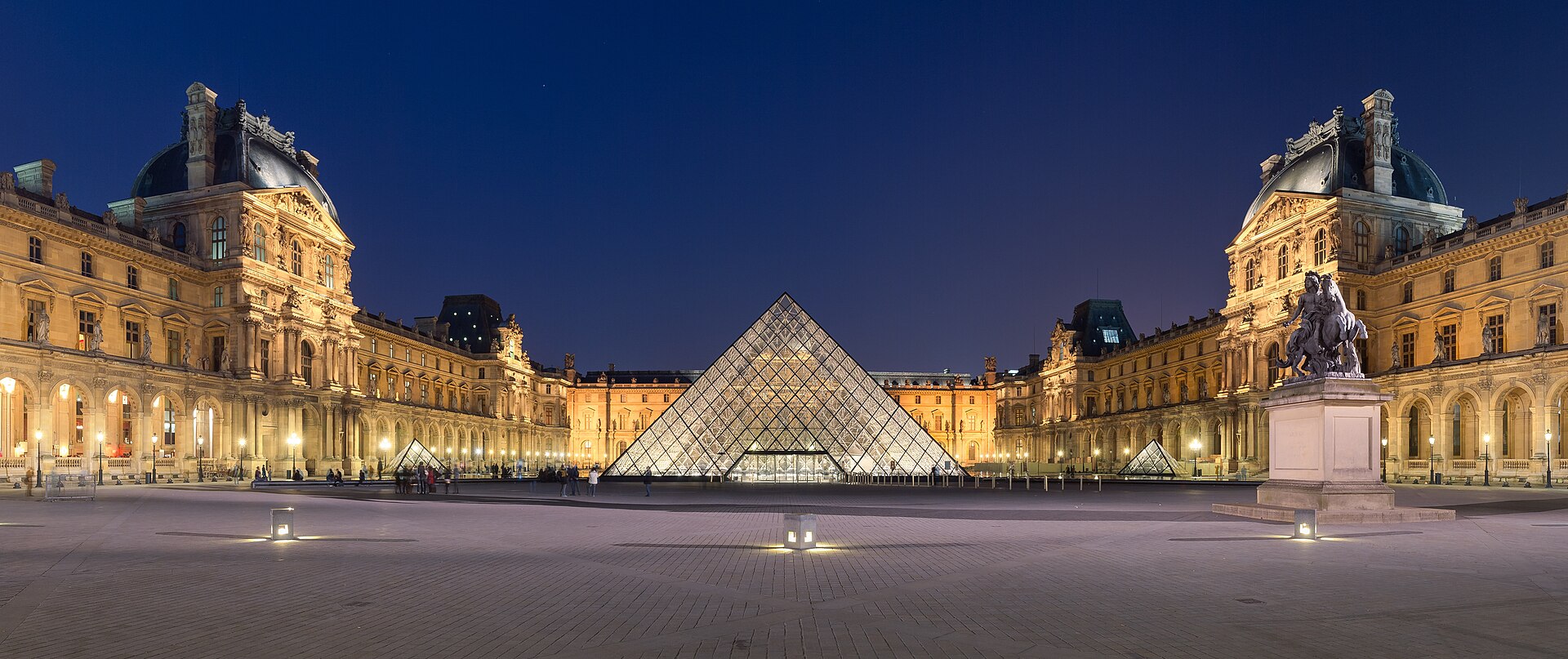
On the morning of June 16, 2025, the Louvre did not open. Thousands of people stood in the courtyard around the glass pyramid, tickets in hand, while the museum’s own staff refused to start work. They were protesting the crowds. The guards and ticket agents said the building had become unmanageable, and they had a point: the pyramid was designed in the 1980s for a museum that drew roughly half the visitors it gets today. That is the honest backdrop to any question about Louvre hours. The opening times are the easy part. The hard part is that close to nine million other people want the same hours you do.
So this is a planner, not a highlights list. It covers when the Louvre is open, how to get in, how to hold the whole building in your head as a simple map, and how long you actually need. If you want to know which works to walk toward once you are inside, that is a separate piece: what to see at the Louvre when you only have a few hours. This one gets you to the door, through it, and back out again before your feet give up.
Louvre hours in 2026
| Day | Opening hours | Notes |
|---|---|---|
| Monday | 9:00 a.m. to 6:00 p.m. | Busy: the Musée d’Orsay and Versailles are closed on Mondays |
| Tuesday | Closed | Every Tuesday, all year |
| Wednesday | 9:00 a.m. to 9:00 p.m. | Late opening |
| Thursday | 9:00 a.m. to 6:00 p.m. | |
| Friday | 9:00 a.m. to 9:00 p.m. | Late opening; free for everyone after 6:00 p.m. on the first Friday of the month, except July and August |
| Saturday and Sunday | 9:00 a.m. to 6:00 p.m. | Weekend crowds |
| January 1, May 1, December 25 | Closed |
The Louvre opens at 9:00 in the morning six days a week. It closes at 6:00 in the evening on Mondays, Thursdays, Saturdays, and Sundays, and stays open until 9:00 at night on Wednesdays and Fridays. It is closed every Tuesday. It is also closed on three public holidays, January 1, May 1, and December 25, and otherwise open on holidays unless one happens to fall on a Tuesday.
Two smaller rules matter more than people expect. Last entry is one hour before closing. And the guards start clearing the rooms thirty minutes before closing, so a 6:00 p.m. closing really means you should be finished by about 5:30. If you walk in at 4:55 on a Thursday, you have a little over half an hour of actual looking.
These are the hours the museum lists on its official site as of November 2026. The Louvre has changed its schedule before, it has closed rooms at short notice during renovations, and it has been shut without warning by strikes. Check louvre.fr in the week of your visit, and look at the list of rooms that are closed that day, before you plan a route around a single painting.
Tickets, time slots, and the price that just went up
Since January 14, 2026, the Louvre has charged two prices. Visitors from the European Economic Area pay 22 euros. Everyone else, including Americans, pays 32 euros. Under-18s get in free, and so do residents of the European Economic Area under 26, with ID. The audio guide is extra.
Book online, on the museum’s own ticketing site at ticket.louvre.fr, and pick a time slot. The museum’s official line is that time-slot reservations are recommended for everyone, including people who qualify for free entry. In practice the recommendation sometimes becomes a rule. The Louvre made reservations mandatory for nearly all visitors through the end of August 2026, and again for the autumn school holidays from October 17 to November 1. Expect the same at Christmas and in spring. Tickets are sometimes sold at the door when the building is quiet, but you should treat that as a bonus, not a plan.
One warning the museum repeats loudly. Avoid resale sites that look like the official one, “skip the line” tickets sold by third parties, and anyone selling tickets on the street. The Louvre says those tickets can be refused at the door, and once you are inside, any exit is final. Your ticket does not let you step out for lunch and come back.
Which entrance to use
There are four doors into the Louvre, and only two of them are for you.
The Pyramid. This is the main entrance for individual visitors, in the middle of the Cour Napoléon. It runs three lines: a green priority line for people with timed tickets or a Paris Museum Pass, an orange line for people without tickets, and a blue priority line for disabled visitors. If you have booked, find the green line and ignore the length of the orange one.
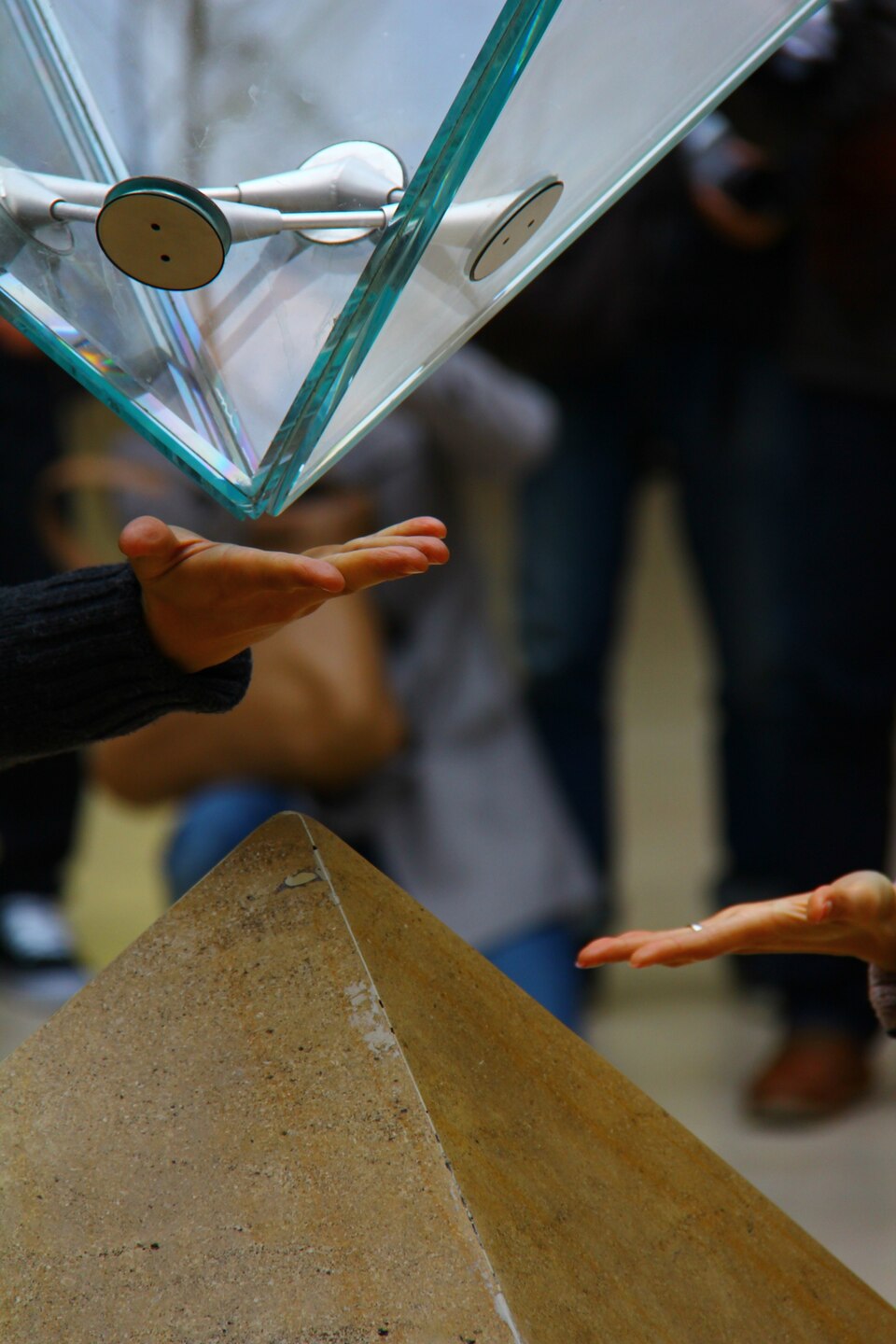
The Carrousel entrance. This is the underground way in, through the Carrousel du Louvre shopping arcade at 99 rue de Rivoli, under the small upside-down glass pyramid that I. M. Pei’s office designed as a skylight. All visitors can use it. It is also connected to the Palais-Royal - Musée du Louvre Metro station on lines 1 and 7, which means you can get from a train to the security line without stepping outside. On a rainy morning in November, that matters.
The Porte des Lions. This is the door on the Seine side, along the Quai François Mitterrand, at the far western end of the Denon wing. It is open only to people who already hold tickets, it closes at 6:00 p.m. every day with last entry at 5:00, and it is closed on Tuesdays like the rest of the museum. When it is open it is often the quietest way in, and it drops you near the Spanish painting galleries at the western end of Denon rather than under the pyramid. It has a history of closing for long stretches, so confirm it before you count on it.
The Passage Richelieu. This is the arcade between the rue de Rivoli and the pyramid courtyard. It is reserved for groups, members, and certain card holders. Individual ticket holders cannot use it.
Whichever way you come in, you end up in the same place: the Hall Napoléon, the big underground lobby beneath the pyramid. That is where the map begins.
The Louvre museum map you can carry in your head
The official Louvre museum map is a fold-out sheet printed in nine languages, plus a PDF and an interactive floor plan on the museum’s collections site. It is useful and overwhelming: several floors, three wings, hundreds of numbered rooms. You will spend the first half hour holding it upside down.
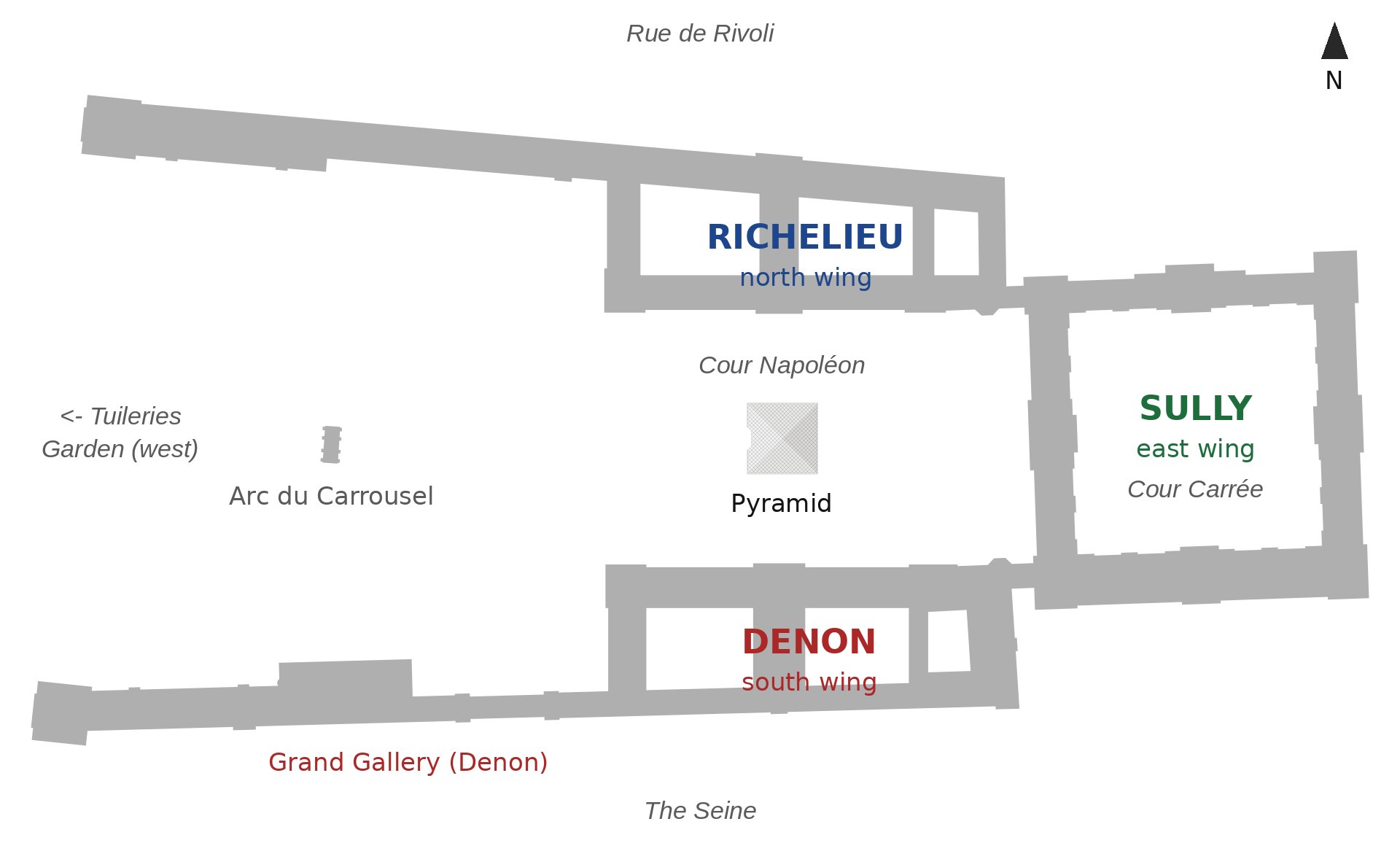
Here is a simpler version. The Louvre is a giant letter U lying on its side, opening toward the west and the Tuileries Garden. The pyramid sits in the open mouth of the U. The three arms of the building each have a name, and each name is a shortcut to what is inside.
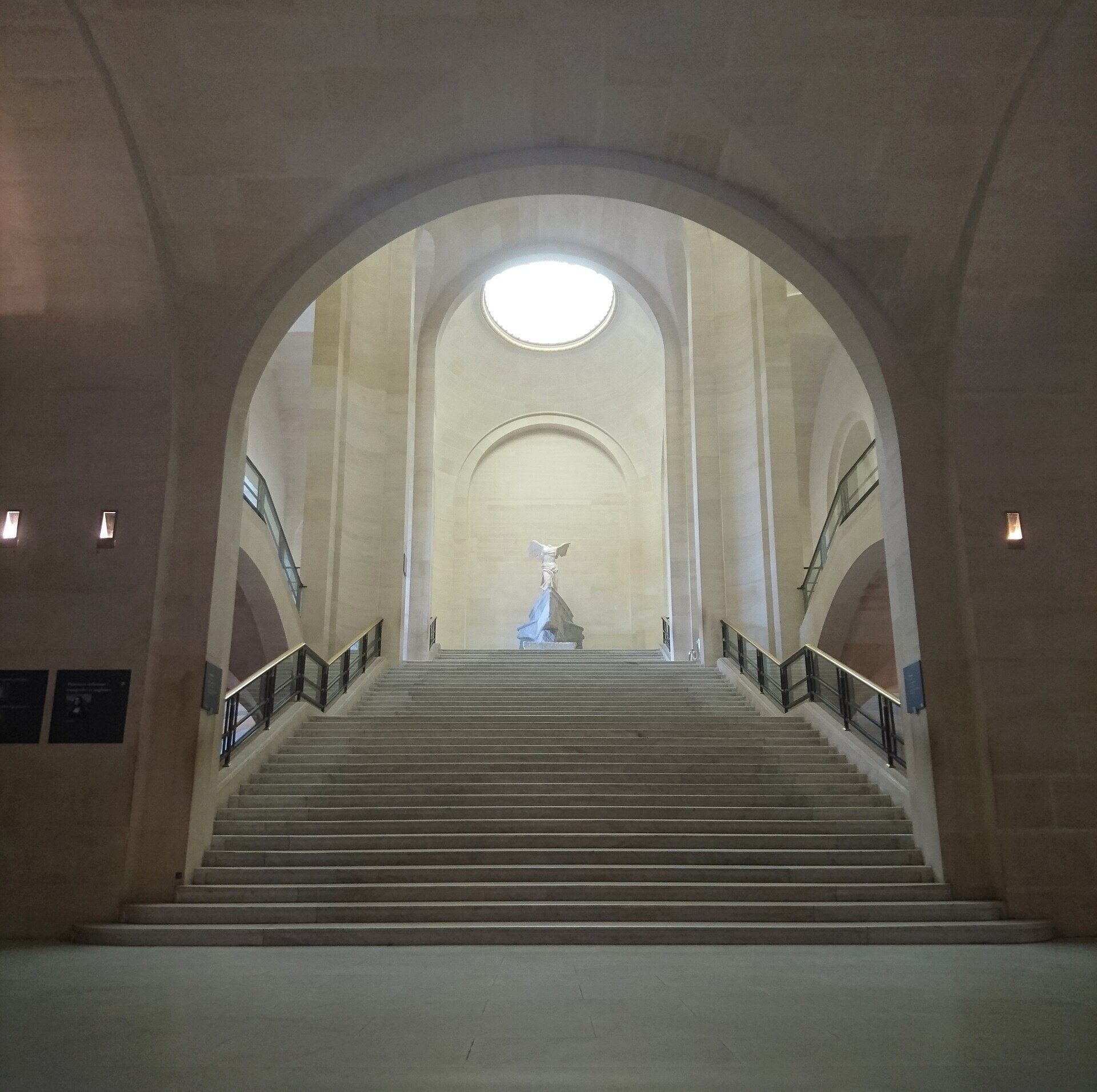
Denon is the south wing, the long arm along the river. This is the crowded one, because almost everything famous is here. The Winged Victory of Samothrace stands at the top of the Daru staircase. The Grand Gallery of Italian painting runs for around 460 meters along the Seine. The Mona Lisa hangs in the Salle des États, room 711, on the first floor. The huge French history paintings fill the red rooms next door: the Coronation of Napoleon, the Raft of the Medusa, Liberty Leading the People. Michelangelo’s two Slaves are on the ground floor below.
Sully is the east end, built around the square Cour Carrée. This is the oldest part of the palace, and its lowest level is older still: you can walk along the dry moat and the base of the towers of the medieval fortress that King Philip Augustus built around 1190. Sully also holds most of the Egyptian collection, the Great Sphinx of Tanis in the crypt, and the Venus de Milo on the ground floor, in room 345.
Richelieu is the north wing, along the rue de Rivoli. It used to house the French Ministry of Finance, which only moved out in the late 1980s. Today it holds the Code of Hammurabi and the ancient Near East on the ground floor, the Napoleon III apartments on the first floor, and the Dutch and Flemish painters on the second, where Vermeer’s Lacemaker is so small that people walk past it looking for something bigger.
That is the whole map. Denon for the famous, Sully for the old, Richelieu for the quiet. Escalators from the Hall Napoléon go up into each one, and the wing names are printed above them. If you only remember one thing, remember that the Denon wing is where the crowds are, and the other two wings are where the space is.
The story of how a fortress became a palace became a finance ministry became a museum is too good to cram in here. It gets its own piece: the fortress, the palace, and the museum stacked inside one building.
How long is the Louvre, really
People asking how long the Louvre is usually mean one of two things. The building itself is enormous: the riverside wing alone runs for most of half a kilometer, and the galleries add up to many miles of walking if you try to cover them all. Nobody does. The second meaning is the useful one. How long does it take to see the Louvre in a way you will remember?
Here is the honest answer. Nobody sees the Louvre. You see a slice of it, and for most people the attention runs out before the legs do. After about two and a half hours, the paintings start to blur together. The Louvre is the most efficient machine for producing museum fatigue ever built.
| Time | What it buys you |
|---|---|
| 2 hours | One wing, done properly. For most first-timers, Denon: the Winged Victory, the Grand Gallery, the Mona Lisa, the French red rooms. |
| 3 to 4 hours | Denon plus one other wing. The right amount for a first visit. Take a break at the halfway point. |
| A full day | All three wings at a sensible pace, with lunch and a real sit-down. Tiring, but possible. |
| An evening | A Wednesday or Friday from 6:00 p.m. to 8:30 p.m. Quieter rooms, shorter lines, one wing. |
How long to spend at the Louvre on a first visit
Three to four hours. That is our recommendation, and we will defend it. Two hours is enough to see the famous things, but you will spend a good chunk of it walking between them and standing in the Mona Lisa line. A whole day is enough to see almost everything, but by mid-afternoon you will not be looking at anything properly.
Three to four hours lets you do one wing with care and a second wing with curiosity, and leaves time for a coffee in between. Here are three routes, sized to the time you have.
The two-hour route. Enter by the pyramid and take the escalator to Denon. Go up the Daru staircase to the Winged Victory. Turn right into the Grand Gallery and walk it slowly, all the way down. Duck into the Salle des États for the Mona Lisa, then turn around to face the Wedding at Cana on the opposite wall, which is the largest painting in the building and the one nobody looks at. Finish in the red rooms with David and Géricault and Delacroix. Out by the time your feet start to complain.
The half-day route. Do the two-hour route, then cross to Sully. Go down to the medieval moat first, because it resets your eyes after all that paint. Then the Egyptian galleries and the Venus de Milo. If you have energy left, go up to the second floor of Sully for the French painting collection, where you will have room to breathe.
The full-day route. Start with Richelieu in the morning, while the crowds are still fighting over the Mona Lisa. The Mesopotamian rooms, the Napoleon III apartments, the Dutch painters upstairs. Eat lunch. Then Denon in the afternoon, when the morning tour groups have moved on, and Sully last, as the light drops in the Cour Carrée.
If you want the paintings in more depth, a separate guide covers the Louvre paintings worth walking for once you are past the Mona Lisa, and another walks through the Coronation of Napoleon figure by figure.
The best time to visit the Louvre
There is a single best time to visit the Louvre, and it is a Wednesday or Friday evening. After about 6:00 p.m. the tour groups have gone, the families with small children have gone, and the people who came for one photograph have taken it and left. The galleries go quiet in a way they never are at 11 in the morning. You get three hours of a building that feels like a palace instead of an airport. Evening visits suit one wing, not three, so go in with a plan.
The second-best time is first thing in the morning, with a 9:00 a.m. ticket. The trick is to go the opposite way from everyone else. The crowd from the pyramid heads straight for the Mona Lisa, so you go to Richelieu or Sully and have the Venus de Milo or the Code of Hammurabi nearly to yourself. Come back to Denon in the afternoon.
The worst times follow a pattern. Mondays are heavy, because the Musée d’Orsay and Versailles are both closed and the Louvre absorbs their visitors. Wednesday mornings are heavy, because the museum was closed the day before. Weekends are heavy all year, and so is the free first-Friday evening. And from late morning to mid-afternoon, every day, the Denon wing is at its fullest.
By season, January and February are the quietest months, apart from school holidays. July and August are the busiest, and the museum has turned to mandatory reservations in summer to manage them. If you are flexible about dates, a weekday in the deep of winter, in the evening, is the Louvre at its most generous.
The Mona Lisa line and how to handle it
The Mona Lisa is in the Salle des États, behind a roped switchback, a wooden barrier, and a sheet of glass. You will be a few meters away from her for about a minute, and you will spend longer than that in the line. Budget fifteen to thirty minutes for the room on a busy day.
Most people spend the wait looking at the back of the person in front. A better use of it is listening. The panel is small, but the story behind it is enormous: a painting that was only moderately famous until an Italian handyman, Vincenzo Peruggia, walked out with it under his smock in August 1911. Chiaro fills those fifteen minutes in the switchback with the theft, the empty hooks on the wall, and the two years when crowds came to the Louvre to stare at the space where she used to be. By the time you reach the barrier you know what you are looking at.
Do not end your visit there. The room is designed to make you turn around and leave. Instead, turn around and stay. Veronese’s Wedding at Cana covers the opposite wall, and you can stand in front of it with almost nobody between you. For more on the painting itself, there is a whole piece on what it is actually like to stand in front of the Mona Lisa.
The Louvre has announced plans to give her a room of her own, with a new entrance on the east side of the palace, as part of a renovation called the Louvre Nouvelle Renaissance. The target date is around 2031. Until then, the Salle des États remains the busiest room in the building.
A few things that will save your day
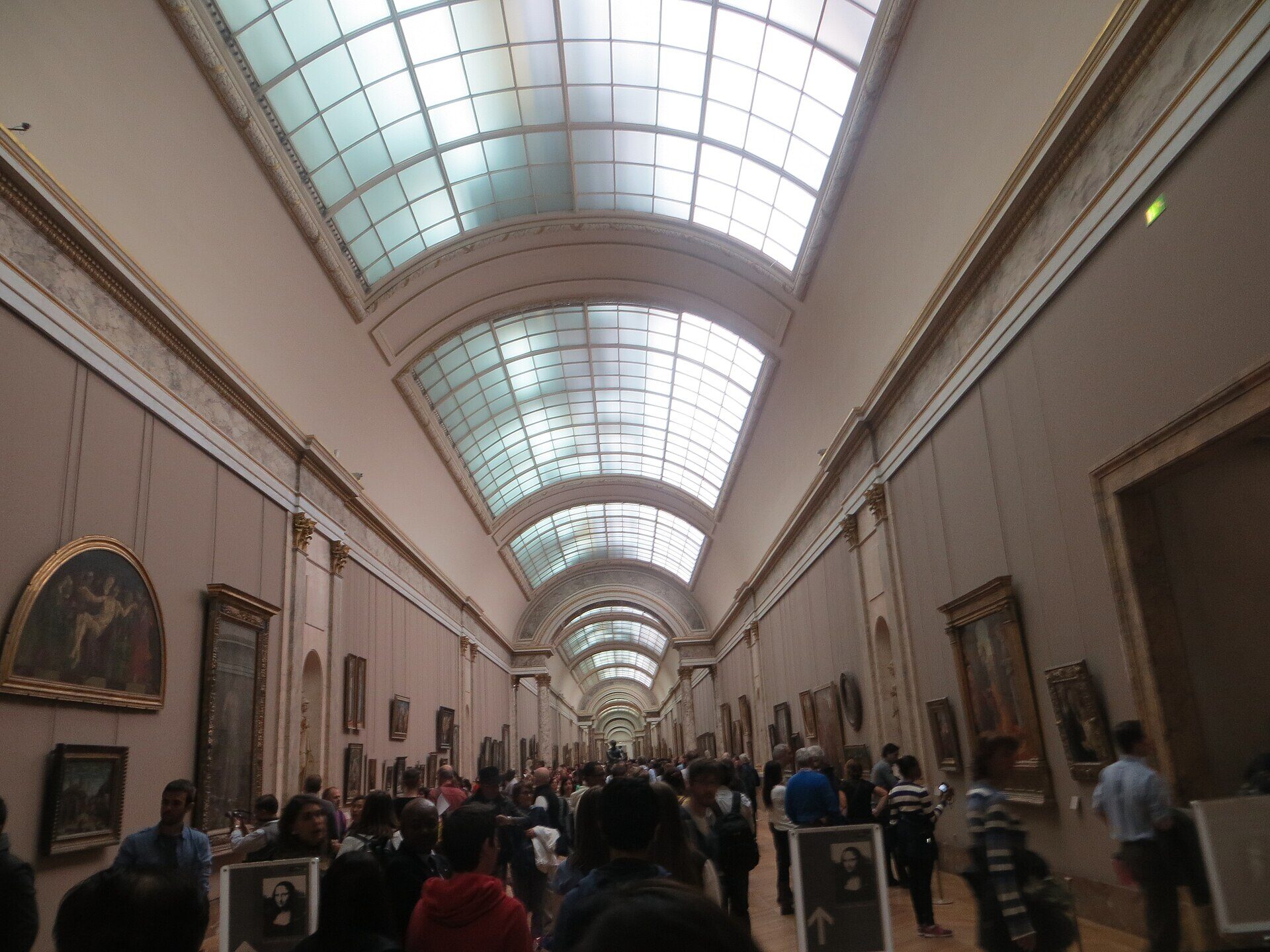
Check which rooms are open. The Louvre publishes a list of closed galleries, and some rooms close on specific weekdays for renovation. You can also phone the information line on the day. The Galerie d’Apollon, where thieves took eight pieces of the French crown jewels on October 19, 2025, reopened on July 22, 2026, but without its jewels. The ceiling and the room are there; the display cases are gone. The story of what the collection used to hold is in the Louvre jewels piece.
Sit down on purpose. The best benches in the building are in the Grand Gallery, in the Cour Marly with its sculpture under a glass roof in Richelieu, and in the Cour Puget next door. Plan a sit-down every hour. It is the cheapest way to see more.
Pick one thing that is not on the list. The best moment of most Louvre visits is a room you did not plan for. The Venus de Milo is famous for a reason, but so is the moat of a medieval castle under your feet, and nobody queues for that.
Know when to choose another museum. If you have one day in Paris and you love the Impressionists, the Louvre may be the wrong building. Its collection mostly stops around the middle of the nineteenth century. There is a full comparison in Musée d’Orsay versus the Louvre.
What to look for on your way out
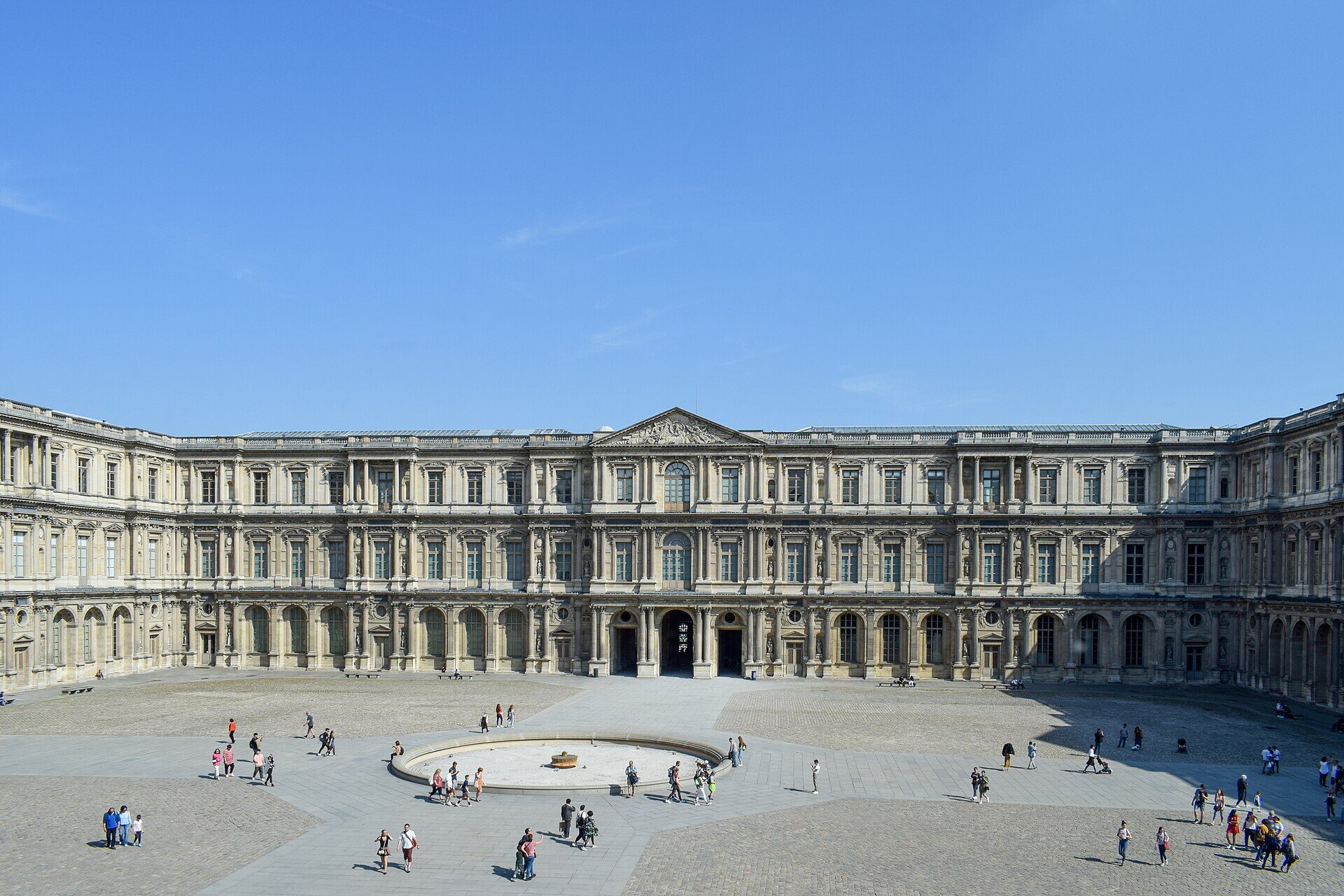
Leave through the Sully wing if you can, and walk out into the Cour Carrée before you head for the pyramid. It is the square courtyard at the east end, and it is open until 7:45 in the evening. It is usually half empty. The facades around you were started in the 1540s, when the Louvre was a royal palace and the medieval keep had only just been torn down. Under your feet are the foundations you may have walked past an hour earlier in the moat.
Stand in the middle and turn slowly. Every wall is a different king. The Louvre is not one building, and you did not see all of it. Nobody does. You saw a slice, and if you planned the hours right, it was a slice you will remember.
The pyramid will still have a line when you leave. Let it. You are walking the other way.
Image credits
- Louvre Museum Wikimedia Commons.jpg — Benh LIEU SONG. Source, CC BY-SA 3.0.
- Louvre - The inverted Pyramid (9132115104).jpg — Cesar I. Martins. Source, CC BY 2.0.
- Simple floor plan of the Louvre.svg — Paris 16, with wing and street labels added by Chiaro. Source, CC BY-SA 4.0.
- Escalier Daru, dit de la Victoire de Samothrace - Musée du Louvre.jpg — Shonagon. Source, CC0.
- Grande Galerie, Louvre April 2014.jpg — Paubotello. Source, CC BY-SA 4.0.
- Cour Carrée du Louvre in 2019.jpg — Arunkumar Vijayan. Source, CC BY-SA 4.0.


