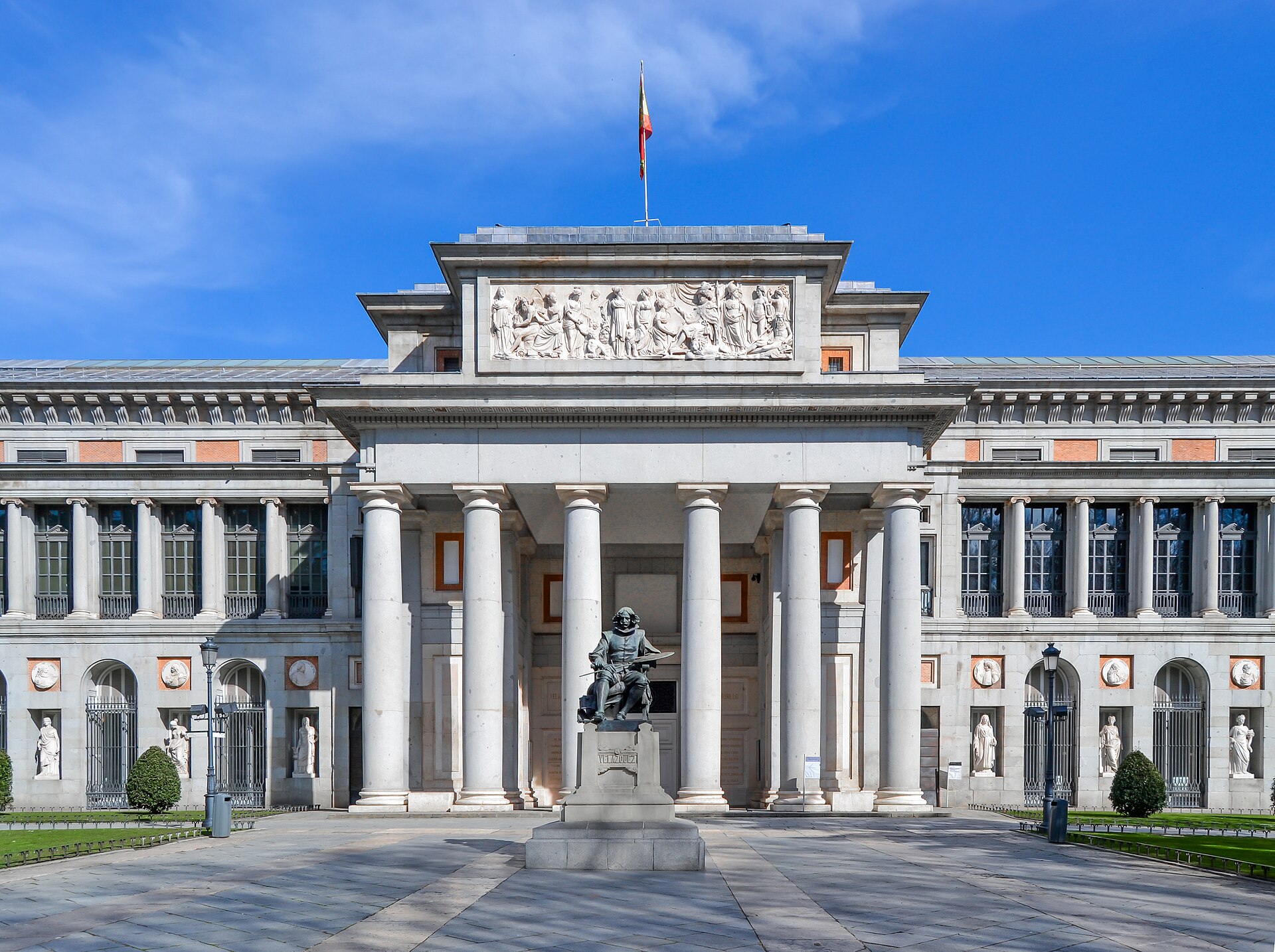
The Museo del Prado holds around eight thousand paintings and shows roughly fifteen hundred of them, which means that even a long day leaves most of it unseen. The good news is that the Prado is not a museum you visit for breadth. It is a museum you visit for depth, because it is essentially the private art collection of the kings of Spain made public, and those kings had specific, obsessive tastes. They loved Titian. They loved Bosch. They kept Velazquez and Goya as their court painters. The result is that the Prado does not have a little of everything. It has the best in the world of a few things, and if you walk straight to those few things you will see some of the greatest paintings ever made without exhausting yourself in front of the merely good.
This is the shortlist. A dozen works, organized roughly by where the collection’s strength lies, that you should not leave Madrid without standing in front of. If you see only these and skip the rest, you will still have seen the Prado. For the practical questions, tickets, hours, the free evening slot, how to find these rooms, the Prado visiting guide covers the logistics. This piece is about what to look at once you are inside.
Start with Velazquez, because everyone does
The single most important painting in the building is Velazquez’s Las Meninas, and it hangs in Room 12 at the heart of the museum, positioned so that the architecture funnels you toward it. It is the 1656 picture in which Velazquez painted himself painting the king and queen of Spain, who appear only as a small reflection in a mirror on the back wall, surrounded by the little Infanta Margarita, her ladies-in-waiting, two court dwarves, and a sleeping dog. Stand at the right distance and the floor of the painting seems continuous with the floor under your feet, and you realize the king and queen are standing where you are standing. It is the most analyzed painting in Western art, and it rewards every minute you give it. We have a full deep-dive on Las Meninas if you want to know what to look for before you go.
While you are in the Velazquez rooms, find his equestrian portraits of the royal family and his portrait of Pope Innocent X’s court, and notice how loosely, almost carelessly, the paint is applied up close, and how it resolves into perfect form when you step back. Velazquez is the reason painters from Manet to Picasso made the pilgrimage to Madrid.
Bosch: the strangest painting in the world
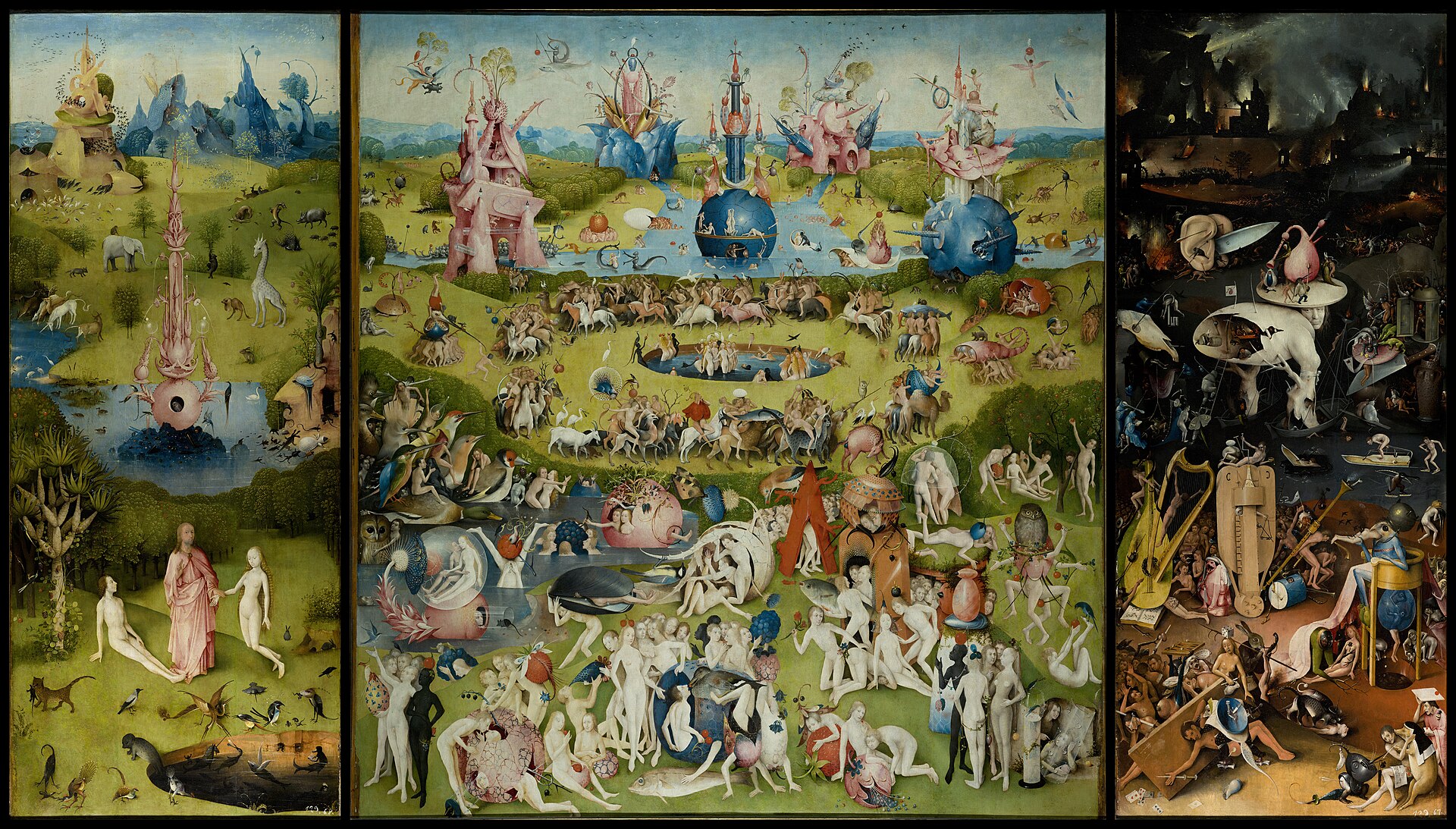
In Room 56A is The Garden of Earthly Delights, the hinged triptych Hieronymus Bosch painted around 1500, showing paradise, a vast carnival of naked figures with giant fruit and birds, and a cold, dark, music-powered hell. It is the most famous unexplained painting in the world, full of detail no reproduction can hold, a man inside an eggshell, a choir singing from a score written on a backside, ears the size of doors. King Philip II of Spain was obsessed with Bosch and bought everything of his he could find, which is why the Prado has the greatest collection of Bosch anywhere. Give the Garden more time than you think you need, because it does not give up its strangeness quickly. Our full piece on Bosch’s Garden of Earthly Delights walks through all three panels.
Goya: from court painter to nightmare
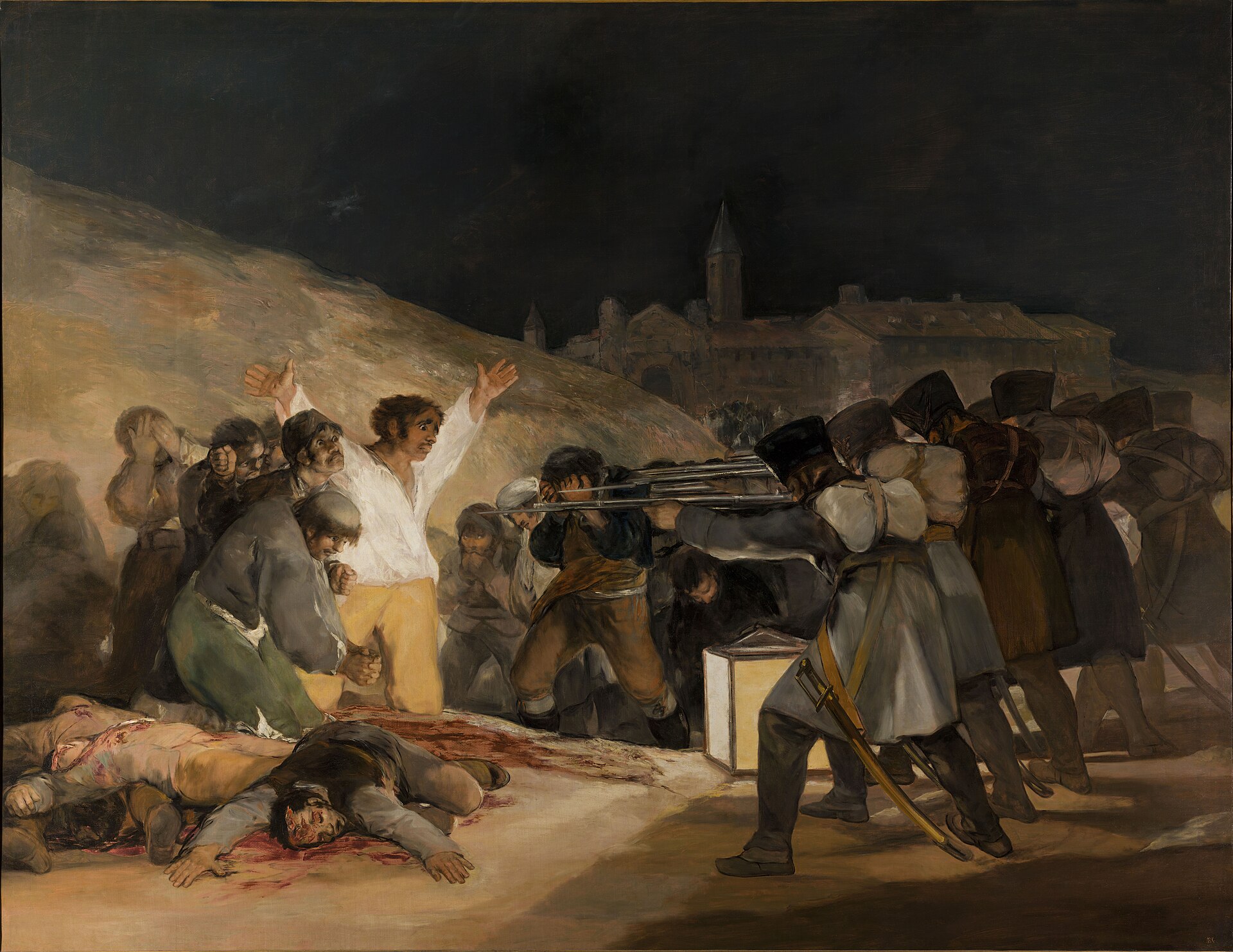
The Prado owns the world’s great collection of Francisco de Goya, and you can watch his whole arc in a few rooms, from the bright, charming tapestry cartoons of his youth to the horror of his old age. The essential stop is Room 64, where The Third of May 1808 shows a faceless French firing squad executing a man in a white shirt who throws his arms wide in the pose of the crucified Christ. It is the painting that taught art how to show war as atrocity rather than glory, and it hangs beside its companion, The Second of May, which shows the Madrid uprising that triggered the reprisal. Our deep-dive on Goya’s Third of May 1808 explains why the man in the white shirt changed everything.
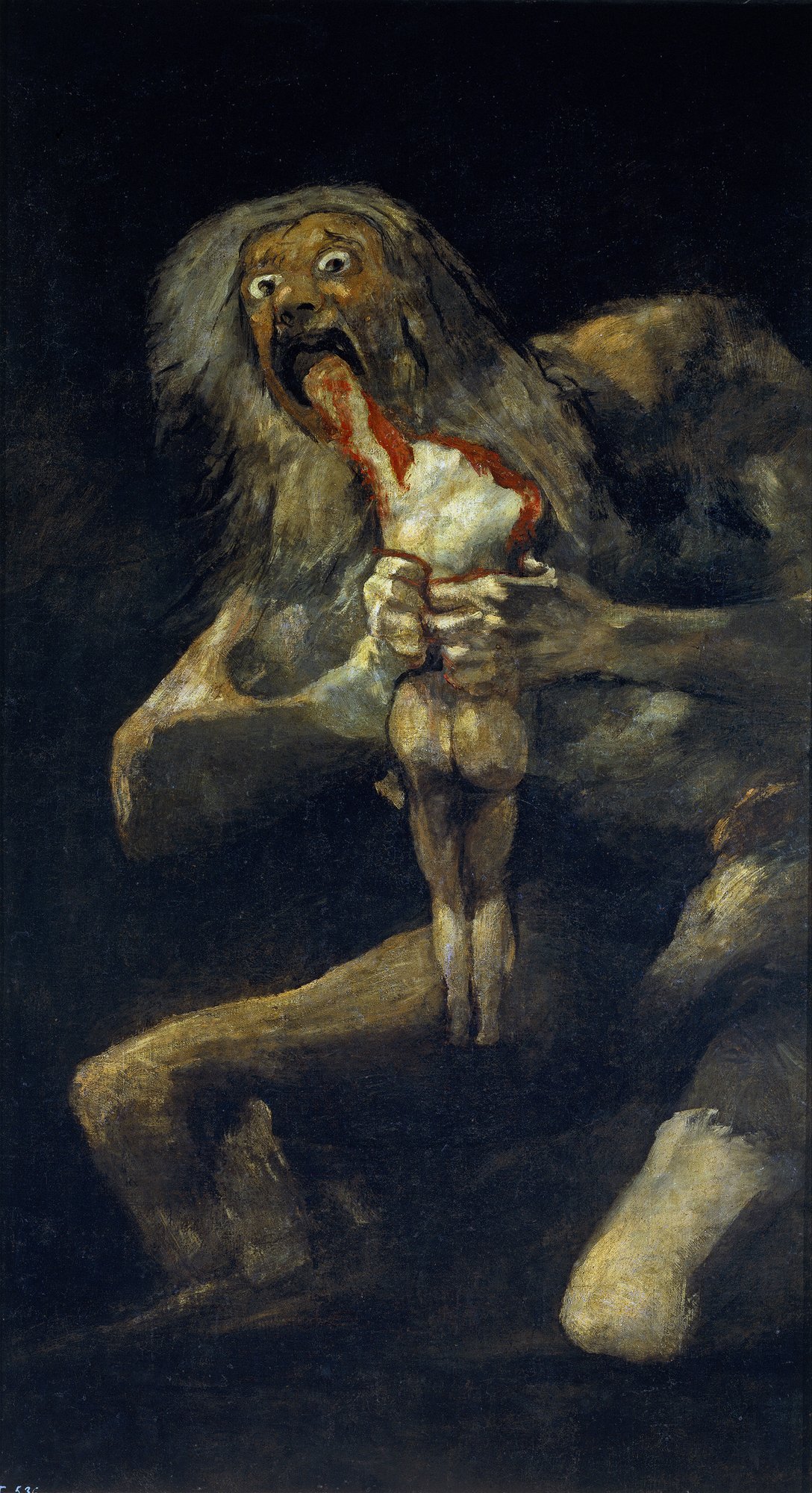
Then go to Room 67 for the Black Paintings, the fourteen murals Goya painted in black and brown on the walls of his own house in his deaf, bitter old age and never meant anyone to see. Saturn Devouring His Son, the god of time cramming his bloody child into his mouth with terrified eyes, is the most famous, and it is one of the darkest images in any museum on earth. The journey from Goya’s sunny early tapestries to this is the journey of a man who watched his country destroy itself, and the Prado lets you walk it room by room.
Titian: the emperor and the empire’s favorite painter
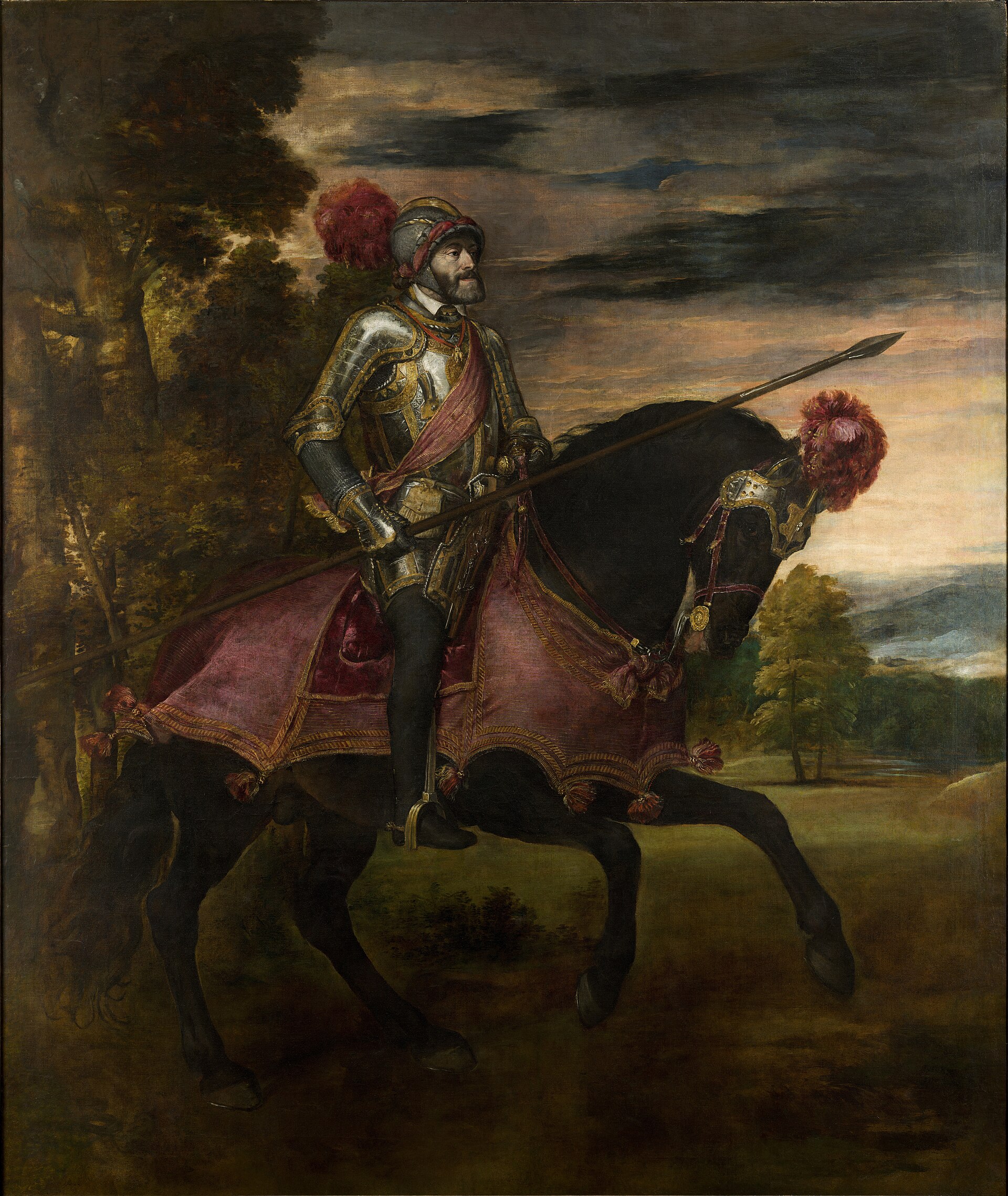
The Spanish Habsburgs were Titian’s greatest patrons, so the Prado has the finest Titian collection in the world. The work to find is the Equestrian Portrait of Charles V at Muhlberg in Room 27, in which the most powerful man in Europe rides alone out of a wood at dawn in black-and-gold armor, with no army and no battle anywhere in sight, the solitude itself the symbol of his command. It invented the template every later painting of a ruler on horseback copied. While in the Titian rooms, look also at his mythological poesie, the sensual Danae and Venus pictures painted for Philip II, to see the range of the man who could paint both imperial power and pure pleasure. The full story is in our piece on Titian’s Charles V at Muhlberg.
El Greco: the long figures and the strange light
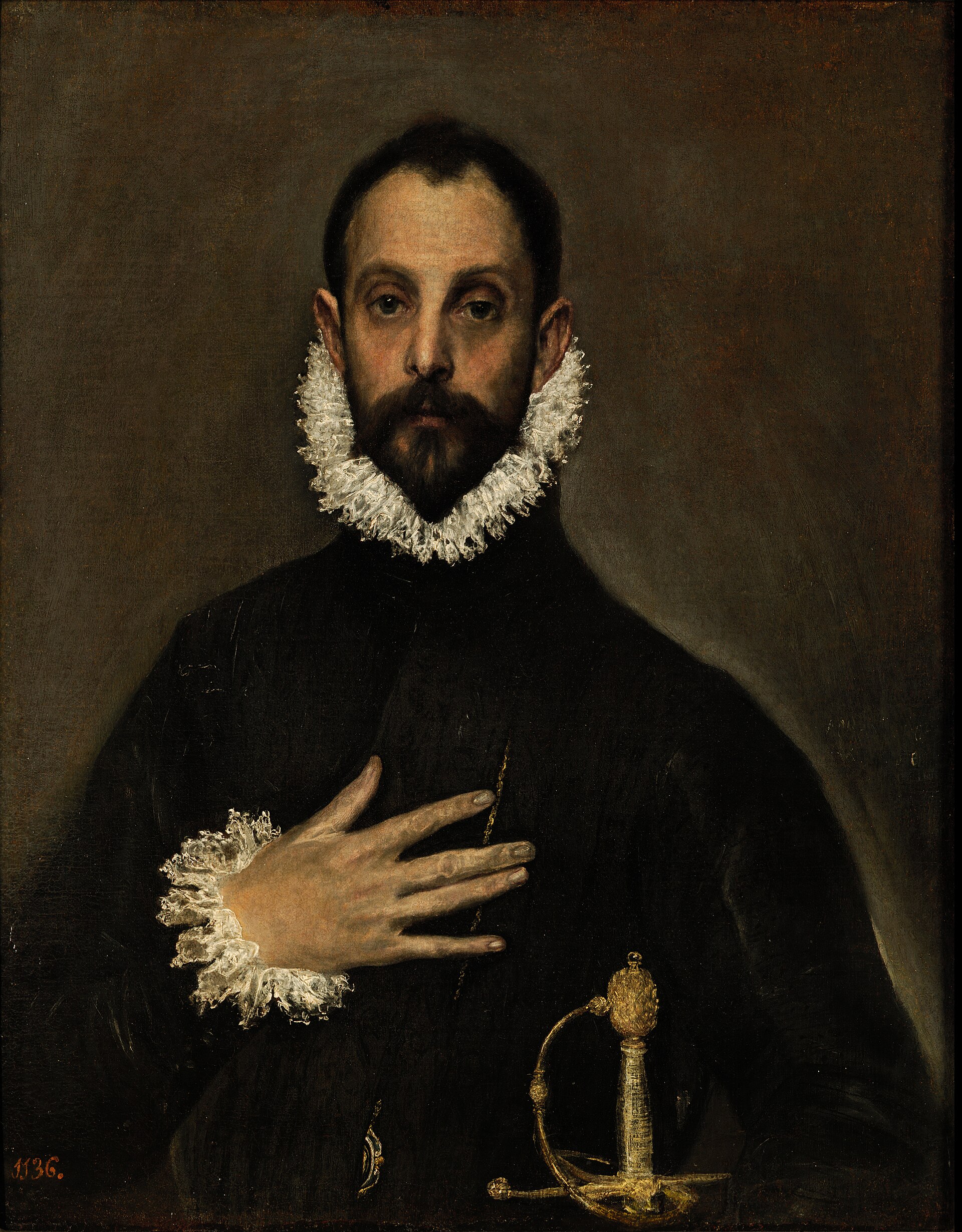
El Greco, the Cretan-born painter who settled in Toledo an hour from Madrid, painted figures elongated like flames in cold, electric, otherworldly color, and the Prado has a strong room of him. The portrait to find is The Nobleman with his Hand on his Chest, a Spanish gentleman in black with a white ruff, his right hand laid on his heart in a gesture of grave sincerity. It is one of the most quietly arresting portraits in the building, the Spanish ideal of dignity and faith compressed into a single hand. El Greco was rediscovered by the early modernists, who saw in his distortions a forerunner of their own, and after Toledo, the Prado is the best place to understand him.
The Flemish primitives: Van der Weyden and the early north
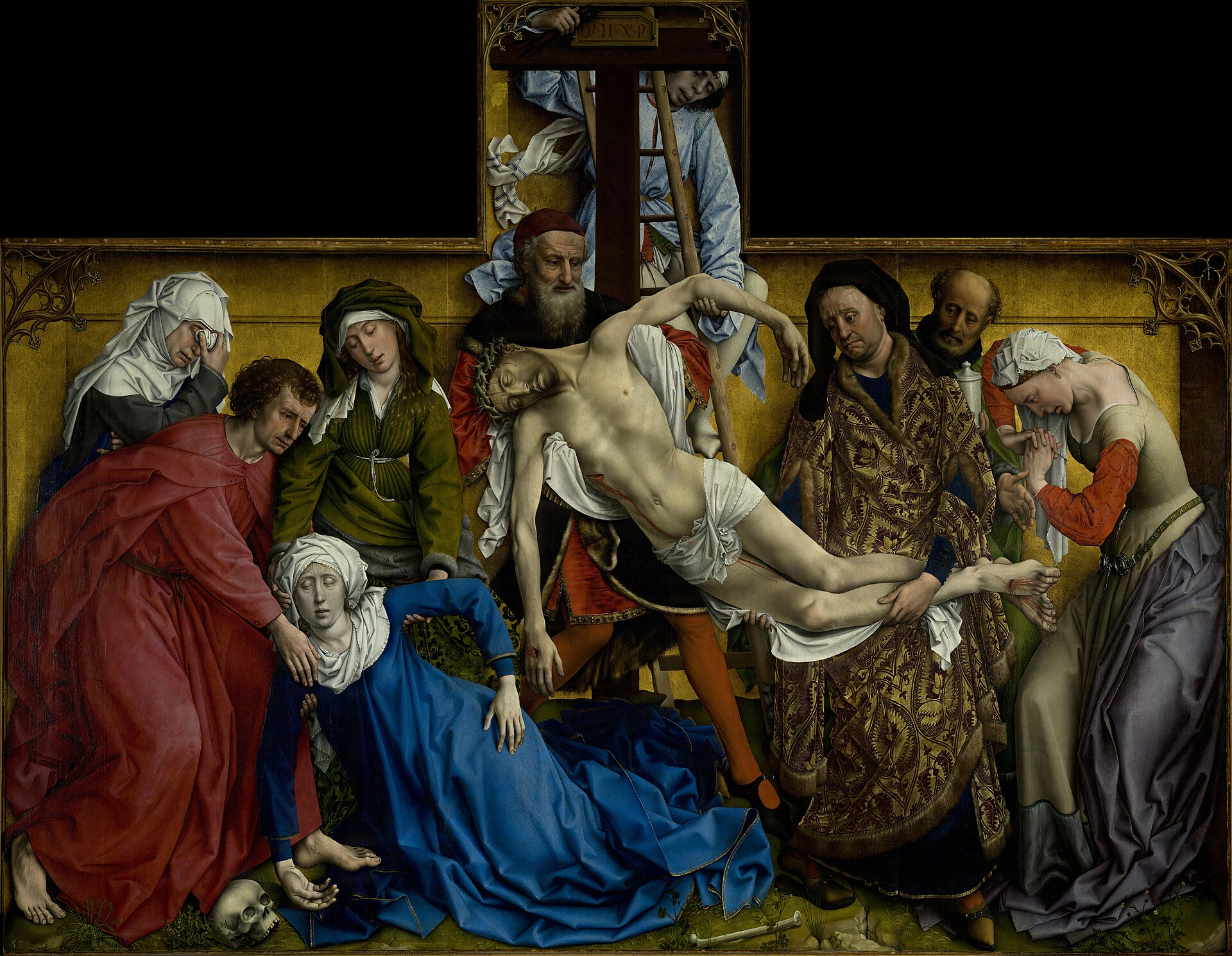
Because Spain ruled the Netherlands for so long, the Prado is one of the best places in the world for early Flemish painting. The masterpiece is Rogier van der Weyden’s Descent from the Cross, painted around 1435, in which ten life-size figures lower the dead Christ from the cross in a shallow, gold-backed space, the swooning Virgin Mary echoing her son’s pose so exactly that the two bodies rhyme. The emotional intensity and the technical perfection of the painting, every tear, every fold of cloth, every drop of blood rendered with jewel-like precision, are the high point of fifteenth-century northern art. Stand close and look at the tears. Nobody before Van der Weyden painted grief like this.
The Italian early Renaissance: Fra Angelico
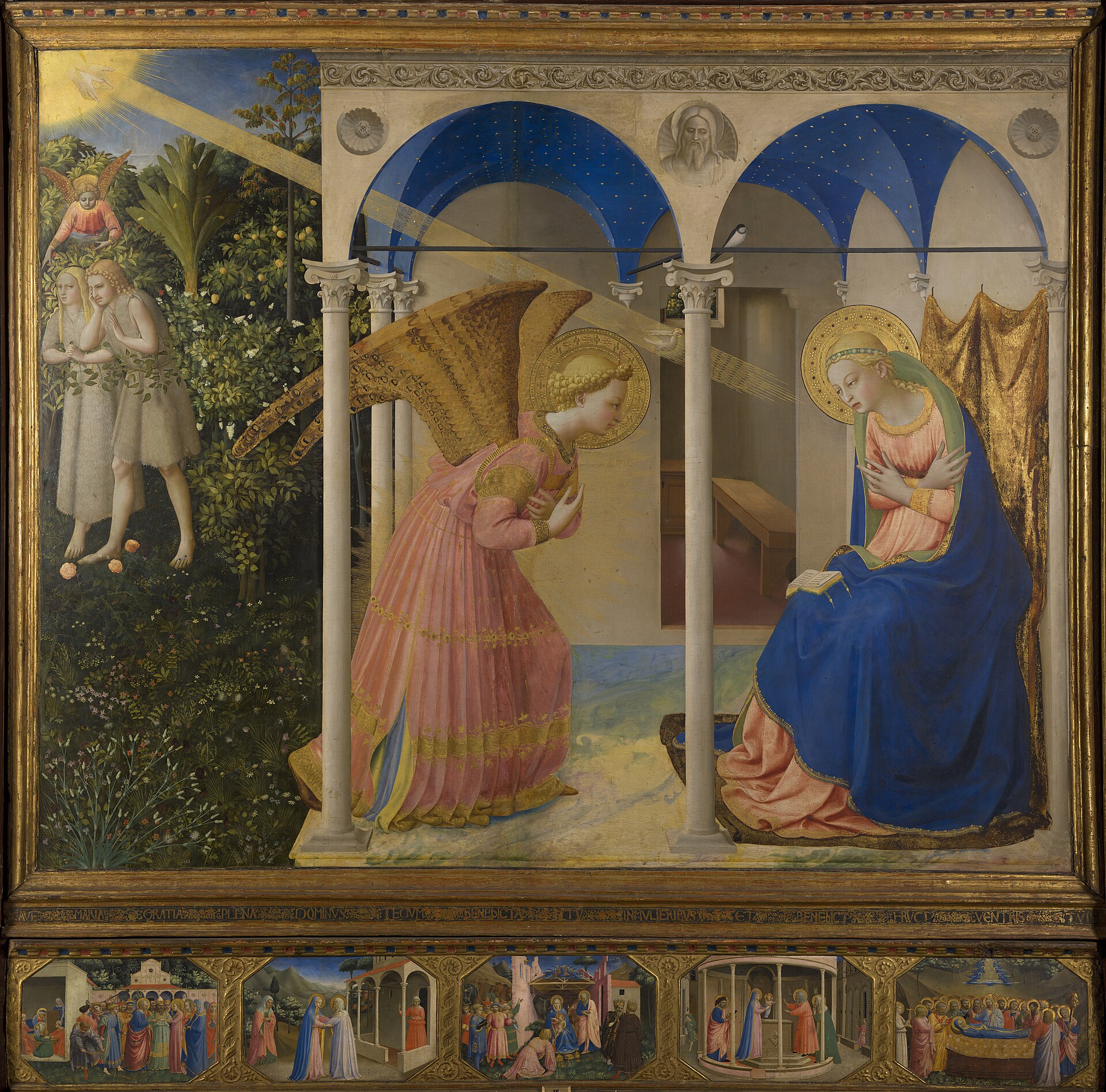
The Prado’s great early Italian painting is Fra Angelico’s Annunciation, painted around 1426, in which the angel Gabriel meets the Virgin Mary in a delicate pink-and-gold loggia while, in the corner, Adam and Eve are expelled from Eden, linking the fall of man to the moment of his promised redemption. Fra Angelico was a Dominican friar who painted as an act of devotion, and the tenderness and clarity of the work, the gold-tipped wings, the soft light, the careful perspective of the architecture, make it one of the most beloved objects in the museum. It is a quieter masterpiece than the Bosch or the Goya, and a useful place to rest your eyes between the louder rooms.
Durer: the German who signed his own face
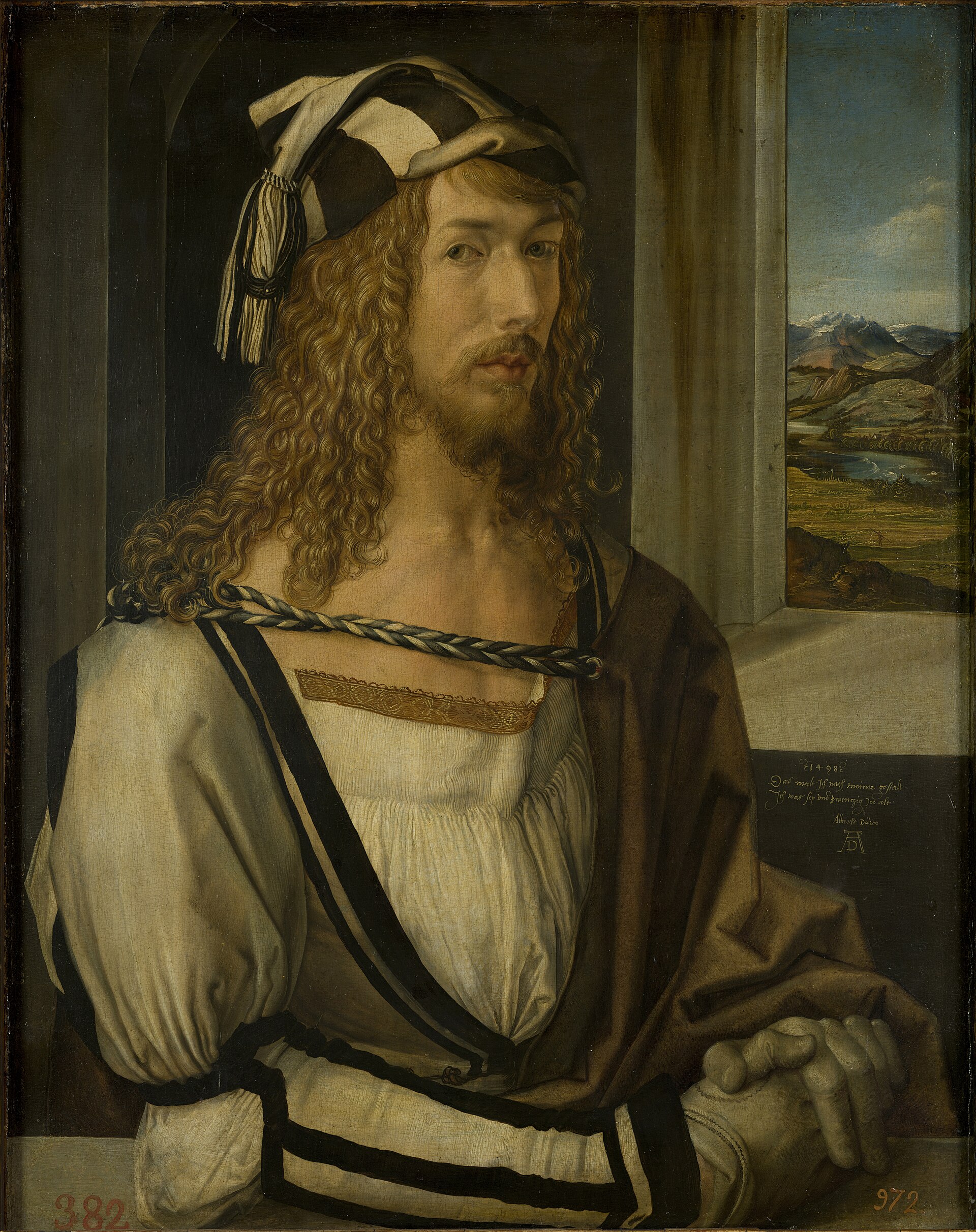
In Room 55B hangs Albrecht Durer’s 1498 self-portrait, the German master at twenty-six in Italian silk and fine gloves, with a snow-capped Alpine landscape through the window and his own name and a rhyming couplet written on the wall beside his head. It is one of the first self-portraits in which an artist presents himself not as a craftsman but as a gentleman and a thinker worth remembering, the opening move in the long campaign to make the artist a person of status. A few rooms away are Durer’s life-size painted Adam and Eve from 1507, the northern answer to the Italian obsession with the perfect nude. The full story is in our piece on Durer’s 1498 self-portrait.
How to see all this without collapsing
A dozen masterpieces is a realistic half-day if you are disciplined and a full day if you linger, which you should. The Prado is large, the masterpieces are spread across three floors, and trying to see everything is the surest way to see nothing. Pick your non-negotiables, Las Meninas, the Bosch, the Goya rooms, the Titian, and treat the rest as bonus. Sit down when you can. The Prado has benches in front of the major works for a reason, and the best way to see Las Meninas or the Garden of Earthly Delights is sitting still in front of it for ten minutes rather than circling it for two.
Chiaro reads out the details that matter in front of each painting, the mirror in Las Meninas, the music in Bosch’s hell, the Christ pose in Goya’s firing squad, the missing battle in Titian’s emperor, so that the proper-name specifics you would otherwise walk past get pointed out while you are standing where they make sense. For the practical side, when to go, how to get in cheaply, how to plan the route, read the Prado visiting guide. And if Madrid is one stop on a larger trip, the Prado belongs in the same conversation as the Louvre and the Uffizi as one of the handful of museums in the world built from a royal collection that you genuinely cannot replicate anywhere else.