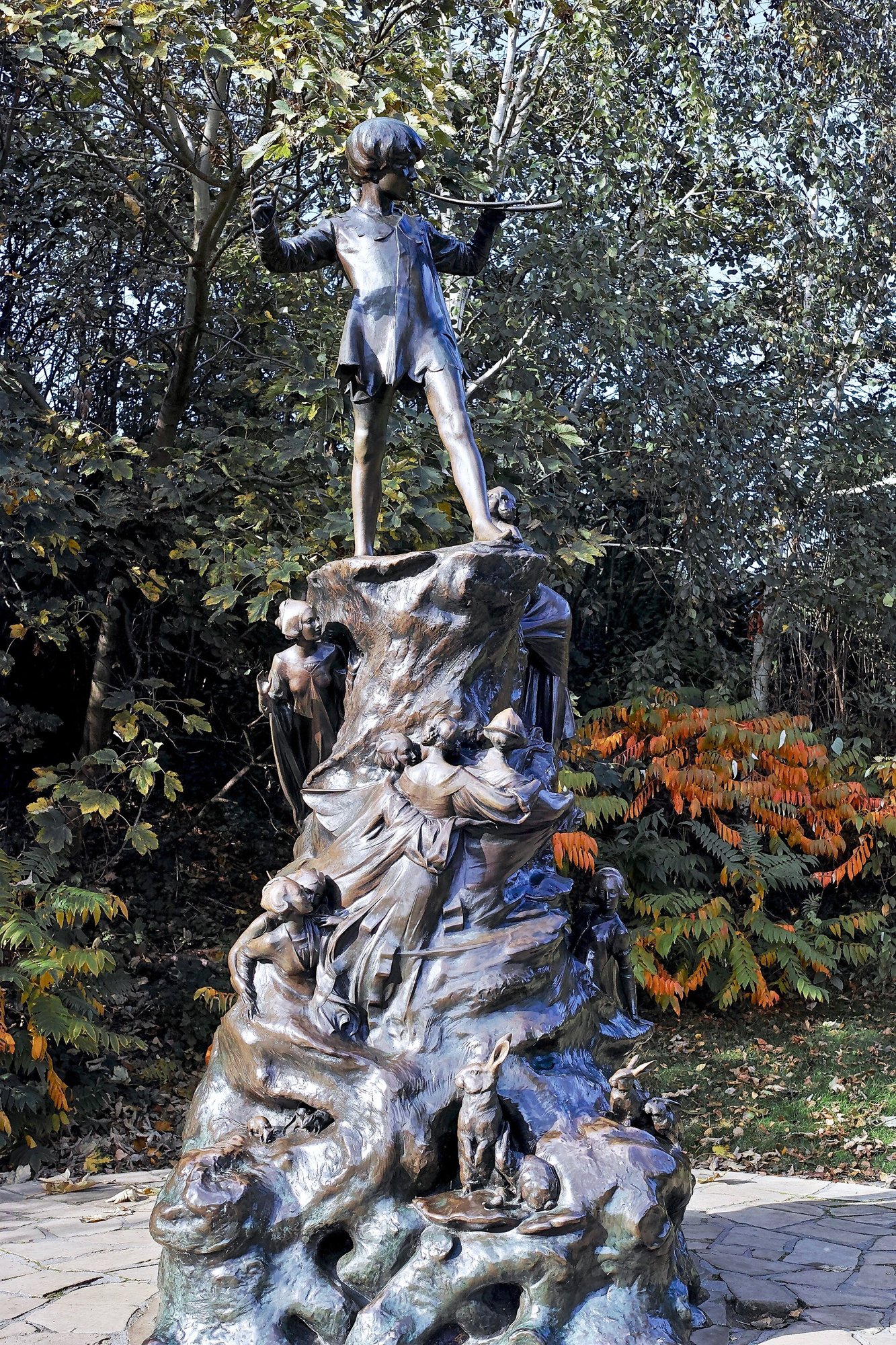
Every park has them. A bronze man on a horse at the crossing of two paths. A marble woman in a crown by the pond. A bust on a pillar, half-hidden by a hedge, with a name nobody under eighty recognizes. You walk past them on the way to the café. Every so often you stop and wonder who they are.
Yes, there is an app for that. Point Chiaro at a park statue and it tells you who it is, who made it and why it’s standing there, out loud, in a few seconds. But it’s worth knowing why park statues are such a puzzle in the first place, and how much you can read off one yourself.
Why park statues are so hard to identify
We’ve written about recognizing sculpture in museums, where at least there’s a label on the wall. Outdoor statues get none of that help.
There’s no label. A museum gives every object a card. A park gives a statue, at best, a name carved into the plinth, sometimes in Latin, sometimes worn smooth, sometimes on the side facing the bushes.
Weather gets to them. Bronze turns green and streaky. Marble blackens, cracks and loses its fingers and noses. Plaques corrode until the letters are a guess. Pigeons do the rest.
Nobody remembers who they are. Cities put up statues to people who mattered enormously in their own decade: a mayor, a general, a poet, a benefactor who paid for the fountain. A century later the name means nothing to anyone in the park, sometimes including the people who maintain it.
They aren’t always who they look like. A crowned woman might be a queen, a saint, an allegory of the city, or a woman who probably never existed. More on her below.
How to read a park statue yourself
Before you get the phone out, walk once around the plinth. Outdoor monuments carry more information than they seem to.
Read the front of the plinth. The name is usually there, often with the dates of birth and death. Dates alone tell you a lot: someone who died in 1918 at twenty-three is almost certainly a war memorial.
Read the back and sides. Dedications live there: who paid for it, the year it was unveiled, sometimes a few lines of verse or a summary of why this person deserved a statue.
Look at the bottom edge of the sculpture itself. Sculptors and bronze foundries signed their work there, along the base of the figure rather than on the plinth. A name and a city (“Fonderia” in Italy, “Fondeur” in France) means you’re reading the maker, not the subject.
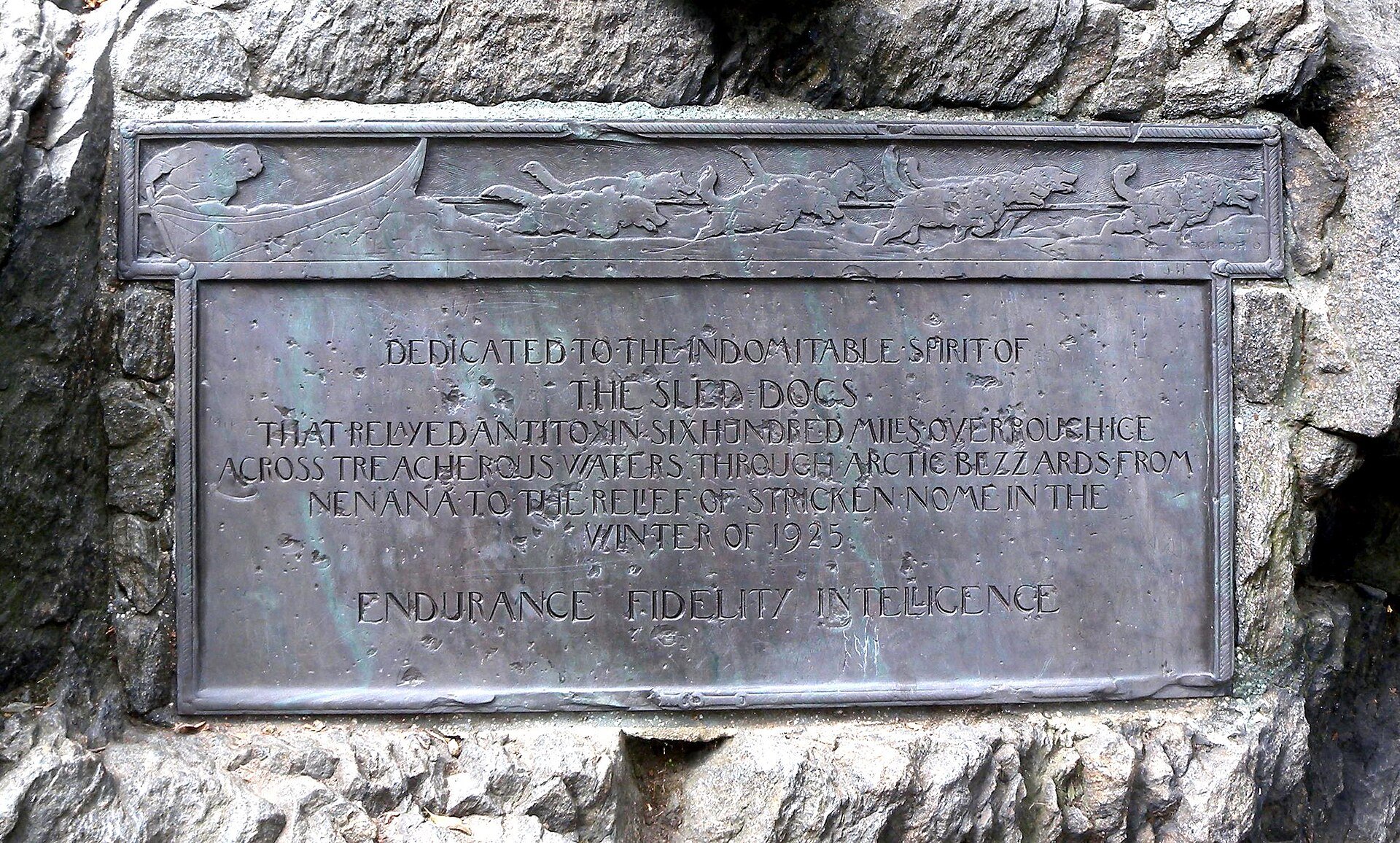
Look for the plaque on the rock. Some monuments tell you their whole story in one paragraph, if you crouch down to read it.
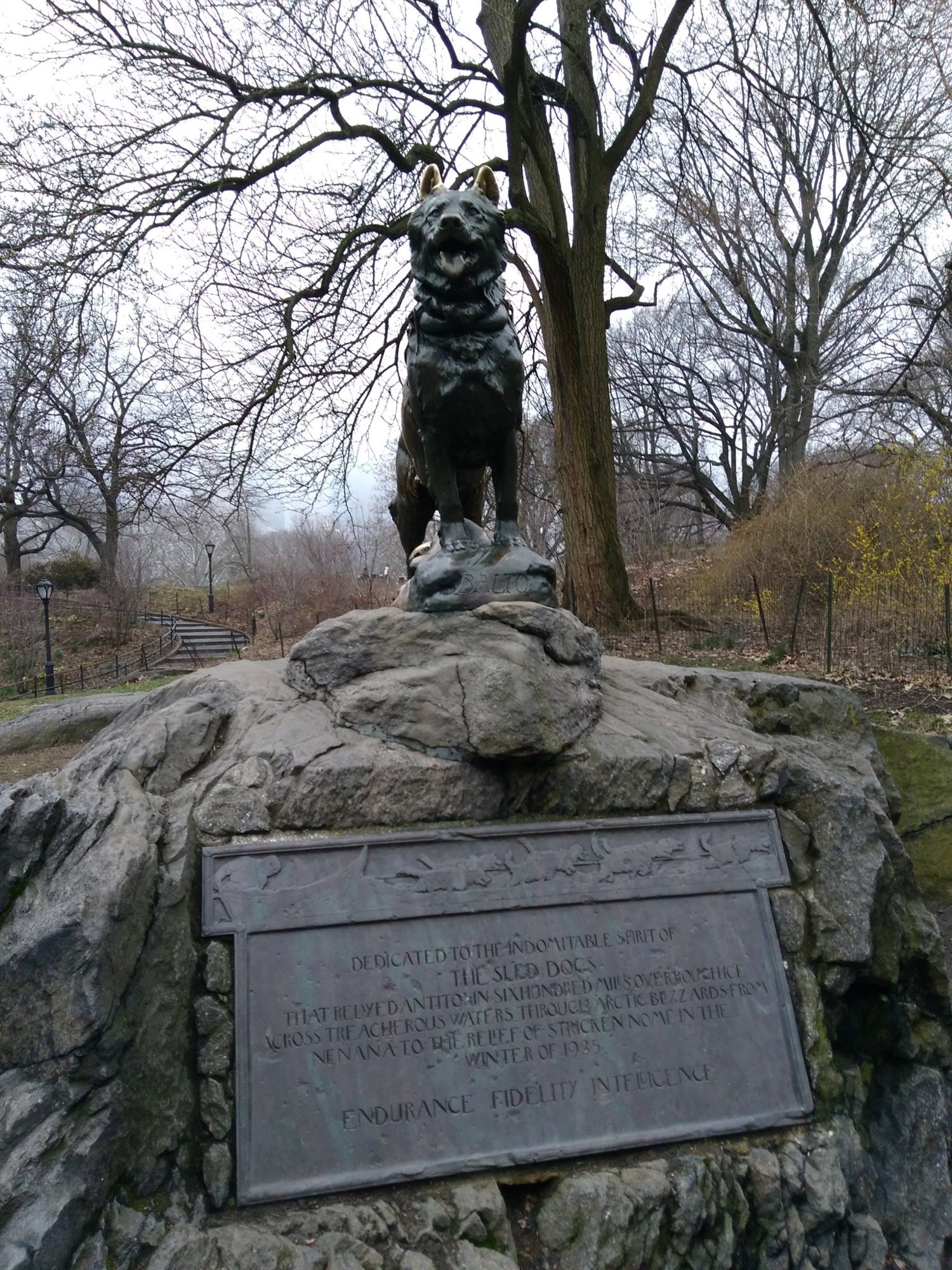
Near the East 67th Street entrance to Central Park, a bronze husky stands on a granite outcrop. The plaque below him explains: he is Balto, and the statue is “dedicated to the indomitable spirit of the sled dogs that relayed antitoxin six hundred miles over rough ice, across treacherous waters, through Arctic blizzards from Nenana to the relief of stricken Nome in the winter of 1925.” The statue by Frederick Roth was unveiled that December, with Balto himself in attendance. According to the Central Park Conservancy, it is the only statue in the park whose subject was present at its own unveiling.
The horse-hoof rule is a myth
Every visitor to a statue of a man on a horse eventually hears the rule: if the horse has one hoof raised, the rider was wounded in battle; two hooves raised, he died in battle; all four on the ground, he died in bed.
It isn’t true. Military historians and memorial institutions, including the Australian War Memorial, have called it an urban myth, and the statues themselves disprove it.
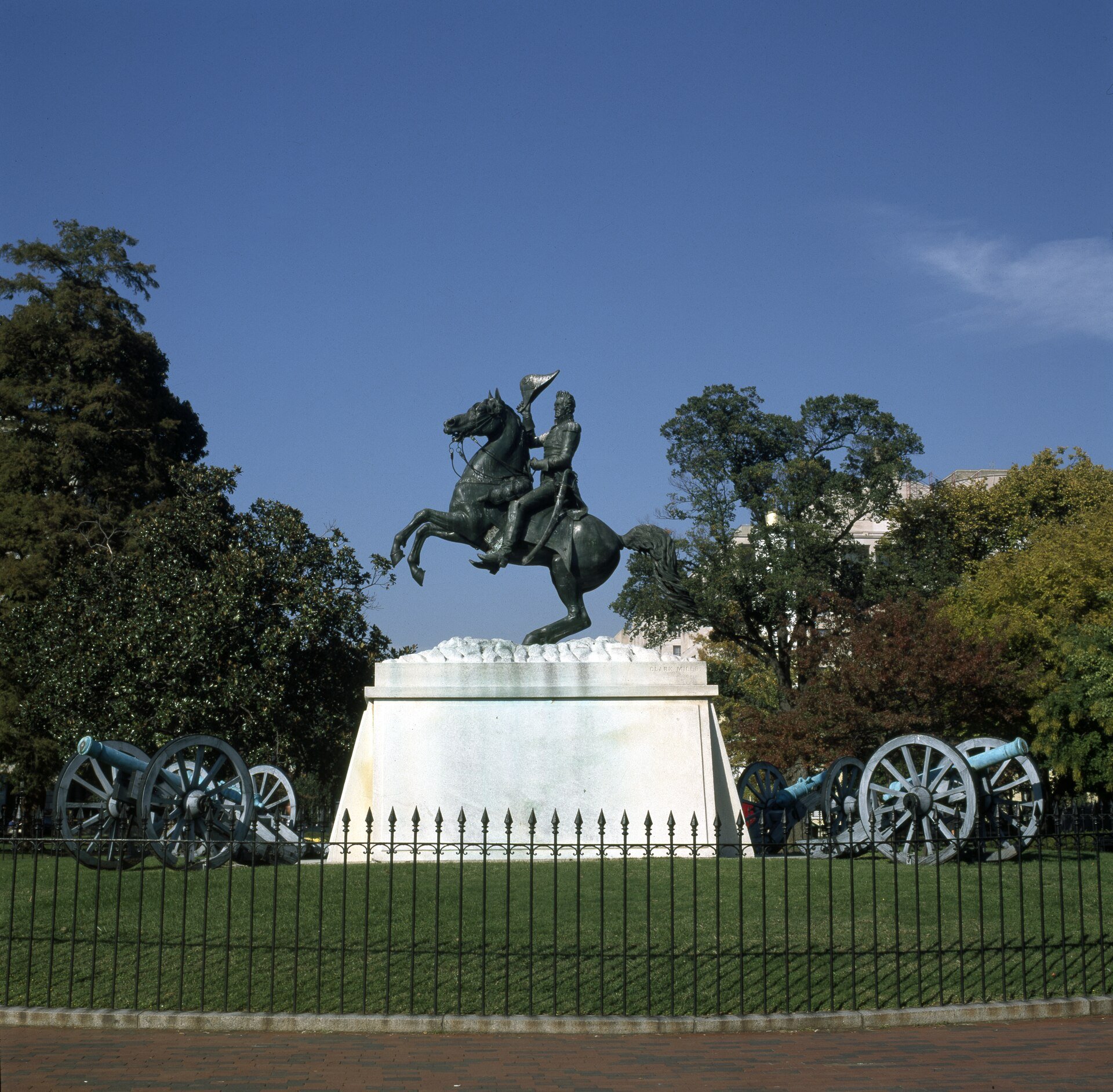
The best counterexample stands across the road from the White House. In Clark Mills’s statue of Andrew Jackson in Lafayette Square, unveiled in 1853, the horse rears up with both front hooves in the air. By the rule, Jackson died in battle. In fact he died at home, at the Hermitage in Tennessee, in 1845. The rearing pose had nothing to do with his death. It was showing off: balancing a bronze horse on its hind legs alone was a feat of engineering, and Mills is said to have trained his own horse to rear so he could study it.
So when you see a rearing horse, ask what the sculptor wanted to show, not how the rider died. And when you can’t tell, ask the statue.
Three parks, three puzzles
The statue that appeared overnight: Peter Pan, Kensington Gardens
The Peter Pan statue in Kensington Gardens, at the top of this post, wasn’t unveiled. It was smuggled in. J. M. Barrie paid George Frampton to make it and had it put up overnight, around the night of 30 April 1912, without fanfare and without permission, so that it would look to children as if the fairies had brought it. A notice in The Times the next morning announced it as a May Day present. Look closely at the tree stump and you’ll find the fairies, rabbits, mice and squirrels climbing up toward Peter.
The woman who probably never lived: Clémence Isaure, Jardin du Luxembourg
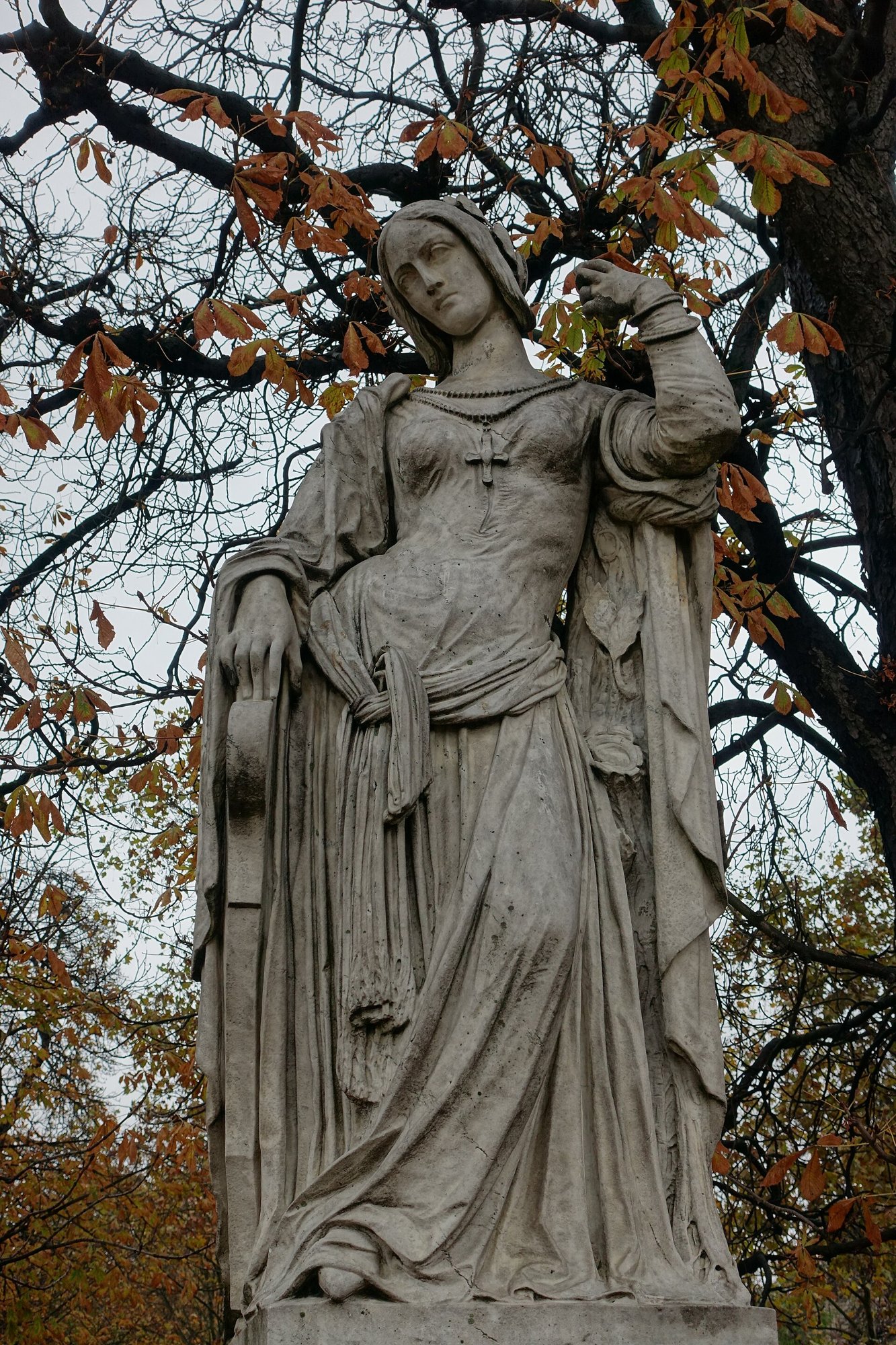
Around the big pond in Paris’s Jardin du Luxembourg stand twenty marble women: the Reines de France et Femmes illustres, a series chosen by King Louis-Philippe in the 1840s. Most of them are what the name promises, queens and regents of France, each on a pedestal giving her name and dates. One of them, Clémence Isaure, is honoured as the patroness of the medieval poetry contest of Toulouse, the Jeux Floraux. Historians have long doubted she ever existed. She has stood among the queens for more than 170 years anyway.
The busts on the hill: the Pincio, Rome
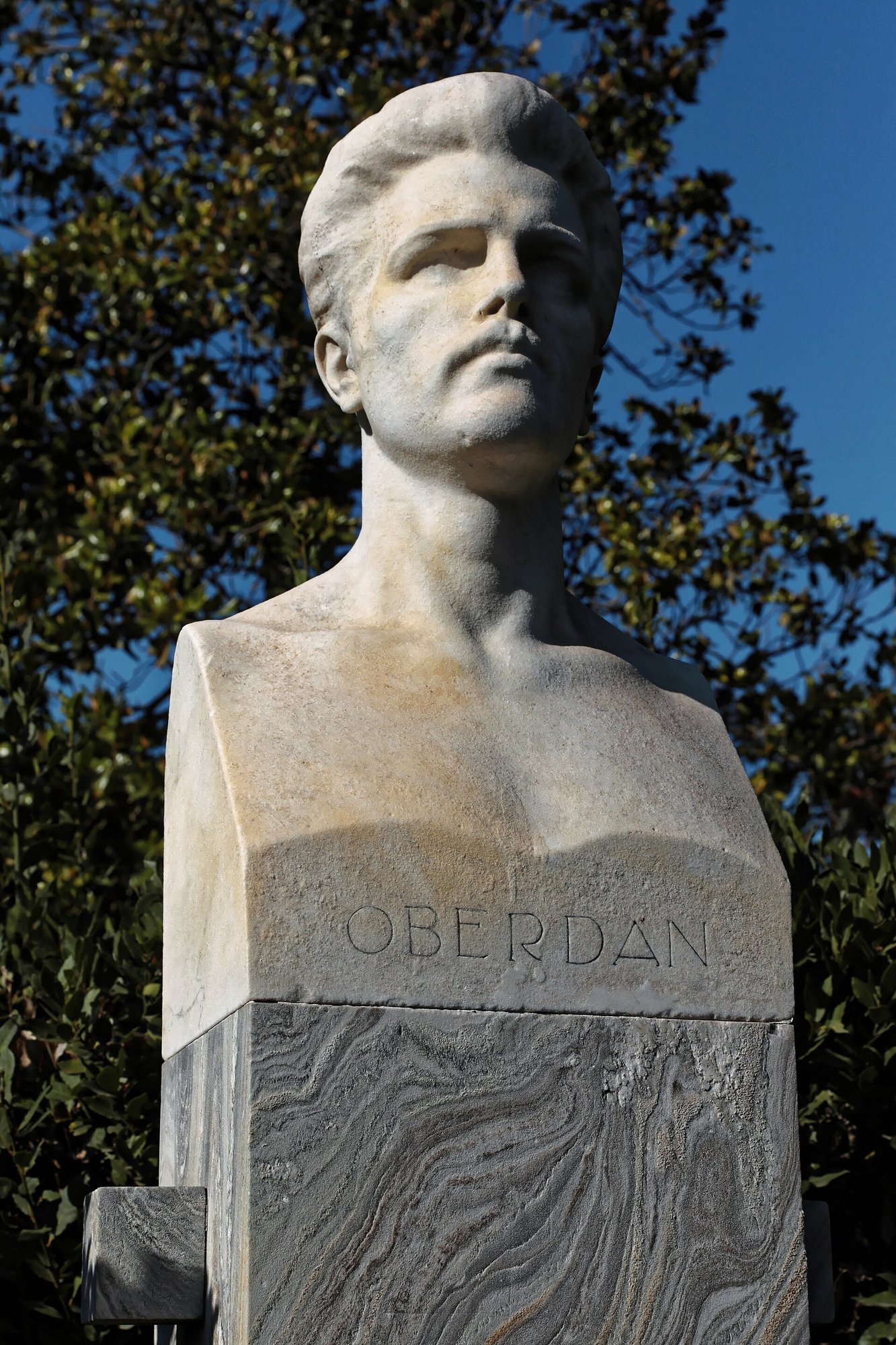
Walk along the avenues of the Pincio, the garden on the hill above Piazza del Popolo next to Villa Borghese, and you pass a long double row of marble heads on pillars. The idea goes back to the short-lived Roman Republic of 1849, which commissioned busts of illustrious Italians for the hill. Many more were added over the following century. Some names are famous, like Leonardo da Vinci. Plenty are not, like the patriot Guglielmo Oberdan, executed by Austria in 1882, whose bust is above. Many have lost their noses to vandals. It’s a whole walk of people you’re supposed to recognize and mostly won’t, which makes it perfect for an app.
How Chiaro identifies a park statue
One photo, from wherever you’re standing
You take one photo of the statue, from the path, at an angle, against the sky. Chiaro recognizes it and starts talking: who it is, who made it, and why it’s there. Audio starts within seconds, so you can put the phone back in your pocket and walk around the plinth while you listen.
Chiaro works almost anywhere you point it. A general on a horse, a bust by a hedge, a fountain, a war memorial, a dog on a rock. If it has a story, Chiaro finds it. There are no city packs to download and no list of supported parks.
Curious? Just ask
Follow-up buttons suggest the next thread: who paid for it, what the inscription means, why this person mattered. Or type or say your own question, like “is the horse thing true?” or “why is her nose missing?”, and Chiaro answers out loud. When the answer depends on today, like whether a statue has been moved, removed or is under restoration, it checks the web and brings back the current answer.
In your language, and the local one
Chiaro speaks 18 languages, in a woman’s or a man’s voice, with a choice of accent for English, Spanish and Portuguese. Place names appear in your language and the local one, side by side, which helps when the inscription is in Latin, French or Italian.
Find the next statue
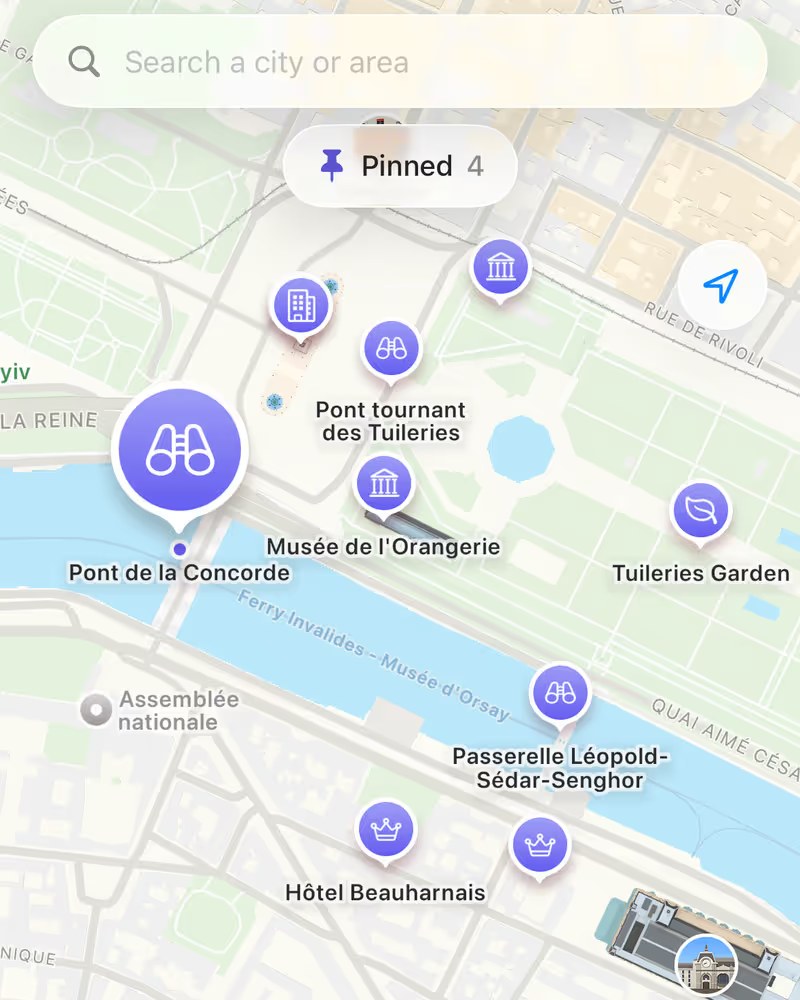
A park is a walk, not a single stop. The Map shows Chiaro’s picks around you, each with one line on why it’s worth the walk, and every photo you take becomes a pin, so you can see which statues you’ve already met. Every evening, a Filo turns the day into a short story that connects the dots: the general in the morning and the queen in the afternoon turn out to belong to the same century and the same argument. Tap Go deeper on any thread. And you can plan tomorrow in one tap, with opening hours, the weather and a backup plan for rain.
See how recognition works
The museum and landmark pages on the Chiaro website are a demo of what the app does after it recognizes something: 80 places, five stops each, playing in your browser with no account. Try the Tower of London, the Lincoln Memorial or the Statue of Liberty, the most famous outdoor statue of them all. The statue in your local park isn’t on that list, and doesn’t need to be: in the app, a photo is enough.
FAQ
Is there an app that identifies statues in a park?
Yes. Chiaro recognizes park statues, memorials, busts and fountains from a photo and plays an audio guide about them in 18 languages. General visual search tools can also match famous statues and return web results.
How can I find out who a statue is without an app?
Walk around the plinth. The name and dates are usually on the front, the dedication on the back or sides, and the sculptor’s signature along the base of the figure. Then search the name.
Does a horse statue’s raised hoof mean the rider died in battle?
No. That’s a myth. Andrew Jackson’s horse in Lafayette Square rears with both front hooves up, and Jackson died at home in 1845.
Does it work on statues that aren’t famous?
Chiaro works almost anywhere you point it, including busts and memorials to people most visitors have never heard of. If it has a story, Chiaro finds it.
Stop on the way to the café
Park statues are the most ignored art in any city, and some of the strangest: a dog who came to his own unveiling, a boy put up overnight by fairies, a queen who may never have lived. Next time you walk past one, stop.
Chiaro means “clear” in Italian. Get it on the App Store, point it at the next statue in the park, and listen.
Snap. Listen. Explore.