Every old city is covered in writing nobody reads. It runs across the top of temples, around the bases of columns, over church doors, along the frieze of a triumphal arch. Some of it is in letters a metre high. Thousands of people walk under it every day and photograph it without knowing what it says.
It’s worth knowing. An inscription is the one part of a monument where the people who built it speak to you directly, in their own words. Sometimes they’re boasting, sometimes they’re lying, and sometimes the most interesting thing about the inscription is the part someone chiselled off.
Why inscriptions are so hard to read
Even if you studied Latin at school, a Roman inscription will stop you cold. Several things are working against you at once.
Everything is abbreviated. Stone was expensive and carving was slow, so Roman stonecutters shortened everything they could. Names shrink to an initial, titles to two or three letters. Readers at the time knew the code. You don’t.
There are no spaces. Words are separated by small dots, called interpuncts, or not separated at all. Later inscriptions sometimes run words together to fit the space.
V is U, and I is J. Classical Latin capitals have no separate U or J. So TERTIVM is tertium, and IVLIVS is Julius.
Letters get joined together. Stonecutters often merged two letters into one shape, a ligature, to save room. An A with an extra stroke can be AE. A missing N in the middle of a word may be hiding inside the letter next to it.
Numbers are letters. Dates are in Roman numerals, often long ones. MDCCLXXVI is 1776.
The stone is worn. Two thousand years of rain, soot and pigeons soften the edges. Many of the most famous inscriptions were originally bronze letters fixed into the stone. The bronze was later pried off and melted down, and what you can still read are the empty sockets and the holes for the pins that held the letters.
And not everything is Latin. In Athens it’s Greek. In Istanbul, Granada or Córdoba it’s Arabic calligraphy, often so stylised that even fluent readers slow down. In Prague’s old Jewish quarter the gravestones are in Hebrew. In much of Europe, later inscriptions switch to Italian, French, German or English, which helps, until the spelling turns out to be three hundred years old.
A pocket decoder for Latin inscriptions
You won’t learn to read Latin on a city break. But a dozen abbreviations cover a surprising share of what you’ll see on churches, arches and monuments.
- SPQR: Senatus Populusque Romanus, “the Senate and the Roman People”. Still on Rome’s manhole covers and bins today.
- D.O.M.: Deo Optimo Maximo, “to God, the best and greatest”. Over the doors of countless churches. It’s a recycled pagan formula: the Romans wrote Iovi Optimo Maximo, to Jupiter.
- IMP: imperator, emperor. AVG: Augustus. CAES: Caesar.
- COS: consul. Often followed by a number: COS III, consul for the third time.
- PONT MAX: pontifex maximus, chief priest. First an emperor’s title, later a pope’s. You’ll see it all over Rome on papal buildings and fountains, usually next to the pope’s name and the year of his reign.
- F or FIL: filius, son. So L·F means “son of Lucius”.
- DIVVS / DIVO: deified. Used for emperors declared gods after their deaths.
- FECIT: “made (this)”. FACIEBAT: “was making (this)”, a more modest signature.
- HIC IACET or H.I.: “here lies”. On tombs and floor slabs.
- A.D.: anno Domini, “in the year of the Lord”.
- MDCC…: dates in Roman numerals. M = 1000, D = 500, C = 100, L = 50, X = 10, V = 5, I = 1. A smaller numeral before a larger one is subtracted: XC is 90, CD is 400.
With just that list, plenty of inscriptions go from noise to sense.
Four inscriptions, translated
The Pantheon, Rome
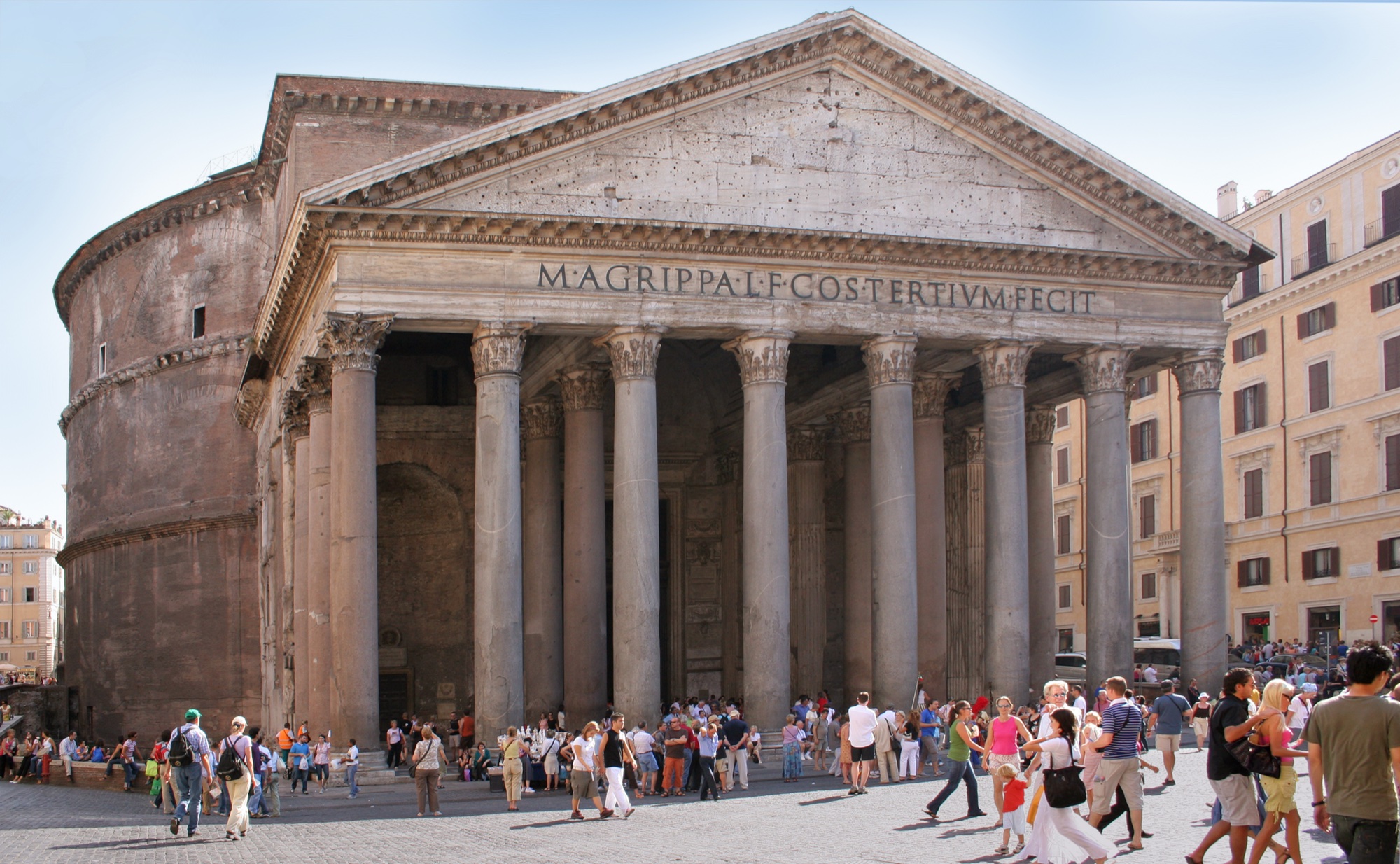
Across the front of the Pantheon, in bronze letters:
M·AGRIPPA·L·F·COS·TERTIVM·FECIT
Decoded: Marcus Agrippa, Lucii filius, consul tertium, fecit. “Marcus Agrippa, son of Lucius, consul for the third time, made this.”
Agrippa was consul for the third time in 27 BC. The catch is that the building you’re looking at isn’t his. Agrippa’s Pantheon burned down, and the one standing now was built under the emperor Hadrian more than a century later. Hadrian put the old builder’s name back on the front instead of his own. The inscription is accurate about Agrippa and silent about the man who actually built the dome. Our Pantheon history post goes into why.
The Arch of Septimius Severus, Roman Forum
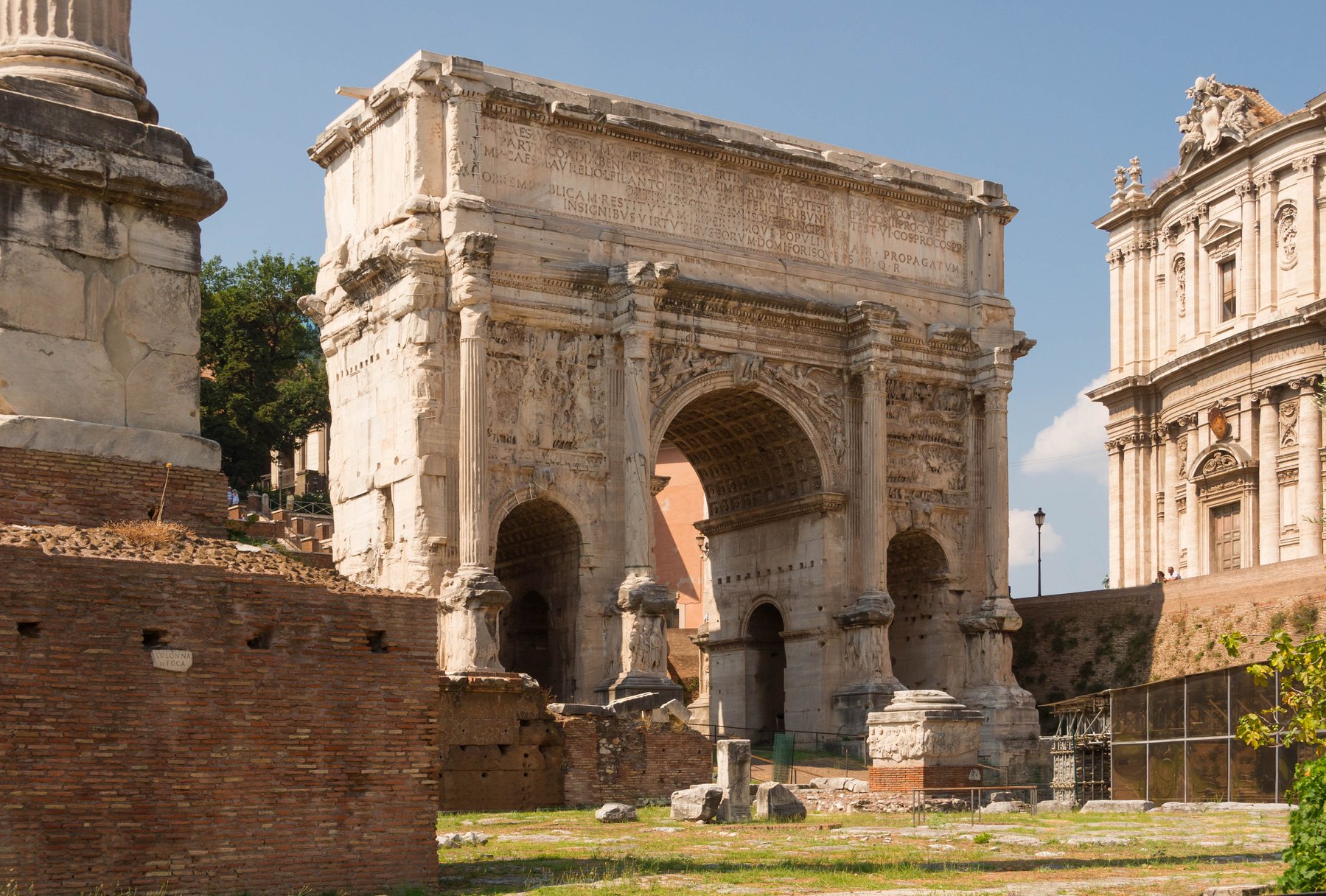
The long inscription on the attic of this arch dedicates it to the emperor Septimius Severus and his two sons, Caracalla and Geta. Except that it doesn’t any more. After Severus died, Caracalla had his brother Geta murdered and his name erased from public monuments. On the arch, Geta’s line was removed and replaced with a flattering phrase about the “best and bravest princes”. The new letters don’t quite cover the old pin holes, which is how scholars read the original wording. It’s the clearest example in Rome of an inscription that has been edited, and our Roman Forum guide tells you where to stand to see it.
The Arch of Titus, Roman Forum
At the other end of the Forum, the Arch of Titus has one of the simplest inscriptions in Rome:
SENATVS POPVLVSQVE ROMANVS DIVO TITO DIVI VESPASIANI F VESPASIANO AVGVSTO
“The Senate and the Roman People, to the deified Titus Vespasianus Augustus, son of the deified Vespasian.”
Two things to notice. DIVO means Titus was already dead and declared a god when the arch was put up. And the decoder works: SPQR, written out in full; DIVO and DIVI; and the single letter F for filius, son.
Hagia Sophia, Istanbul
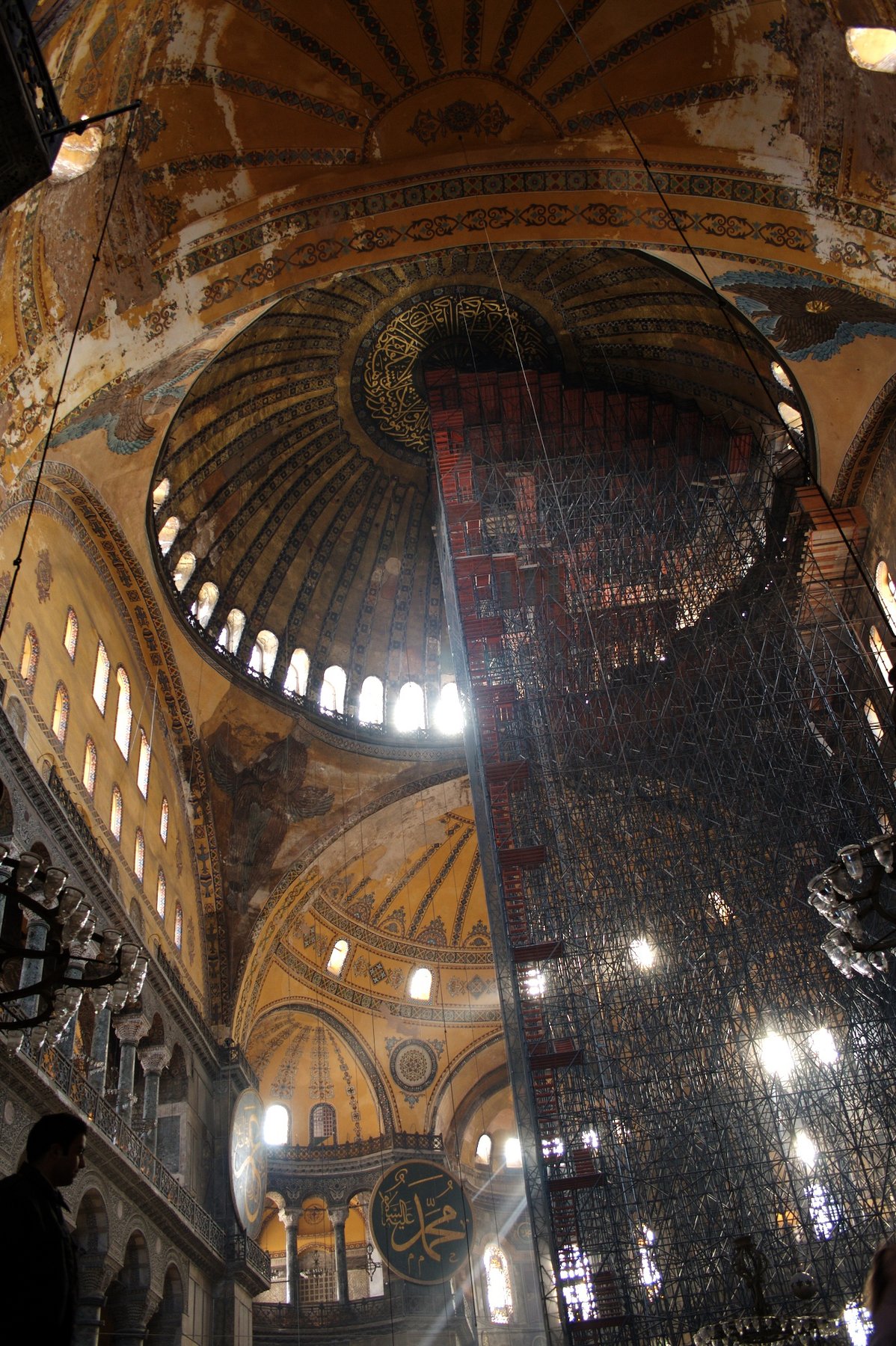
Inside Hagia Sophia, eight enormous green-and-gold roundels hang below the dome, each about seven and a half metres across. They are among the largest calligraphic panels in the Islamic world, made in the nineteenth century by the calligrapher Kazasker Mustafa İzzet Efendi. They don’t contain sentences, but names: Allah, the Prophet Muhammad, the first four caliphs, Abu Bakr, Umar, Uthman and Ali, and the Prophet’s grandsons, Hasan and Husayn.
Above them, in the dome itself, is a verse from the Quran. Below them, in places, the Byzantine mosaics of the church show through. Our Hagia Sophia post explains how three layers of writing and images ended up in one building.
The small inscriptions are often the best ones
The big dedications on the front of a building are official. The best stories are usually in the small writing nearer eye level.
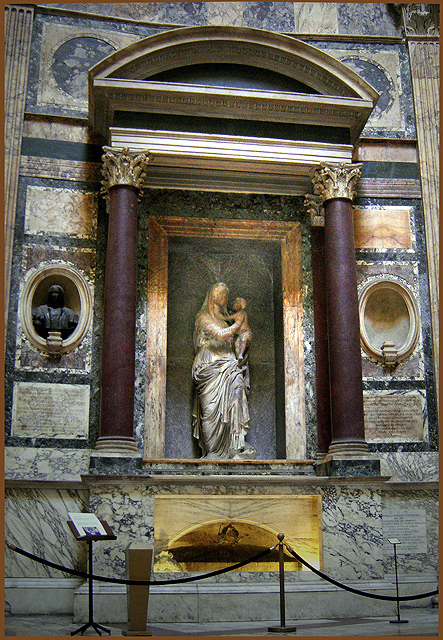
Inside the Pantheon, on Raphael’s tomb, is a two-line Latin epitaph written by his friend Pietro Bembo. Roughly translated: “Here lies Raphael, by whom Nature feared to be outdone while he lived, and, when he died, feared that she herself would die.”
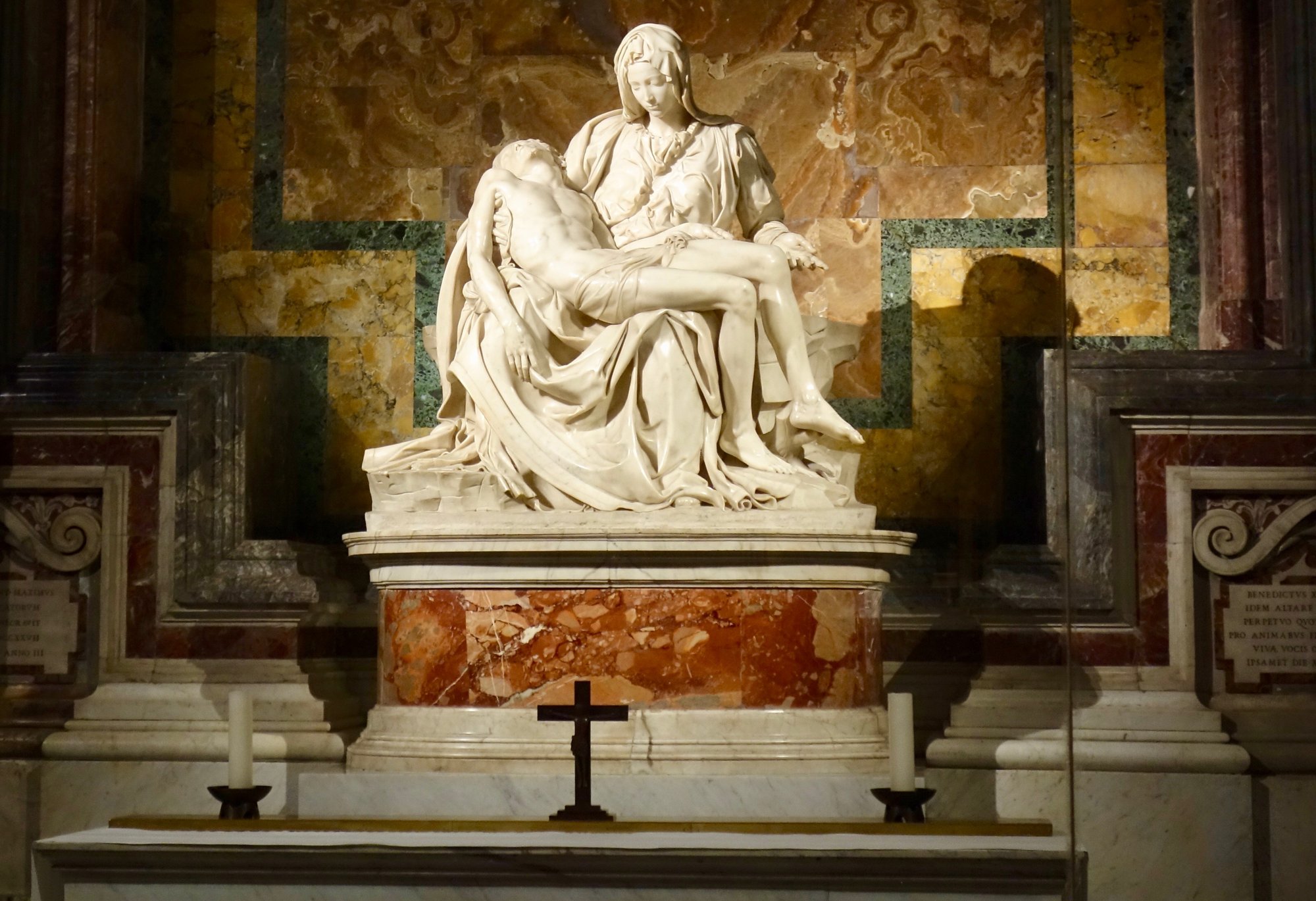
In St Peter’s, across the sash on the Virgin’s chest in Michelangelo’s Pietà, is the only signature he ever carved: MICHAEL.ANGELVS.BONAROTVS.FLORENTINVS.FACIEBAT, “Michelangelo Buonarroti of Florence was making this”. Note the modest FACIEBAT from the decoder, not the confident FECIT. The Pietà post tells you why he signed it at all, and why he regretted it.
What if nobody can read it?

Photo by Christian Lendl on Unsplash
The most famous inscription in the world is famous because, for a long time, nobody could read it. The Rosetta Stone, in the British Museum, carries a priestly decree from 196 BC in honour of the young king Ptolemy V, written out three times: in hieroglyphs, in Demotic, the everyday Egyptian script, and in ancient Greek. French soldiers found it in 1799 near the town of Rashid, which Europeans called Rosetta. Because scholars could read the Greek, the stone became the key to the other two. Jean-François Champollion announced in 1822 that he had cracked the hieroglyphs, and a whole civilisation’s writing opened up.
That is the dividing line for any inscription. If scholars can read a language, from Egyptian hieroglyphs and ancient Greek to Latin, Arabic and Hebrew, the text can be translated into any modern language. Some never got their Rosetta Stone. Etruscan is the classic case. The Etruscans borrowed their alphabet from the Greeks, so you can sound out the letters on a tomb in Tarquinia or a bronze in a museum in Florence, but the language is unrelated to its neighbours, and much of its vocabulary is still not understood. Cretan Linear A hasn’t been deciphered at all.
How Chiaro translates an inscription
The decoder gets you part of the way. For the rest, there’s Chiaro.
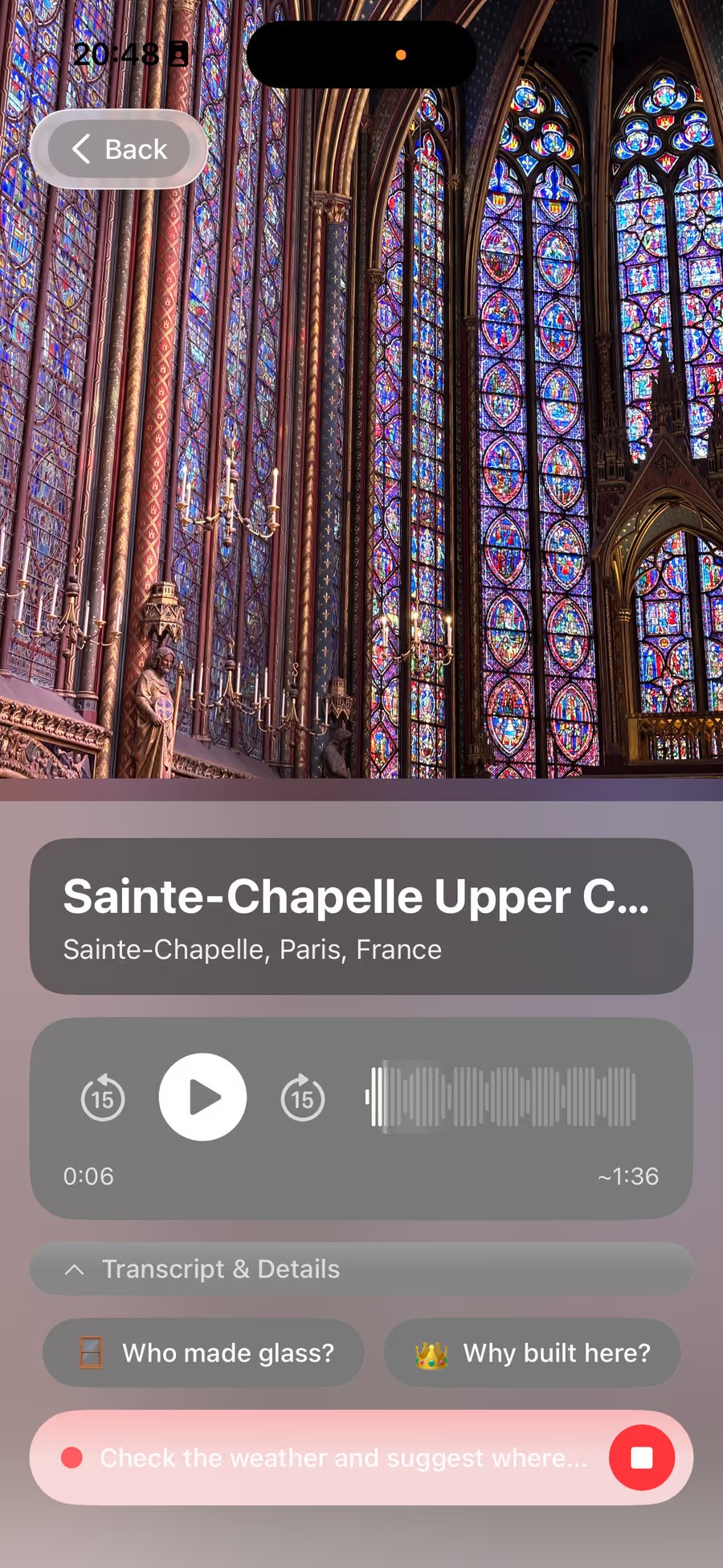
Point the camera at the text. Chiaro reads the inscription and translates it for you, abbreviations, Roman numerals and all. It works on almost any inscription in a language scholars can read: Latin over a church door, Greek on a temple, hieroglyphs on an obelisk, Arabic calligraphy in a mosque, Hebrew on a gravestone, or a plaque in a language you don’t speak. And it translates into any modern language, so the answer comes back in yours. When a language can’t be translated, like Etruscan, Chiaro still recognises what it is and tells you so, along with what is known about the people who wrote it.
Or just ask “what does it say?” If you’ve already snapped the monument, type or say the question and Chiaro answers out loud. Then keep going: who wrote it, why that name is there and not another, what was chiselled off and when. When the answer depends on today, Chiaro checks the web.
It explains, not just translates. A word-for-word translation of M·AGRIPPA·L·F·COS·TERTIVM·FECIT is accurate and useless. What you want is the story: that the name on the front belongs to the wrong builder. Chiaro tells you what the monument is, who made it and why it matters, and the inscription becomes part of that story.
In your language. Chiaro speaks 18 languages, in a woman’s or a man’s voice. For English, Spanish and Portuguese you can pick the accent too. Place names appear in your language and the local one, side by side.
It works almost anywhere. There are no city packs to download. Arches, tombs, fountains, war memorials and the plaque by a door: if it has a story, Chiaro finds it.
And at the end of the day, Chiaro turns what you saw into a Filo, a short story of your day that connects the dots. Agrippa in the morning, Raphael’s tomb at lunch, and the inscription on the arch in the afternoon turn out to belong to the same thread.
See how recognition works
The museum and landmark pages on the Chiaro website are a demo of what the app does after it recognizes something: 80 places, five stops each, playing in your browser with no account. For inscriptions, try Hagia Sophia, Westminster Abbey or the Lincoln Memorial, where the walls carry the full text of two of Lincoln’s speeches. In the app, you’re not limited to those 80: any inscription you point it at is enough.
FAQ
Is there an app that translates inscriptions on monuments?
Yes. Chiaro reads the writing on a monument from a photo and translates it, including Latin abbreviations and Roman numerals, then explains what it means and why it’s there. You can also ask “what does it say?” out loud.
What does SPQR mean?
Senatus Populusque Romanus, “the Senate and the Roman People”. It was the official name of the Roman state, and the city of Rome still uses it today.
What does D.O.M. mean over a church door?
Deo Optimo Maximo, “to God, the best and greatest”. It’s adapted from the Roman dedication to Jupiter, Iovi Optimo Maximo.
How do I read Roman numerals in a date?
Add the letters up from left to right, and subtract any smaller numeral that comes before a larger one. M = 1000, D = 500, C = 100, L = 50, X = 10, V = 5, I = 1. So MDCCCXLVIII is 1000 + 500 + 300 + 40 + 8 = 1848.
Does it work on Greek, Arabic or Hebrew inscriptions?
Yes. Chiaro reads and translates inscriptions in almost any language scholars can read, ancient or modern, including Greek, Arabic, Hebrew and Egyptian hieroglyphs, into any modern language. It also explains the context, such as whose names are written in the roundels of Hagia Sophia.
Can it translate Etruscan or other undeciphered scripts?
No one can, fully. Etruscan can be sounded out but is only partly understood, and scripts like Linear A have never been deciphered. Chiaro recognises the language, tells you that it can’t be fully translated, and explains what is known about it.
Read the walls
Once you start reading inscriptions, a city changes. The building with someone else’s name on it, the brother erased from the arch, the poet’s line on a painter’s tomb: the walls have been talking all along.
Chiaro means “clear” in Italian. Get it on the App Store, point it at the next inscription you can’t read, and listen.
Snap. Listen. Explore.