Every traveller means to keep a diary. Most of us manage two evenings. By the third night you are too tired, the notebook is at the bottom of the bag, and the day turns into four hundred photos you will scroll past once on the flight home and never open again.
The problem isn’t laziness. A diary asks you to do two hard things at the end of a long day: remember what you saw, and work out what it meant. Chiaro does the second part for you. Every evening it turns what you saw into a short story of your day. We call it a Filo.
Why travel diaries are so hard to keep

There are three usual ways to record a day on the road, and each one breaks somewhere.
The handwritten diary. The most personal, and the first to go. Writing up a day properly takes half an hour, and the evening is exactly when you want to eat, sleep or go back out.
The notes app. Faster, but you end up with fragments: “church with gold ceiling”, “ask about the column”, “the place with the lemons”. A week later even you can’t decode them.
The camera roll. Effortless, and the least useful. Photos record what something looked like. They don’t record what it was, or why you stopped to take the picture.
What all three are missing is the story: the thread that runs from the thing you saw in the morning to the thing you saw at dusk.
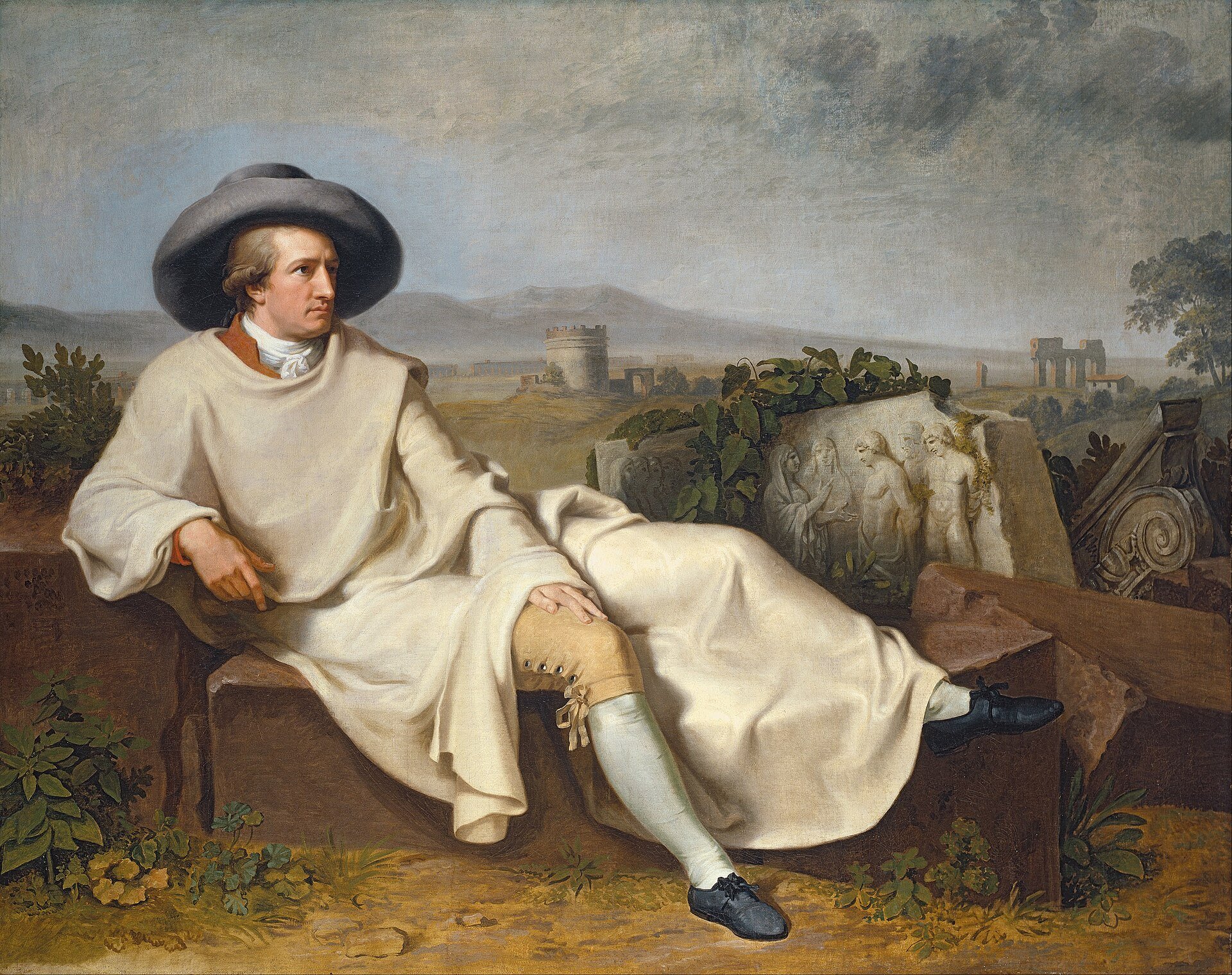
The most famous travel diary of all took its author thirty years. Goethe travelled through Italy from 1786 to 1788, writing diaries and letters as he went, and only turned them into Italian Journey decades later. Most of us don’t have thirty years. We have tonight.
What a Filo is
A Filo is Chiaro’s evening story of your day. Filo is Italian for “thread”, and that’s the idea: Chiaro takes what you saw during the day and turns it into a short story that connects the dots.
It’s not a list of where you went. It’s the reason those places belong together.
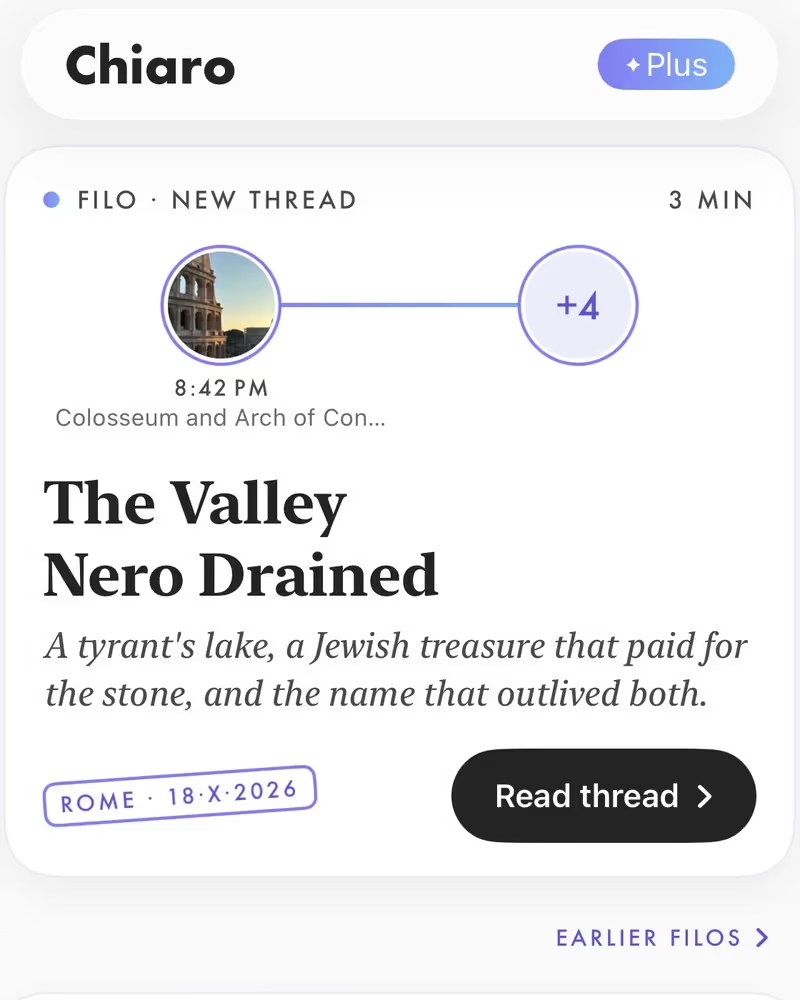
Take the Filo in the screenshot above, from a day in Rome. It starts at the Colosseum and the Arch of Constantine, and it’s called The Valley Nero Drained. The subtitle is the whole day in one line: “A tyrant’s lake, a Jewish treasure that paid for the stone, and the name that outlived both.” The Colosseum stands where Nero had a private lake in the gardens of his palace. Its construction was paid for with spoils from the sack of Jerusalem. And the name “Colosseum” probably comes from the colossal statue of Nero that stood next to it. Three stops on a walking day, one story. You would not have put that together from your camera roll.
Go deeper on any thread
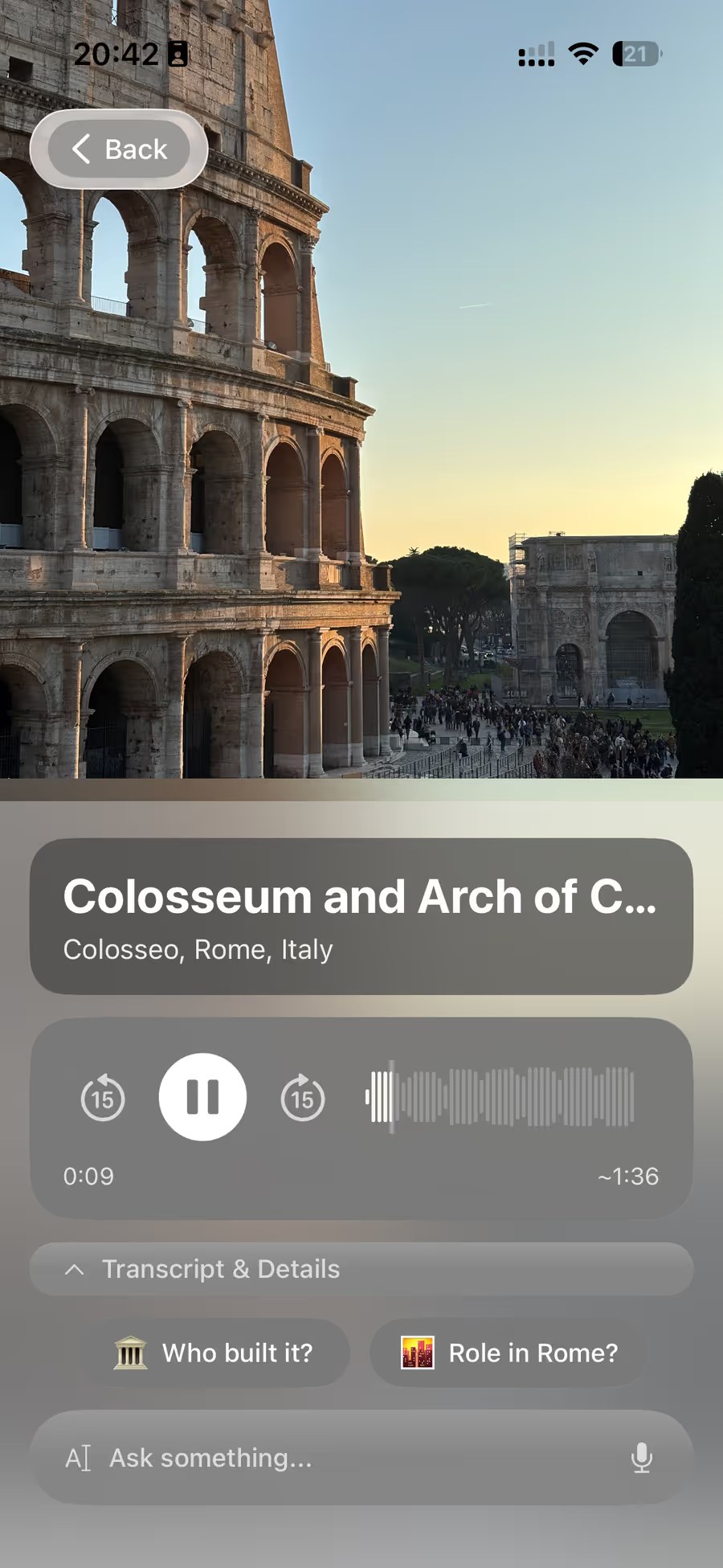
A Filo is short on purpose: a few minutes to read before dinner. When one thread catches you, tap Go deeper and Chiaro keeps going on that part of the story. Every Filo you’ve had stays in the app, so you can scroll back through earlier ones.
Pin anything
If something in a Filo makes you want to go back, or to go somewhere new tomorrow, pin it. You can pin a place from the map, a chat or a Filo, and find it again in one tap.
How Chiaro knows what your day was
You don’t write anything. Chiaro turns what you saw into the story, and what you saw is what you pointed it at.
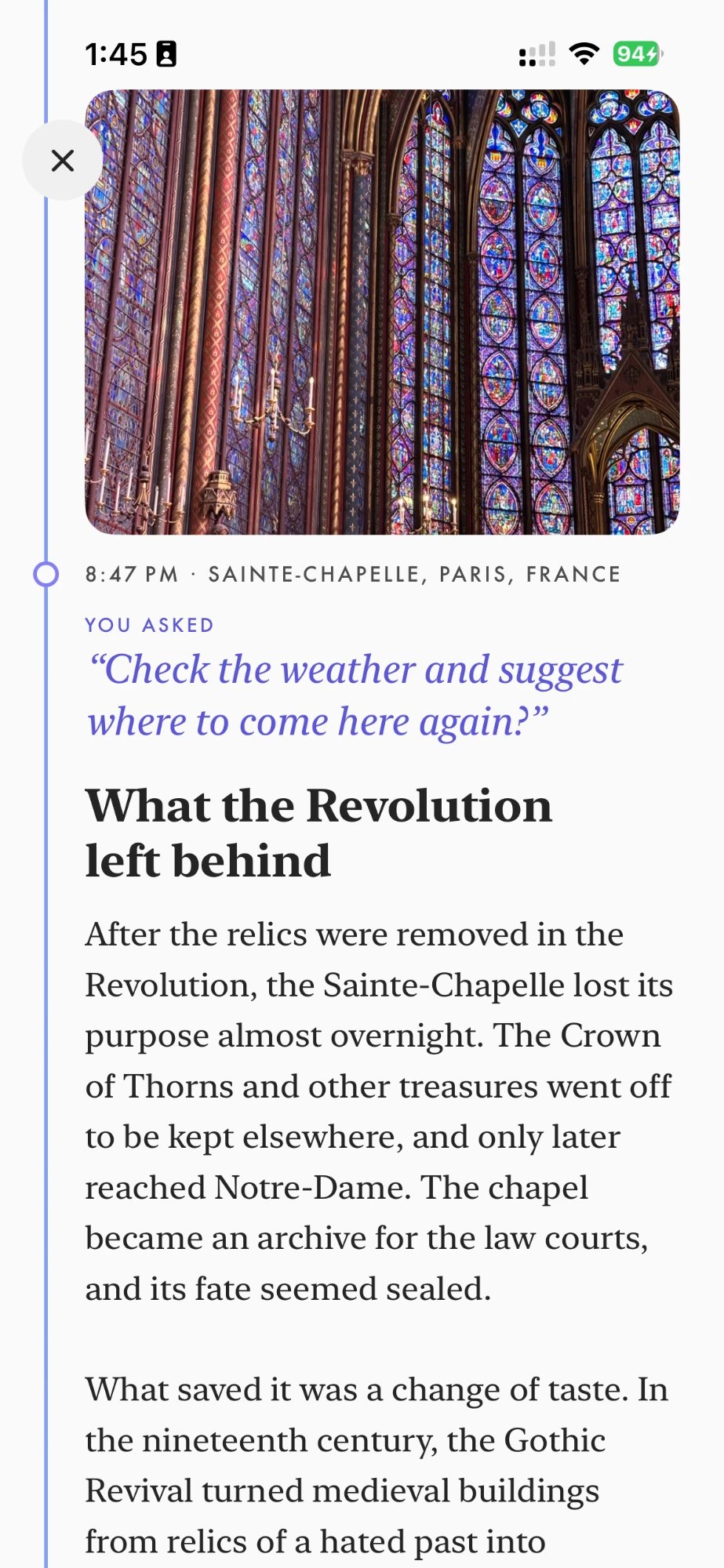
The photos you take. Point your camera at a painting, a statue, a building or a mural, and Chiaro recognizes it and plays its story in seconds. Every photo you take also becomes a pin on the Map, so the day has a shape: where you started, where you wandered, where you ended up.
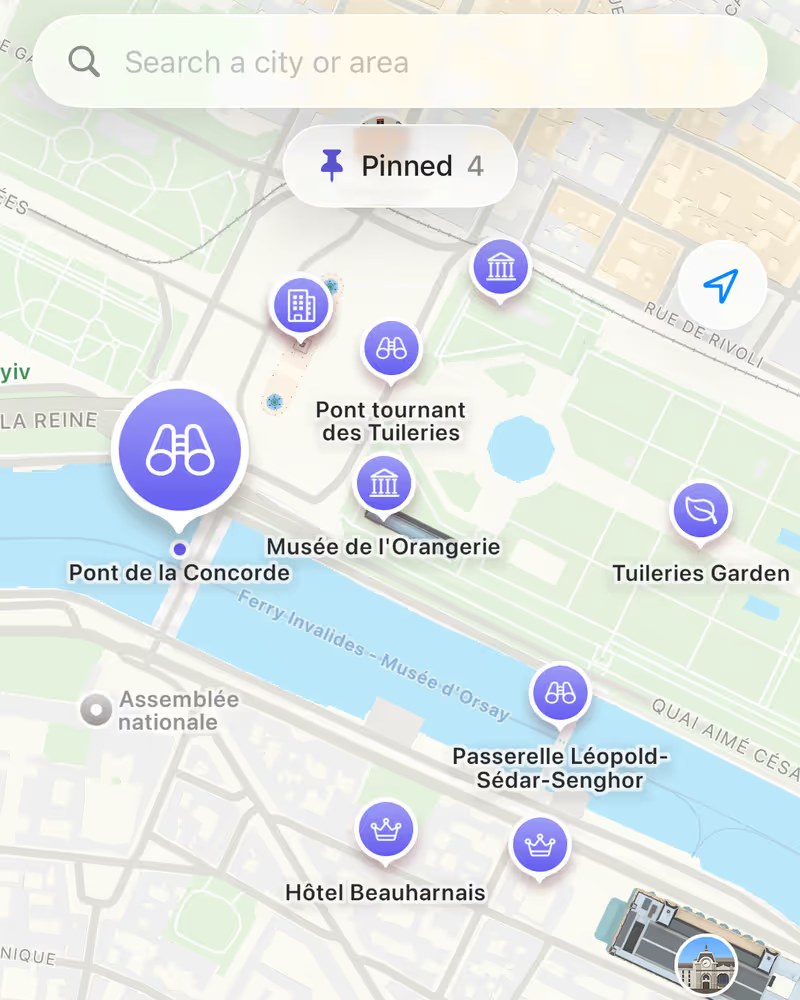
The questions you ask along the way. Type or say any question and Chiaro answers out loud, and checks the web when the answer is about today. Chiaro remembers what you’ve been curious about, so the guides you hear during the day follow your interests.
How to get a good Filo
A Filo can only connect the dots you give it. A few habits make a big difference:
- Snap as you go. Don’t save it for the famous things. The odd doorway, the fountain, the plaque on the side of a church: the small stops are often where the thread is.
- Ask the question you actually have. “Why is this column here?” “Who paid for this?” “Is this the same family as the palace this morning?” A day you were curious about makes a better story than a day you only walked through.
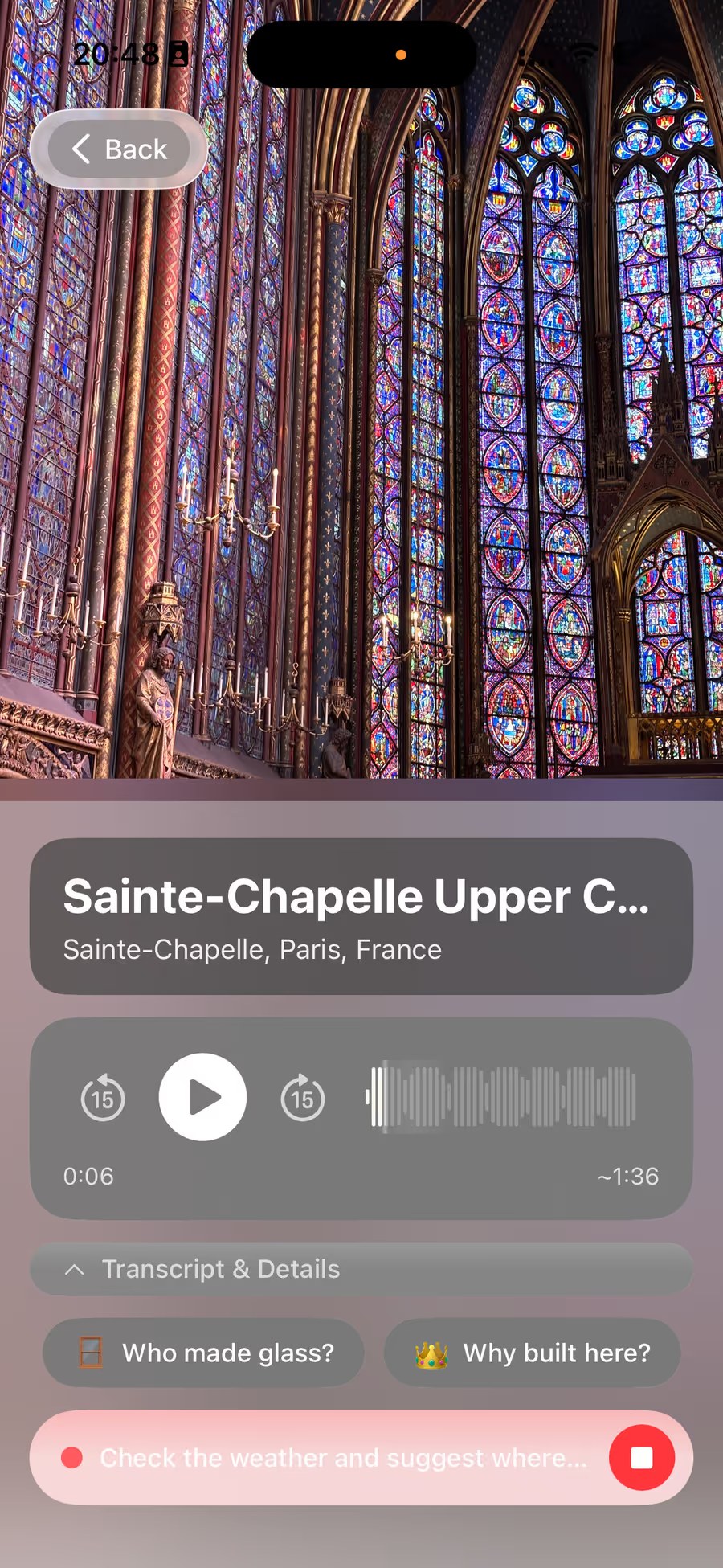
- Read it the same evening. A Filo is best while the day is still in your legs: three minutes over dinner, then Go deeper on whatever surprised you.
- Pin what you want to come back to. The Filo is also a good place to plan tomorrow. Chiaro can do that too: pick a place or tap Surprise me and get a plan with opening hours, the weather and a backup for rain.
From the story of a day to the story of a trip
A Filo covers one day. When you leave a city, Chiaro sends a recap of your days there, and when you get home, the whole trip, city by city. That’s a different kind of travel journal, and we wrote about it separately in an app that creates a travel journal automatically.
Sign in with Apple, and your guides, chats and Filos follow you to a new phone.
FAQ
Is there an app that writes a travel diary for me?
Yes. Every evening Chiaro turns what you saw into a short story of your day, called a Filo. You don’t type anything.
What’s the difference between a Filo and a photo album?
A photo album shows what you saw. A Filo tells you how it fits together: why the church you passed in the afternoon connects to the painting you saw in the morning.
Do I have to write anything?
No. Snap things as you go and ask questions when you’re curious. Chiaro writes the story in the evening.
What languages does it work in?
Chiaro works in 18 languages, from English, Spanish and French to Japanese, Arabic and Georgian.
Tonight’s story
The best travel diaries aren’t lists of places. They’re the moment you realise two things you saw on the same day were part of one story. Chiaro means “clear” in Italian, and a Filo is that moment, every evening, without the notebook.
Get Chiaro on the App Store, snap your way through the day, and read the story tonight.
Snap. Listen. Explore.