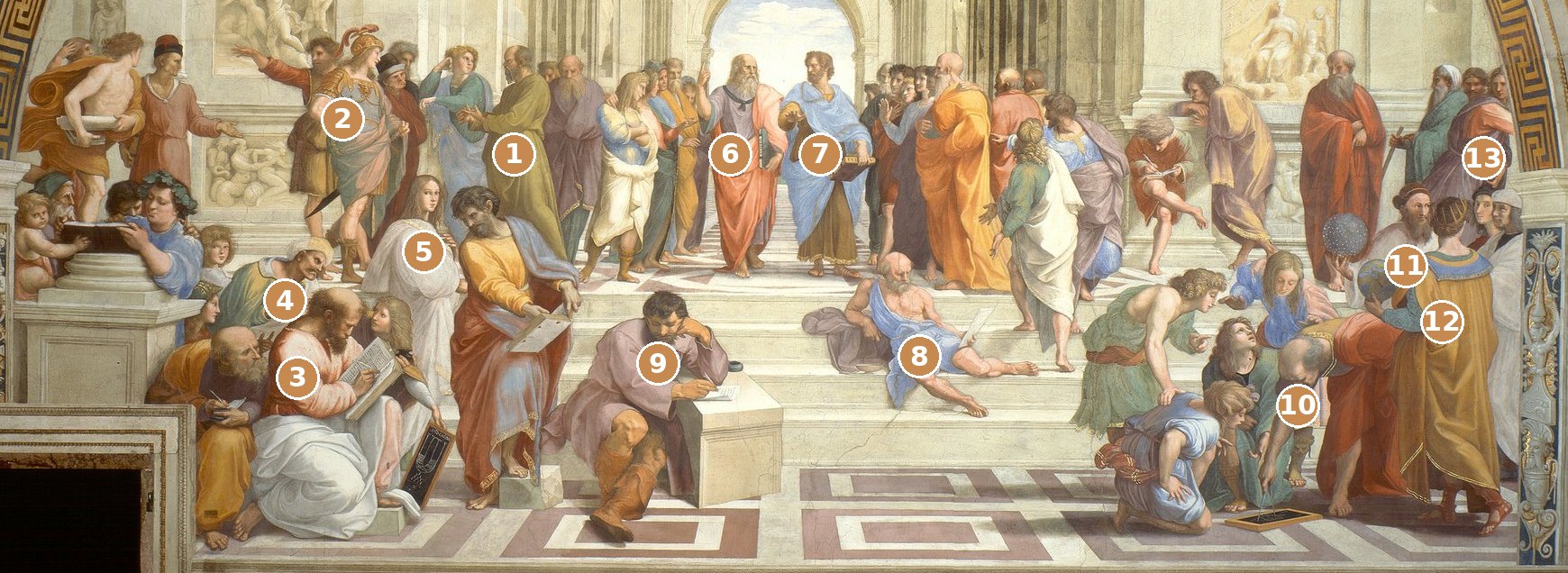
Stand in front of The School of Athens and you will hear the same question in every language in the room. Who is that? The man pointing up. The man sulking on the block. The young man in the black cap, staring back. Raphael put fifty-eight figures on one wall and did not label a single one of them.
That is true of most of the famous paintings with a crowd in them. Rembrandt’s Night Watch carries a shield with eighteen names on it, and the shield does not say which name goes with which face. Leonardo never wrote the apostles’ names on the Last Supper. David painted about 190 people into The Coronation of Napoleon, and some of them were not even in the church. These pictures were made for viewers who already knew the cast. We don’t.
So we started making keys. Each painting below gets a figure-by-figure guide, most of them built around a numbered image: who each person is, where to find them on the canvas, and the story that explains why they are standing there. The pictures stop being a blur of robes and turn into scenes.
You do not need a printed key in the room, either. With Chiaro open in front of the canvas, you photograph a single face in the crowd and the name comes back, with the story of who lent it.
The School of Athens, by Raphael
This is where the series started, and it is still the most crowded room of the lot. Plato wears Leonardo da Vinci’s face. Heraclitus, brooding on a marble block, is Michelangelo, added late on a fresh patch of plaster. Euclid is the architect Bramante, and Raphael himself peers out from the far right edge. The figure in white some call Hypatia gets an honest answer, not a guess.
Read the guide: School of Athens characters labeled.
The Night Watch, by Rembrandt
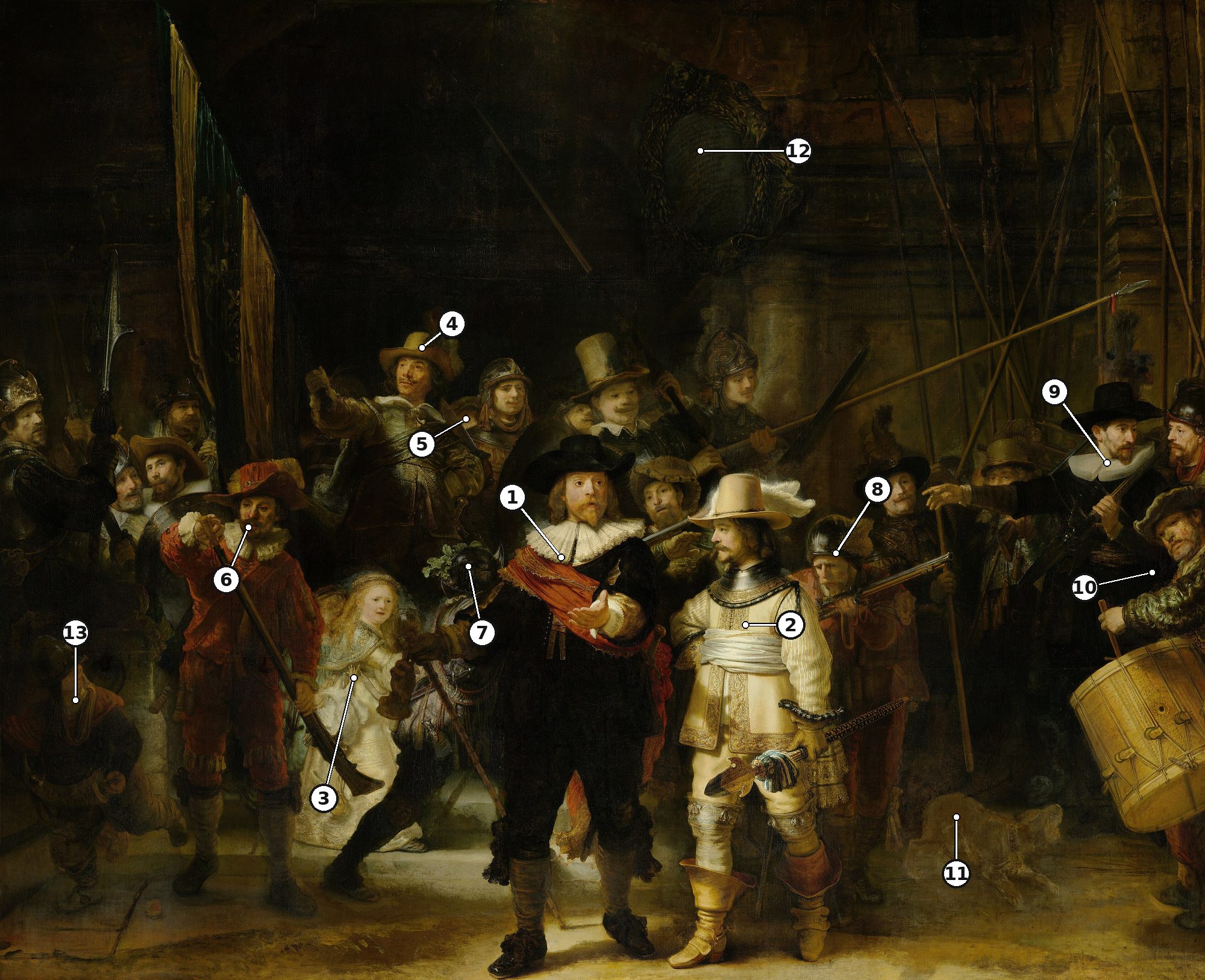
A militia company paid about one hundred guilders a head to be painted in 1642, and the money bought very different positions. The guide numbers thirteen figures and details, from the captain in black and the lieutenant in yellow to the glowing girl with a dead chicken at her waist, the hired drummer, the dog, and a single half-hidden eye that may be Rembrandt’s. The painting hangs in the Rijksmuseum.
Read the guide: The Night Watch, every figure identified.
The Last Supper, by Leonardo da Vinci
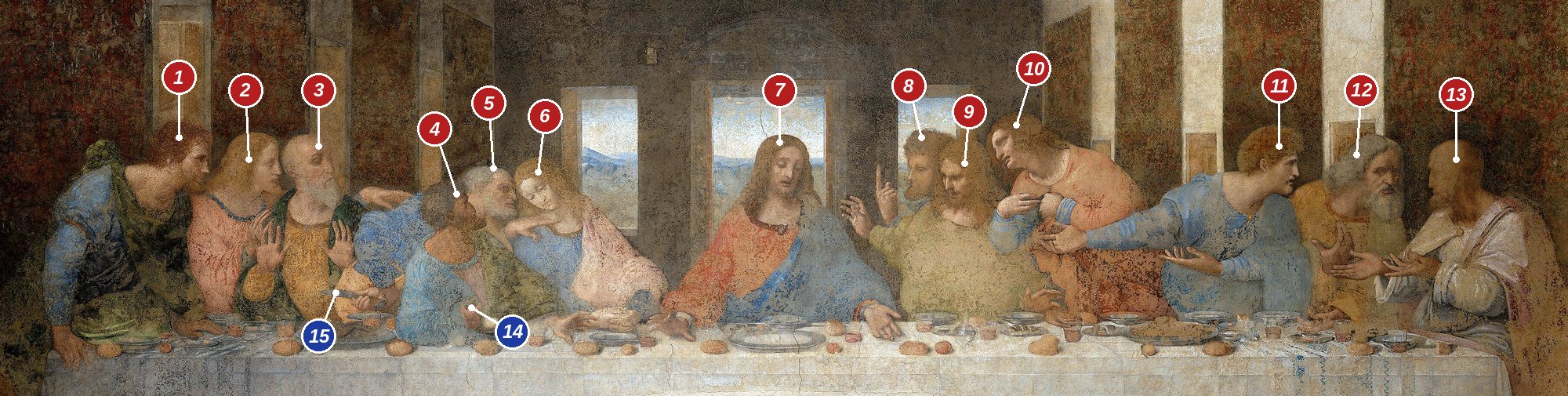
Twelve men hear one sentence, and every reaction is a clue. All twelve apostles are named here in four groups of three, with Judas’s purse and Peter’s knife pointed out. The guide also explains where the names come from, a sixteenth-century copy with the names lettered along the bottom, and why the young figure beside Christ is John, not Mary Magdalene.
Read the guide: The Last Supper, who is who.
Liberty Leading the People, by Delacroix
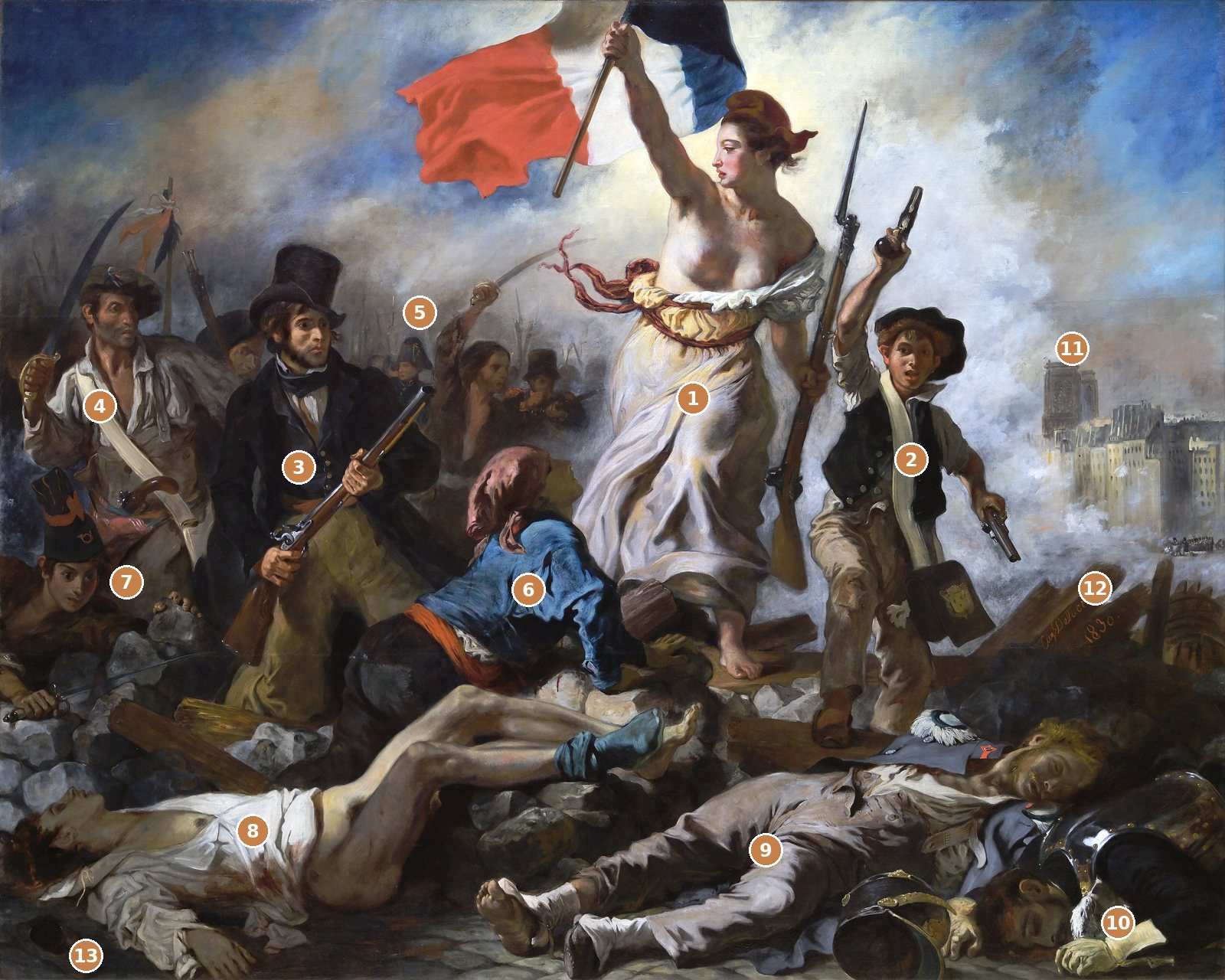
Most people get two things wrong about this canvas. It shows the revolution of July 1830, not 1789, and the man in the top hat is almost certainly not Delacroix. The key walks across the barricade, from the boy with two pistols to the tiny tricolour on Notre-Dame, and ends at the old shoe the 2024 cleaning brought back. It hangs in the Louvre.
Read the guide: Liberty Leading the People, who’s who.
The Raft of the Medusa, by Géricault
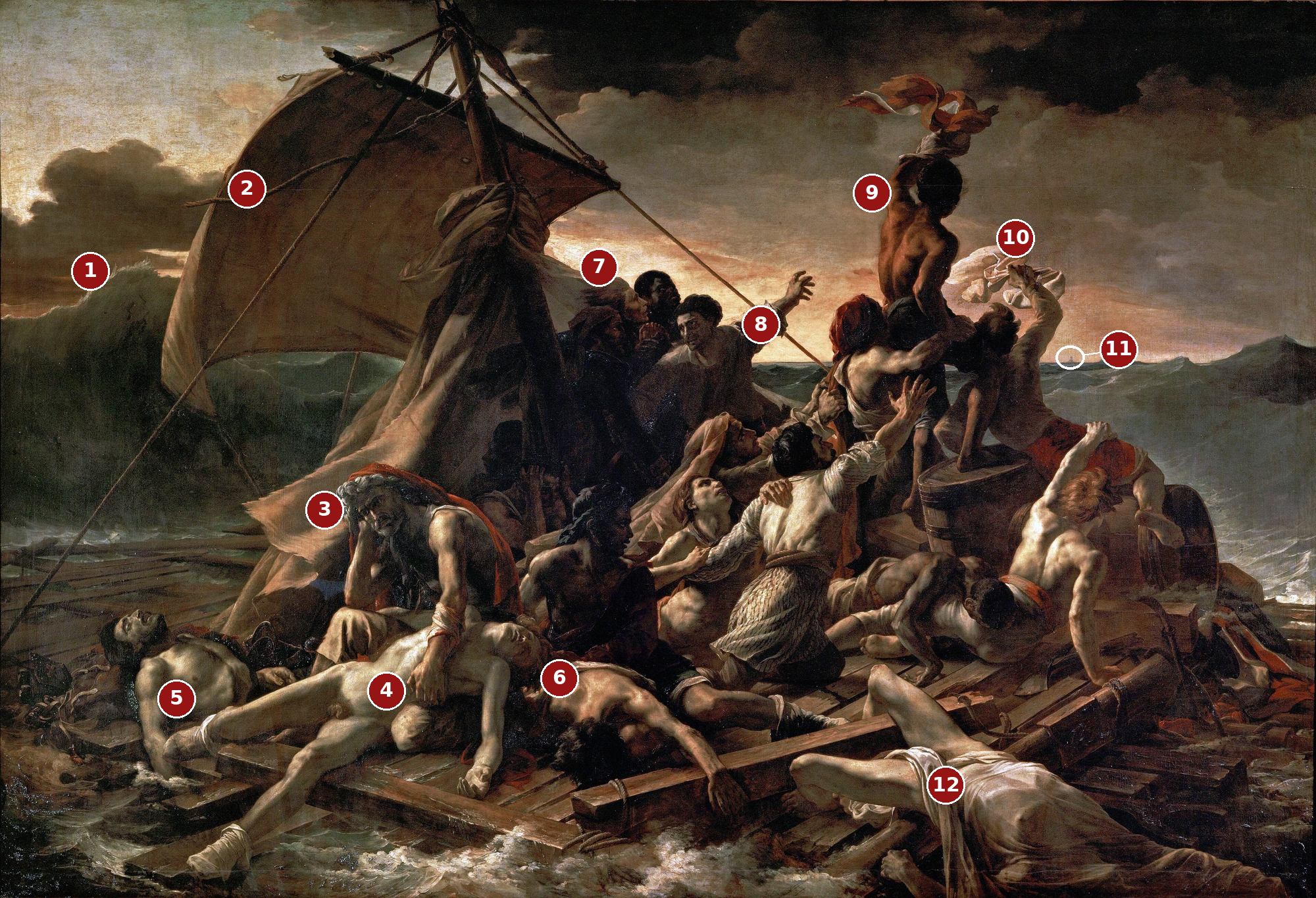
Fifteen men were still alive on the raft when they saw a sail on July 17, 1816. Géricault painted the moment the ship disappeared. The guide gives the men on the canvas their names and stories: the father holding his dead son, Jean Charles waving from the barrel, the face-down youth a young Delacroix is said to have posed for, and the speck of the Argus on the horizon. It hangs in the Louvre.
Read the guide: The Raft of the Medusa, the true story and every figure.
The Calling of Saint Matthew, by Caravaggio
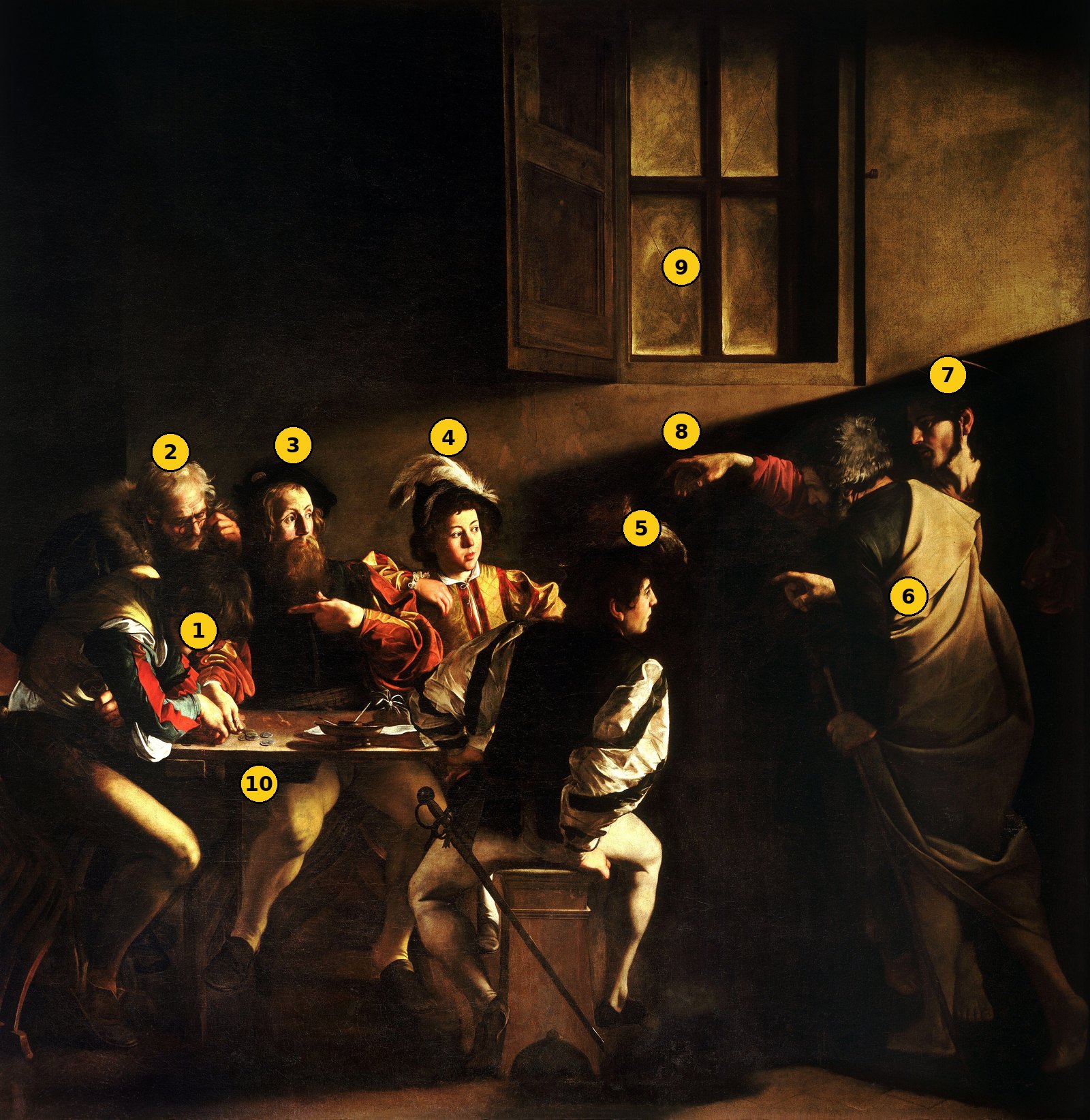
Five men count money at a table, Christ points, and four centuries later people still argue about which one is Matthew. The guide numbers everyone in the room and lays out the case for the bearded man and for the boy who never looks up. The painting is still in its chapel in San Luigi dei Francesi, and seeing it costs a coin for the lights.
Read the guide: The Calling of Saint Matthew, which one is Matthew.
The Coronation of Napoleon, by David
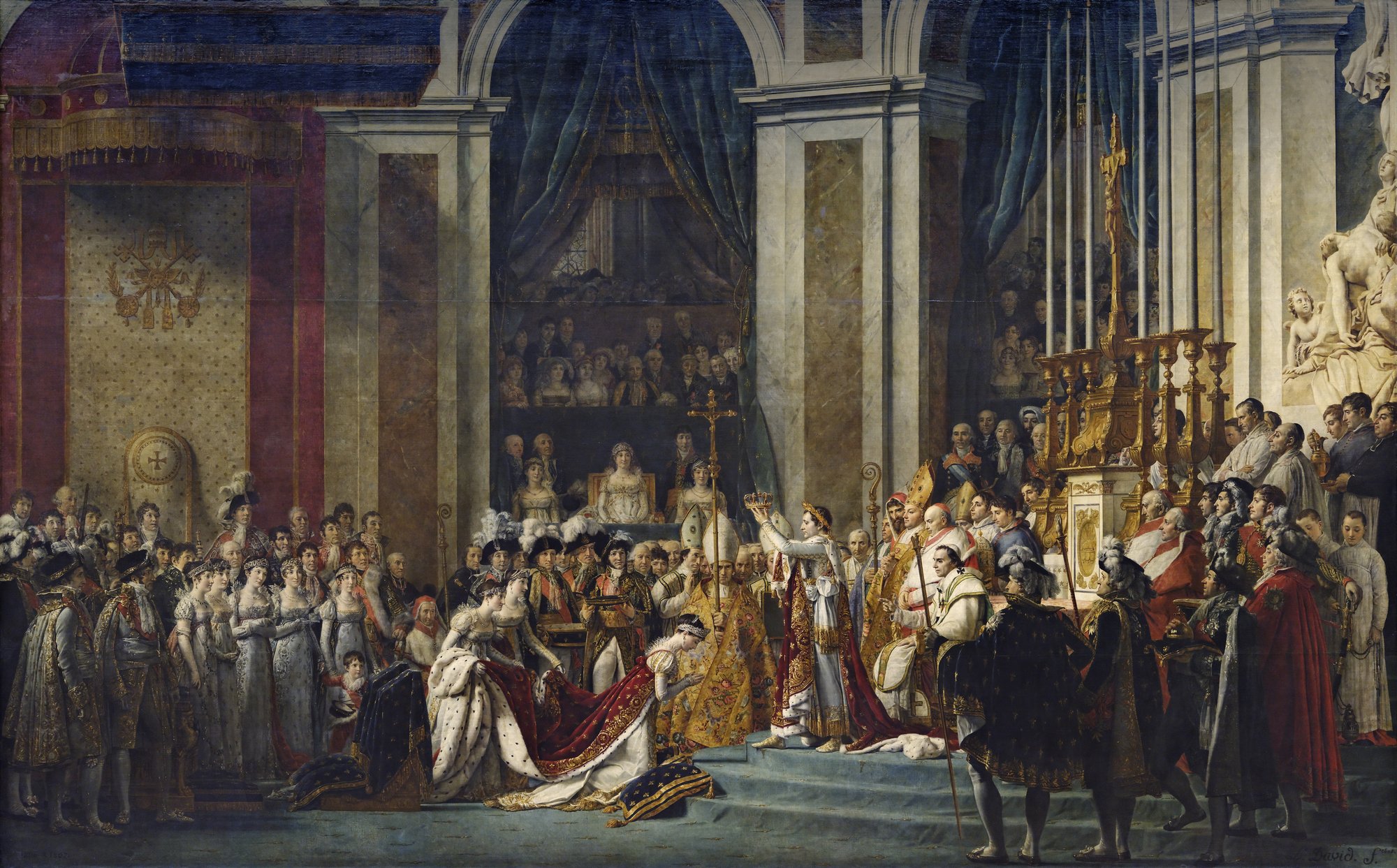
The Louvre’s curator counts about 190 figures on this canvas, 93 of them portraits of real people. The guide reads it left to right: the Bonaparte brothers and sisters, Josephine on her cushion, the pope’s raised hand that was painted in later, a mother who never attended, and David himself, sketching up in the gallery.
Read the guide: The Coronation of Napoleon, who’s who in David’s crowd.
The Oath of the Horatii and The Death of Marat, by David
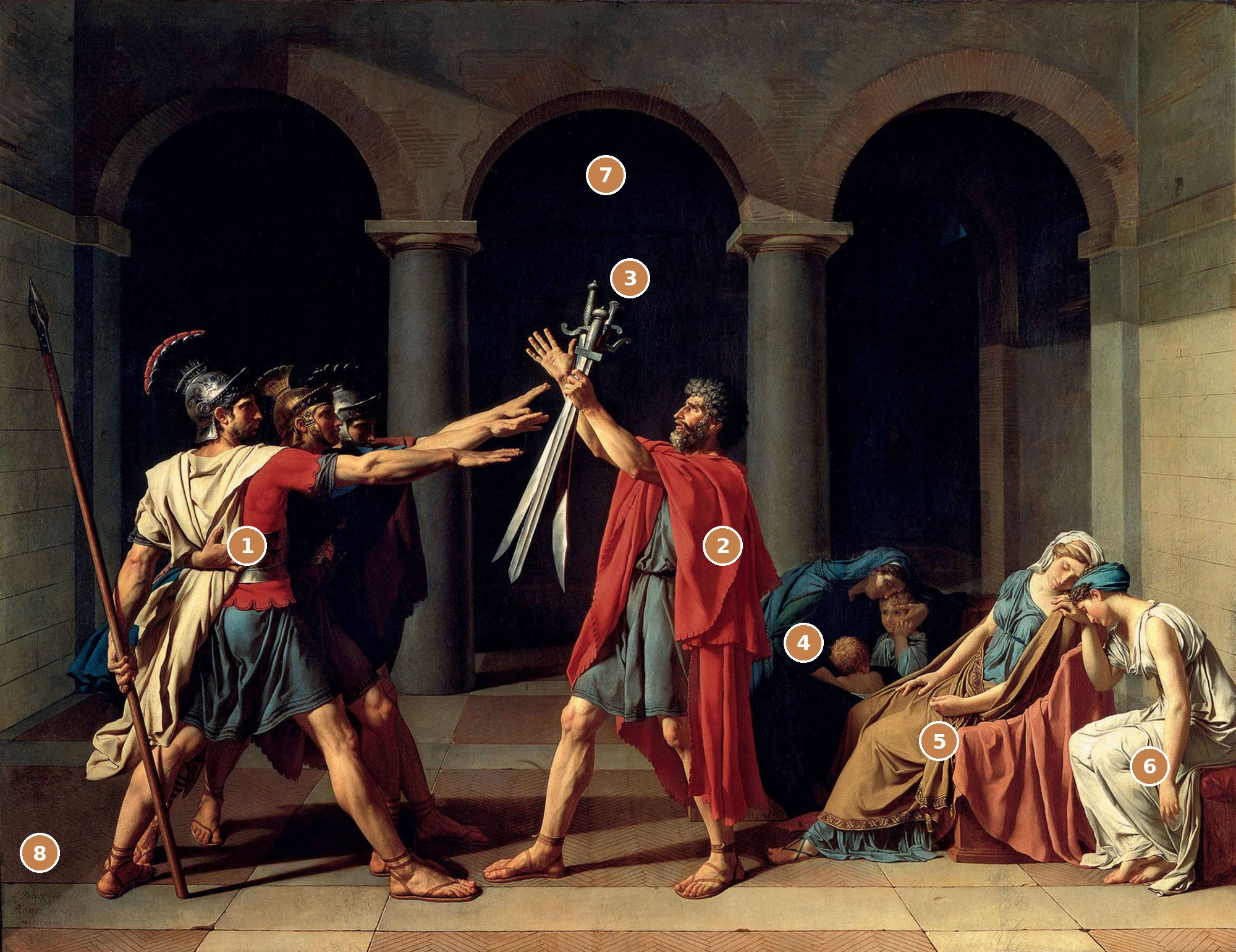
Two paintings by the same man bracket the French Revolution. One was made for Louis XVI, the other for the revolutionaries who executed him. The guide numbers the brothers, the swords and the grieving women in the Oath, then every object around Marat’s bathtub, down to Charlotte Corday’s letter. It also explains why the original Marat hangs in Brussels, not Paris.
Read the guide: Oath of the Horatii and The Death of Marat, figure by figure.
The Arnolfini Portrait, by Jan van Eyck
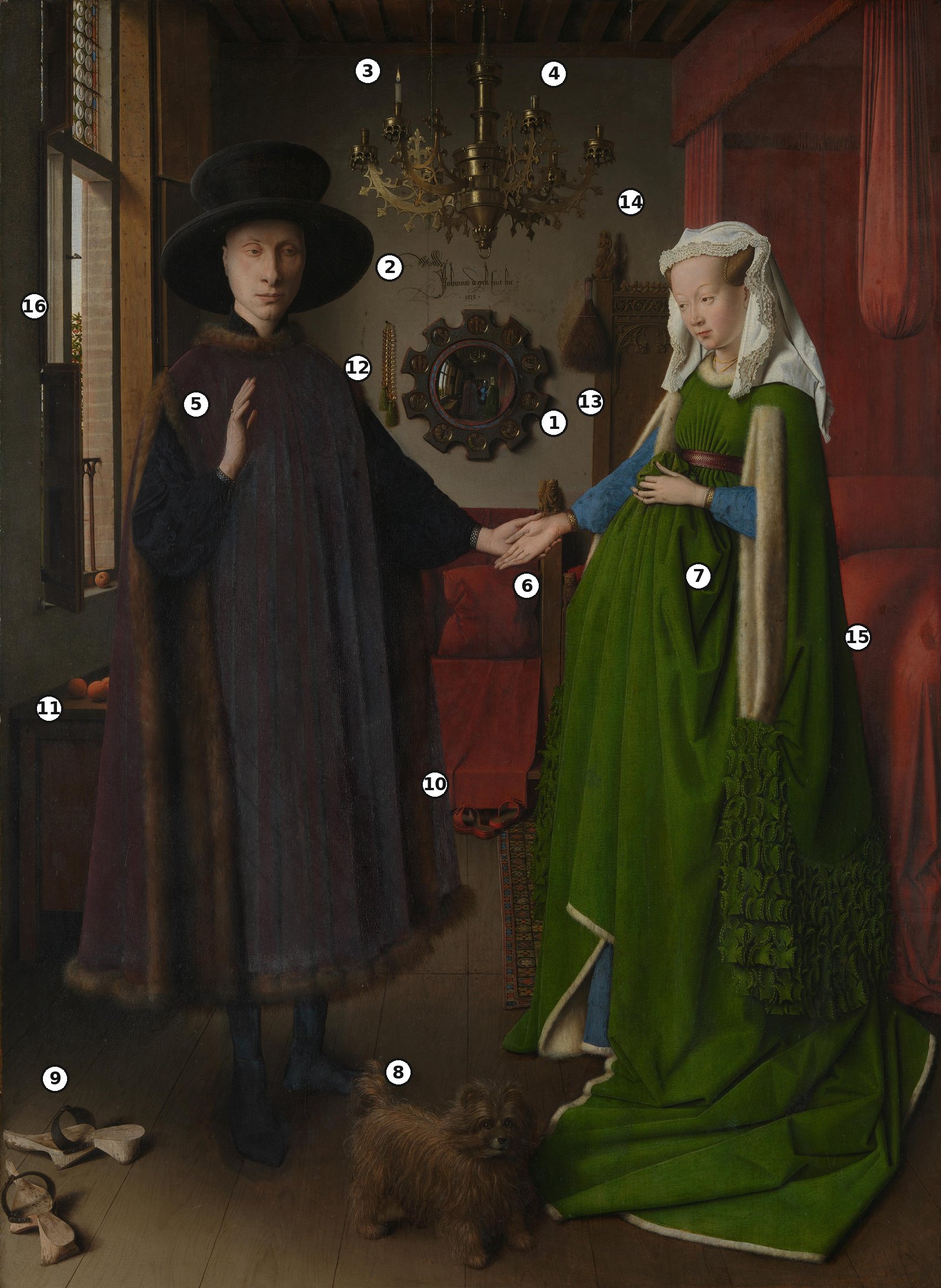
Only two people stand in this room, but the room is the crowd. The guide numbers sixteen details: the two visitors in the mirror, the line “Jan van Eyck was here” on the wall, the one burning candle, the dog, the clogs, and the gown that does not mean what everyone thinks it means. It is the first stop on our National Gallery audio guide.
Read the guide: The Arnolfini Portrait, 16 hidden details.
Primavera, by Botticelli
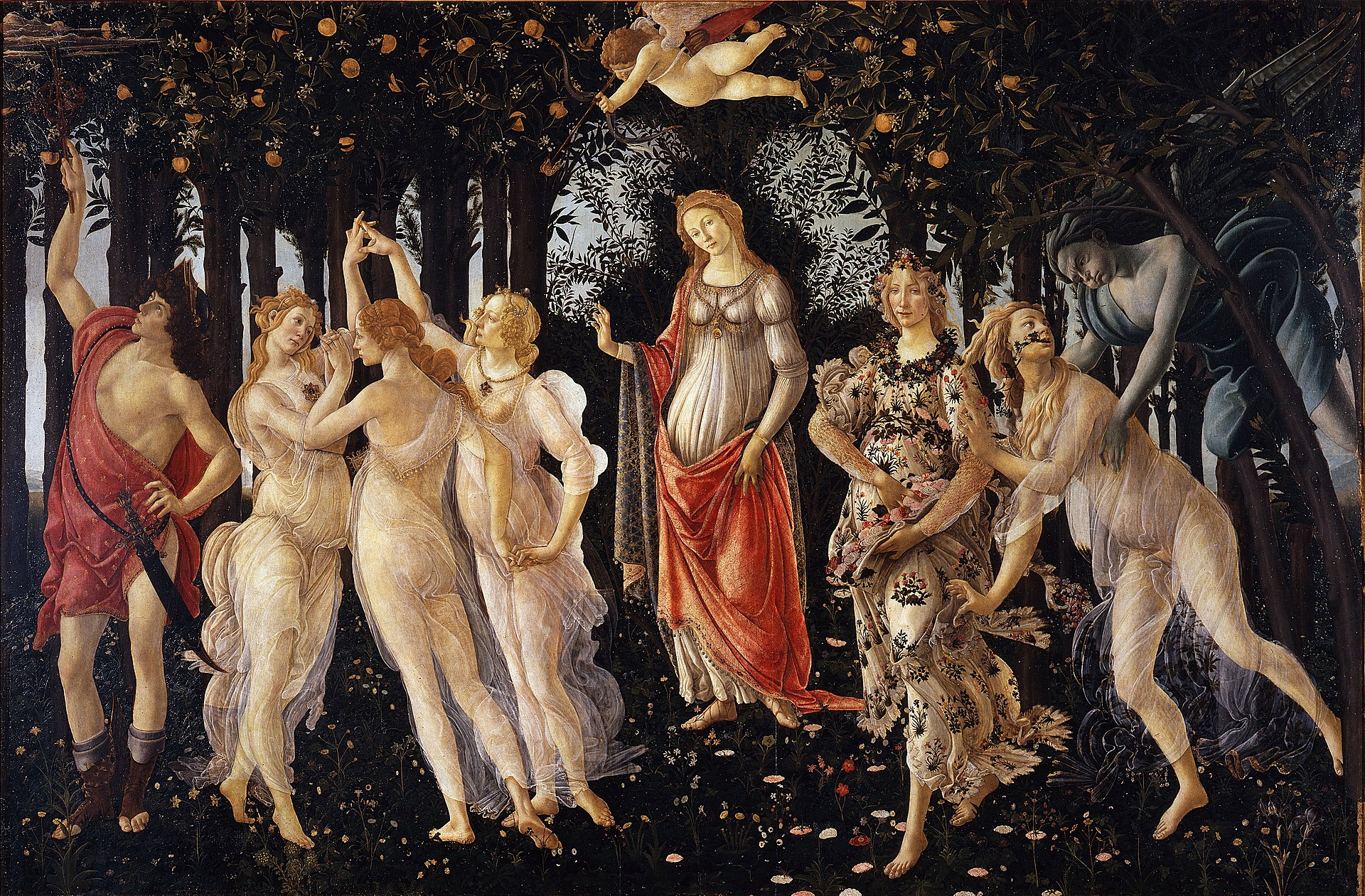
Nine figures stand in an orange grove, and the painting is meant to be read backward. The guide starts on the right with Zephyr seizing the nymph Chloris, and walks left through Flora, Venus, the blindfolded Cupid and the Three Graces to Mercury parting the clouds.
Read the guide: Primavera, figure by figure, right to left.
The Last Judgment, by Michelangelo
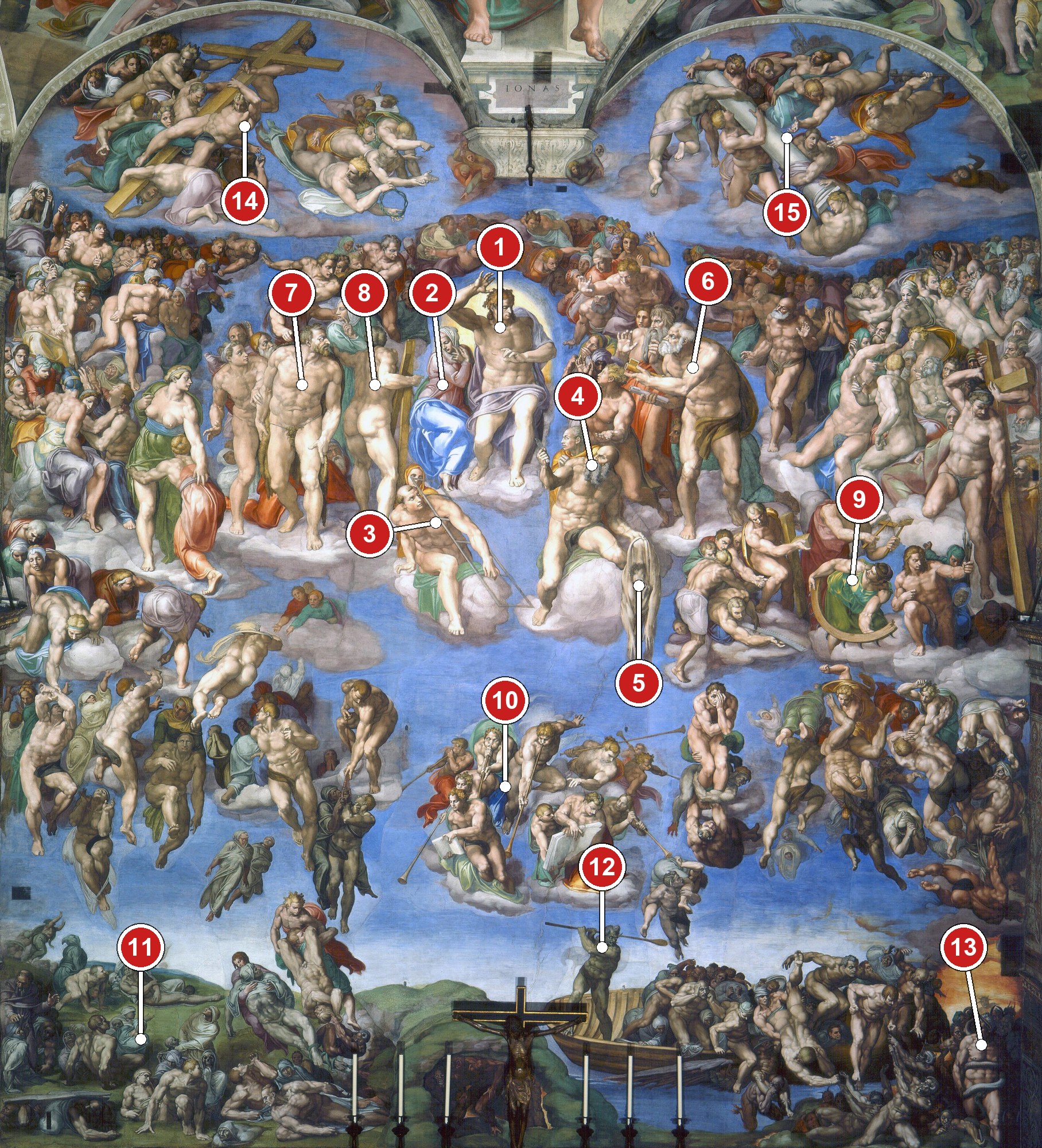
More than three hundred bodies swirl across the altar wall of the Sistine Chapel with not a single frame or label to separate them. The guide numbers fifteen anchors, from the beardless Christ and the saints holding the weapons that killed them down to Charon’s ferryboat, the papal master of ceremonies given donkey ears in Hell, and Michelangelo’s own broken-nosed face dangling on Saint Bartholomew’s flayed skin.
Read the guide: Michelangelo’s The Last Judgment, every key figure identified.
Guernica, by Pablo Picasso
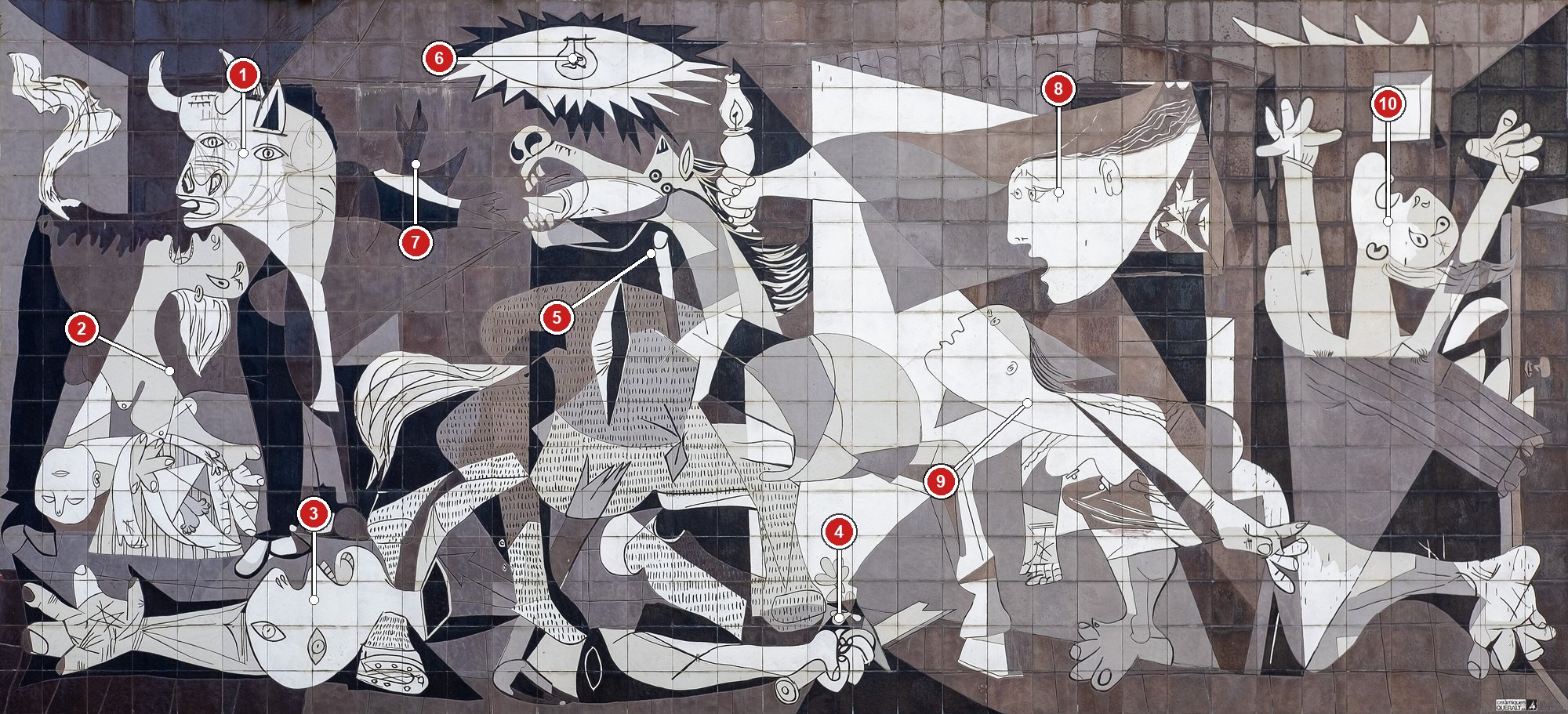
Nine figures, two light sources, and not a drop of color across nearly eight metres of canvas. The key numbers the bull, the screaming horse with its newsprint coat, the grieving mother, the broken sword and tiny flower, the silenced bird on the table, and the bare electric lightbulb overhead, then traces the forty-two-year New York exile that ended at Madrid’s Reina Sofía.
Read the guide: Picasso’s Guernica, every figure and symbol explained.
The Family of Charles IV, by Goya
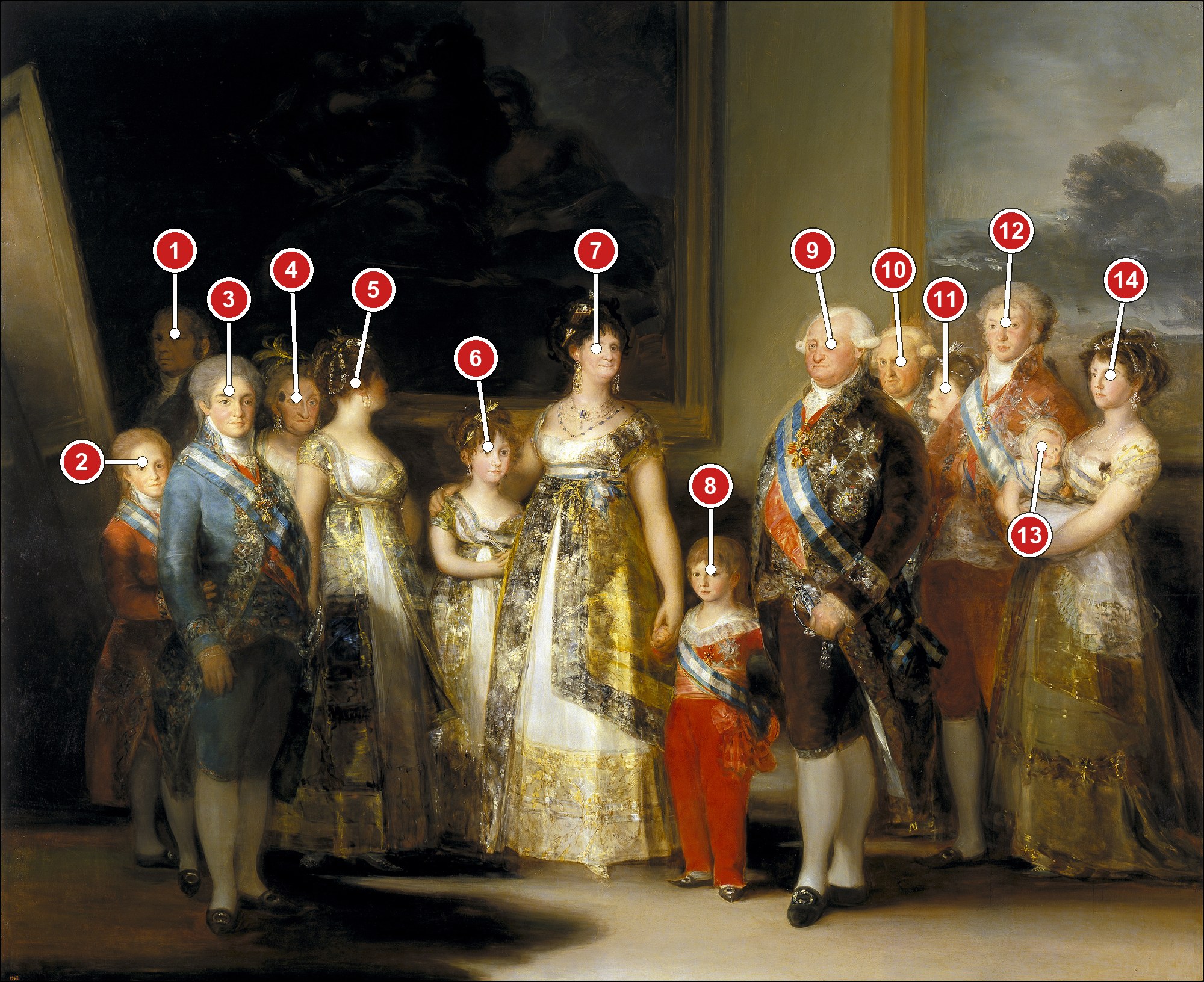
Thirteen Spanish Bourbons stand blazing in silk and diamonds while their deaf court painter watches them from the dark behind a giant canvas. Reading left to right, the guide names every prince, infanta and baby, explains the black patch on an elderly aunt’s temple and the future bride whose face is turned to the wall, and shows why Queen María Luisa holds the center spot instead of the King. The painting hangs in the Museo del Prado.
Read the guide: The Family of Charles IV, every royal named and Goya in the shadows.
Luncheon of the Boating Party, by Renoir
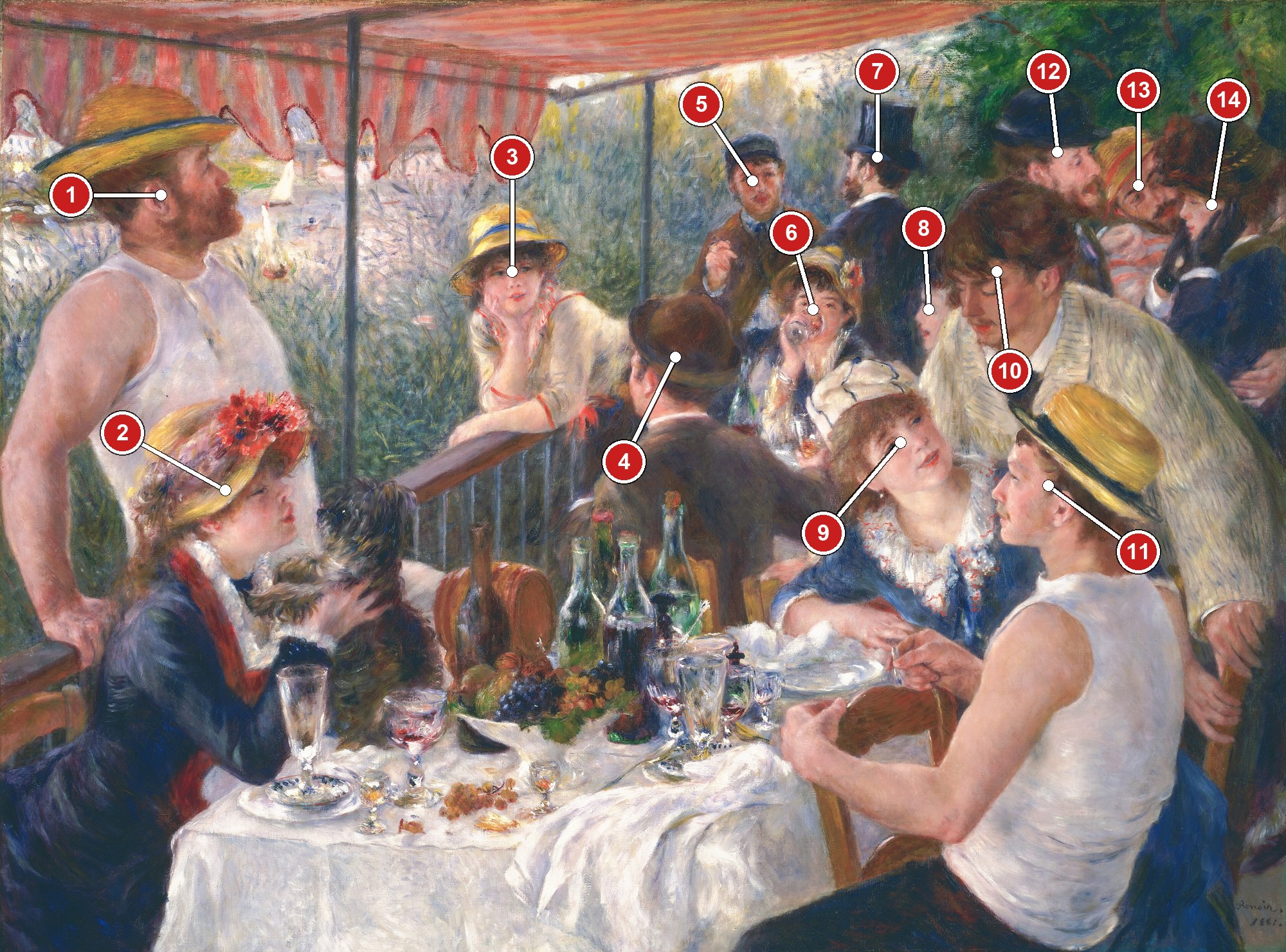
Nobody at this riverside table in Chatou was a hired stranger. The key identifies Renoir’s friends around the wine bottles: twenty-one-year-old seamstress Aline Charigot with her little dog, millionaire painter Gustave Caillebotte straddling a reversed chair, top-hatted collector Charles Ephrussi, actress Ellen Andrée behind her glass, and the mysterious fourteenth profile peeking out behind a shoulder.
Read the guide: Luncheon of the Boating Party, every real friend identified.
Netherlandish Proverbs, by Pieter Bruegel the Elder
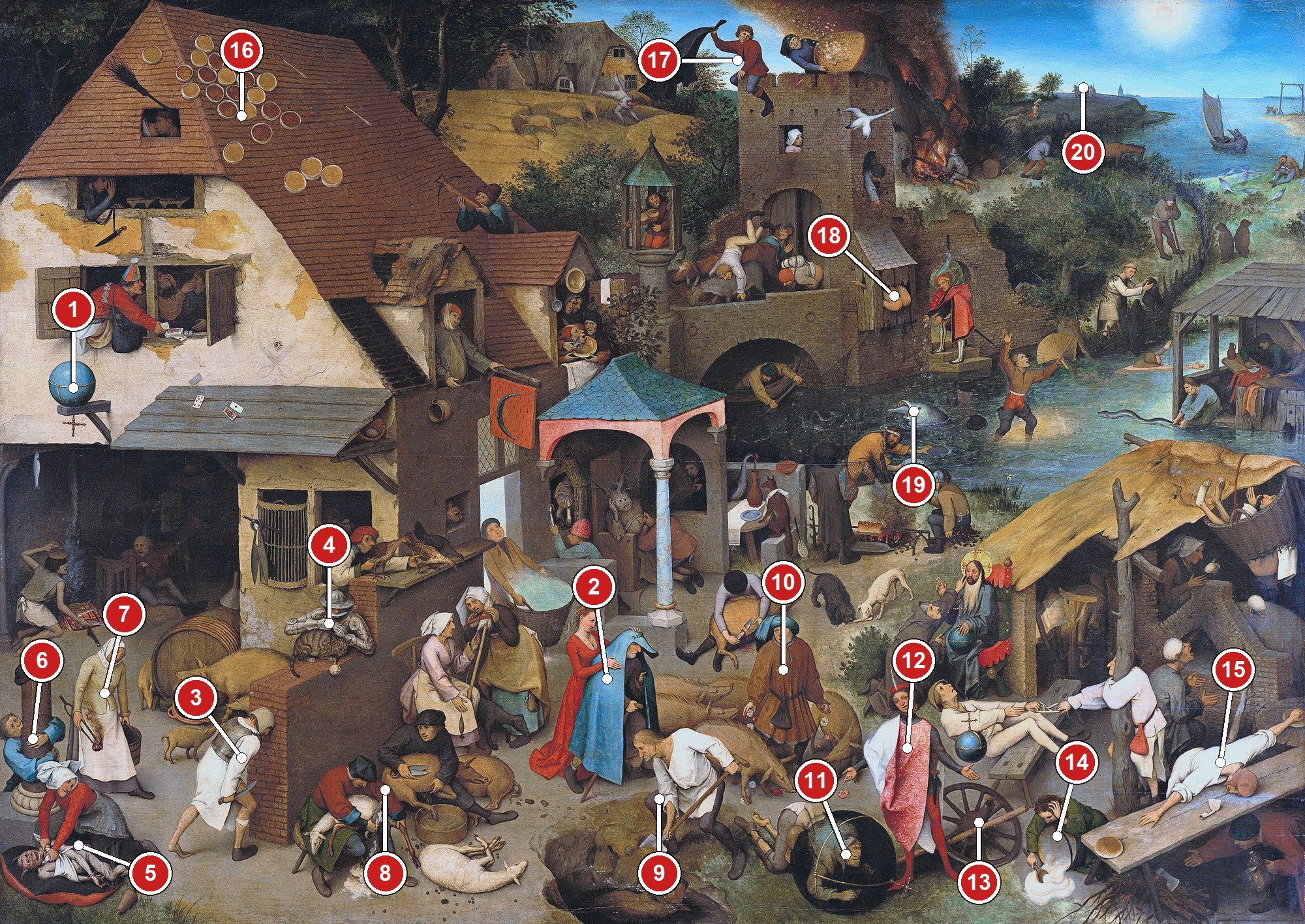
Bruegel crammed well over a hundred Dutch idioms into one five-foot oak panel and wiped away every word of text. Our numbered key picks out twenty anchors across the village — banging your head against a brick wall, belling the cat, hanging the blue cloak on a husband, big fish eating little fish — down to the three microscopic blind men on the horizon.
Read the guide: Bruegel’s Netherlandish Proverbs, 20 key proverbs numbered and explained.
One more face in the crowd
Almost every painting in this series hides the same trick. Raphael stands at the edge of his fresco. Rembrandt shows one eye between two soldiers. Michelangelo hangs his own broken-nosed face on Saint Bartholomew’s flayed skin. Goya stands behind his stretcher in the dark watching the Bourbons admire themselves. David sketches in the gallery. Van Eyck signs the wall, and he may be one of the two small figures in the mirror. The painters who built these crowds kept a place in them for themselves. Once you know the names, the first thing to look for is the one face nobody commissioned.